top of page
Beautiful French Town

The towns and villages of France

  • 32
    Page 28
The 6th arrondissement is the heart of French intellectual life, home to prestigious institutions.

The Institut de France: With its majestic golden dome facing the Pont des Arts, it houses the Académie Française.

The École des Beaux-Arts: An architectural gem where the artists of tomorrow are trained. Its courtyard and galleries are sometimes open to the public during exhibitions.

The Théâtre de l'Odéon: A neoclassical monument dedicated to the dramatic arts, surrounded by specialized bookstores that enhance the area's literary atmosphere.

The 6th arrondissement

The Historic Heart of Saint-Germain-des-Prés

Far from the hustle and bustle of the Champs-Élysées, the northern part of the arrondissement offers a more residential, relaxed atmosphere.

Parc Monceau: Undoubtedly one of the most elegant parks in Paris. Surrounded by the mansions of billionaires, it is dotted with follies (artificial ruins, a pyramid, colonnades) that give it a uniquely romantic feel.

The Cernuschi Museum & the Camondo Museum: Located on the edge of the park, these private museums, housed in sumptuous residences, showcase Asian art and collections of 18th-century furniture, respectively.

The Village Royal: A small pedestrian street tucked away near the Madeleine church, often decorated with art installations (like the famous colorful umbrellas), ideal for quiet shopping.

The 8th arrondissement

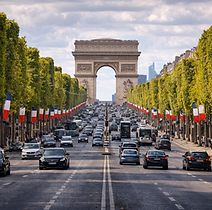
The Historical Axis and its Monuments

Leave Earth's atmosphere behind and discover the conquest of space and the Moon.

The Ariane 1 and Ariane 5 Rockets: Visible for miles around, these life-size replicas stand over 50 meters tall on the tarmac. They embody the power of the European space program.

The Space Hall: This pavilion retraces the space race between the United States and the USSR. Here you will discover real space capsules (such as the Soviet Soyuz T-6 capsule that carried Jean-Loup Chrétien, the first Frenchman in space), satellites, and astronaut suits.

The Planetarium: Equipped with a 360° projection system, it offers immersive shows that take you on a journey through the solar system and to explore distant galaxies.

The Air and Space Museum

Aviation Pioneers and the Great War

The beating heart of the park is its vast freshwater marsh. A veritable aquatic labyrinth, it is best explored at the leisurely pace of its canals, locally called "pians."

A boat trip on a flat-bottomed boat, called a chaland, is the only way to delve into the heart of the marsh. Guided by a boatman using a long wooden pole, you glide silently among the reeds and water lilies.

The black gold of Brière: The guides will tell you the story of morta, this fossilized oak wood, thousands of years old, buried in the peat, which local artisans now carve into magnificent knives and other works of art.

The Briéron ports: Departures are from small picturesque and preserved ports such as the port of Bréca, the port of La Chaussée-Neuve in Saint-André-des-Eaux, or the port of Rozé in Saint-Malo-de-Guersac.

The Brière Regional Natural Park

A bird sanctuary of global importance

Since 1862, the château has housed some of humanity's oldest treasures found on French soil.

The Venus of Brassempouy: Admire one of the oldest known representations of a human face (approximately 25,000 years old), a remarkably delicate ivory statuette.

From Prehistory to the Merovingians: The exhibition takes you through the Bronze Age, the Iron Age, and the Gallo-Roman period, offering a fascinating glimpse into our origins.

Napoleon III's Throne Room: The emperor, a history enthusiast, was the driving force behind the creation of this museum; his influence is still visible in some of the decor.

The Château de Saint-Germain-en-Laye

An Architecture of Brick and Transition

State-owned heritage gives the 7th arrondissement its solemn and imposing character.

The Hôtel National des Invalides: Recognizable by its gilded dome, it houses the Army Museum and the Tomb of Napoleon I.

The National Assembly (Palais Bourbon): Facing the Pont de la Concorde, this temple of French democracy boasts a colonnaded façade.

The Hôtel de Matignon: The official residence of the Prime Minister, famous for its park, the largest private garden in Paris.

The 7th arrondissement

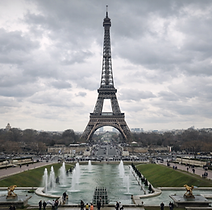
The Icons of Iron and Greenery

The southern slopes of Montmartre conceal a residential neighborhood of rare elegance, once inhabited by the intellectual elite.

The Museum of Romantic Life: Nestled in a former artist's home at the end of a flower-lined lane, this museum evokes the era of George Sand and Frédéric Chopin. A true haven of peace.

The Gustave Moreau Museum: Housed in the Symbolist painter's former studio-home, this museum is famous for its vertiginous spiral staircase and mystical atmosphere.

The "New Athens" Architecture: Stroll around Place Saint-Georges to admire the facades adorned with columns and statues, inspired by ancient Greece.

The 9th arrondissement

The Opéra Garnier and Haussmannian Paris

The microclimate of the Alpilles, swept by the powerful Mistral wind that purifies the crops, is the cradle of exceptionally high-quality local products.

The PDO Olive Oil of the Vallée des Baux-de-Provence: The Alpilles boast millions of olive trees. A visit to the traditional mills of Maussane-les-Alpilles or Mouriès (France's leading olive-growing town) reveals a vibrant oil with notes of fresh hay or artichoke, extracted from unique local varieties such as Salonenque and Béruguette.

The wines of the PDO Les Baux-de-Provence: A pioneer in organic and biodynamic viticulture, this exclusive vineyard flourishes on the rocky slopes. The often spectacular estates produce powerful reds and luscious rosés born from the very rock.

The Alpilles

Les Baux-de-Provence, an eagle's nest of medieval history

The Camargue is above all a mosaic of ever-changing landscapes, shaped by the meeting of fresh and salt water.

The Salin de Giraud and Aigues-Mortes salt marshes: Expanses of an unreal pink due to the proliferation of microorganisms. These mountains of white salt (the "camelles") contrast with the azure sky.

The Ponds and Marshes: A veritable aquatic labyrinth, the Vaccarès lagoon is the beating heart of the reserve, offering shimmering silver reflections as far as the eye can see.

The Sea Dike: A wild path between dunes and lagoons, ideal for observing the raw power of the protected coastline.

The Camargue

Gardiane Traditions and Culture

Vaux-le-Vicomte offers a unique sensory experience that has earned it worldwide renown.

2,000 Candles: Every Saturday during the summer, the château and gardens are illuminated solely by candlelight, recreating the magical atmosphere of 17th-century festivities.

The Fireworks Display: The evening typically concludes with a pyrotechnic show over the gardens, recalling the tragic celebration of August 1661.

Candlelight Dinner: Guests can dine facing the illuminated château, offering a moment of pure romance.

The Château de Vaux-le-Vicomte

Architecture and the Grand Salon

  • 32
    Page 28
bottom of page