
The Alpilles

Rising from the plains of the Comtat Venaissin and the Crau, the Alpilles mountain range presents its silhouette of sculpted white limestone beneath the azure skies of Provence. A true quintessential Provençal postcard, this Regional Natural Park in the Bouches-du-Rhône is a land of light, wind, and passion. Here, the rugged, wild ridges contrast with the gentle valleys carpeted with silvery olive trees and verdant vineyards, dotted with stone villages where the song of cicadas echoes.
Les Baux-de-Provence, an eagle's nest of medieval history
Listed among the Most Beautiful Villages of France, this striking, rocky site clings to a steep spur, offering a breathtaking panorama of the Val d'Enfer (Valley of Hell).
The Château des Baux: This ruined, semi-troglodytic fortress stretches across seven hectares atop the plateau. Exploring its dungeons and reconstructed siege engines, you'll relive the era of the powerful Lords of Baux who defied the kings of France.
The Carrières des Lumières (Quarries of Light): Located below the village, these former white limestone quarries host monumental immersive art exhibitions. Works by renowned painters are projected onto the 14-meter-high rock walls, creating a magical visual and sound spectacle.
The Preserved Village: Stroll through the pedestrianized, cobbled streets, lined with Renaissance mansions, artisan boutiques, and small, shaded squares.


Saint-Rémy-de-Provence: a gentle way of life, antiquity, and creative genius

The cultural and historical capital of the Alpilles, Saint-Rémy charms visitors with its boulevards shaded by centuries-old plane trees, its murmuring fountains, and its significant artistic heritage.
The Glanum archaeological site: At the foot of the mountain range stand the remarkable remains of a Celto-Ligurian city, Hellenized and then Roman. The "Ancients"—a triumphal arch and a remarkably well-preserved mausoleum—mark the entrance to this open-air treasure.
The Saint-Paul de Mausole Monastery: This masterpiece of Provençal Romanesque art is where Vincent van Gogh was interned for a year (1889-1890). It was in this inspiring setting, amidst fields of olive groves and lavender, that he painted more than 150 of his most famous canvases, including The Starry Night.
The art of Provençal markets: On Wednesday mornings, the large market of Saint-Rémy takes over the town. It's the perfect place to soak up the scents of thyme, rosemary, Marseille soaps and colorful fabrics.
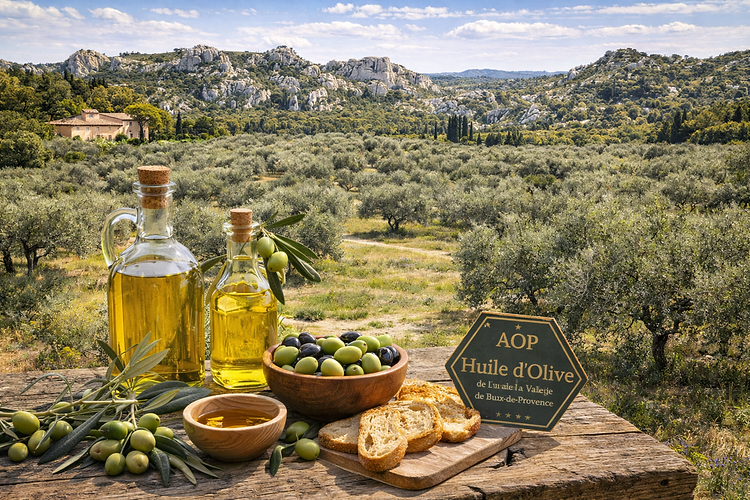
Green gold and the vineyards of the secret valleys
The microclimate of the Alpilles, swept by the powerful Mistral wind that purifies the crops, is the cradle of exceptionally high-quality local products.
The PDO Olive Oil of the Vallée des Baux-de-Provence: The Alpilles boast millions of olive trees. A visit to the traditional mills of Maussane-les-Alpilles or Mouriès (France's leading olive-growing town) reveals a vibrant oil with notes of fresh hay or artichoke, extracted from unique local varieties such as Salonenque and Béruguette.
The wines of the PDO Les Baux-de-Provence: A pioneer in organic and biodynamic viticulture, this exclusive vineyard flourishes on the rocky slopes. The often spectacular estates produce powerful reds and luscious rosés born from the very rock.


Following in the footsteps of Alphonse Daudet and pastoral traditions
The western foothills of the Alpilles mountains are home to authentic villages where the traditions of transhumance and Provençal culture remain deeply rooted.
Fontvieille and Daudet's Windmill: Perched atop a pine-covered hill stands the famous windmill that inspired Alphonse Daudet's *Letters from My Windmill*. A footpath connects the monument to the Château de Montauban, where the writer resided.
The Château d'Estoublon: This exceptional estate blends lush olive groves with 18th-century architecture, offering a luxurious immersion into the region's art of living.
The Culture of Costume and the Félibrige: In Fontvieille and Eygalières, the summer festivals see the revival of parades of women from Arles in traditional costumes and the "ramades" carts (adorned with greenery and fruit), celebrating the work of the land.
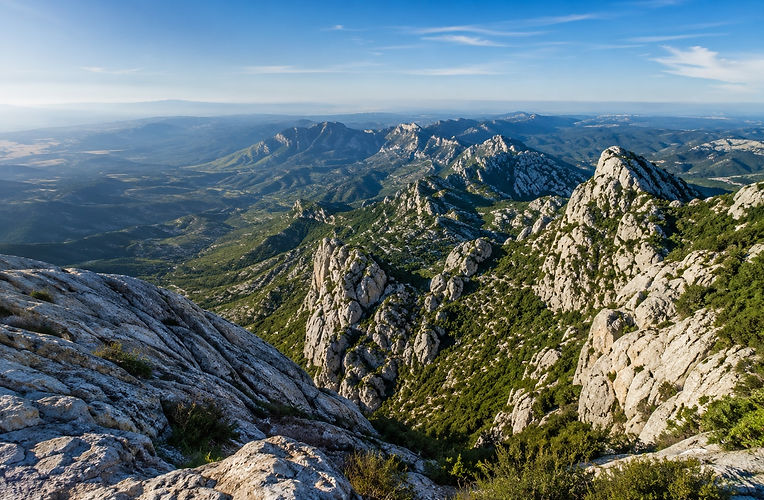
Hiking and panoramic views on the limestone ridges
For lovers of unspoiled nature, the Alpilles Regional Natural Park is an exceptional playground, crisscrossed by numerous marked trails.
The Crêtes Trail (GR6): This spectacular path winds along the rocky spine of the massif. It offers breathtaking views: to the north, the market gardens stretch to Mont Ventoux; to the south, the vast wilderness of the Crau plain and the Camargue ponds extending towards the Mediterranean.
The summit of Opies: Reaching an altitude of 498 meters, it is the highest point in the Alpilles. Crowned by an old stone watchtower, it is well worth the hike through fragrant garrigue scrubland, home to rare birds such as the magnificent Bonelli's Eagle.
The Destet and the hidden gorges: The small winding roads and wild valleys (like the Lèque valley) delight cyclists and climbers who come to challenge the white limestone cliffs.
Conclusion
Small in size but immense in heritage, the Alpilles embody the eternal and sensory essence of Provence. From the dramatic ruins of Les Baux to the olive groves immortalized by Van Gogh, every corner of this limestone massif invites contemplation and wonder. By perfectly balancing the ruggedness of its wild nature with the refinement of its terroir, this stone citadel stands out as a luminous and unforgettable interlude, a haven where time seems to align with the peaceful course of the Provençal sun.
Tourist Office of Les Baux-de-Provence
Information Regarding Visuals: This website uses computer-generated images and illustrations created by artificial intelligence for atmospheric and stylistic purposes. These representations are not actual photographs and are strictly non-binding.