top of page
Beautiful French Town

The towns and villages of France

  • 32
    Page 1
Untouched by time, Agen's historic center invites you to a poetic stroll in the footsteps of its wealthy medieval and Renaissance merchants.

Rue des Cornières: This is one of the oldest and most picturesque streets in the city. It is characterized by its houses projecting onto the street, supported by magnificent stone or wooden arcades (cornières), which once sheltered merchants' stalls during inclement weather.

The Senechal's House (19th century): At the turn of Rue de Beauville, admire this superb stone house with its Flamboyant Gothic loggia and finely sculpted mullioned windows.

The half-timbered houses of Rue de la Grande-Horloge: The half-timbered facades, in ochre and pastel hues, stand proudly, sometimes adorned with pink bricks arranged in a herringbone pattern, recalling the region's unique architectural identity.

Agen

The Canal Bridge, an engineering masterpiece spanning the river

Aix-en-Provence is inextricably linked to its prodigy, Paul Cézanne. An urban trail marked with bronze studs bearing a "C" allows visitors to walk in the master's footsteps and explore his living and working spaces.

Cézanne's Studio (Colline des Lauves): It was here, in this haven of tranquility that has remained untouched, that the painter spent the last years of his life. Northern light streams in through large bay windows, illuminating his personal belongings, still lifes, and work clothes, creating an atmosphere of intense artistic emotion.

The Painters' Ground: Located a little higher up the hill, this park offers the exact vantage point where Cézanne would set up his easel to paint his most famous canvases of Mont Sainte-Victoire, the limestone giant that dominates the Aix skyline and became an icon of modern art.

The Bastide du Jas de Bouffan and the Bibémus Quarries: The painter's family property and the old ochre stone quarries of Bibémus complete this artistic pilgrimage, offering a raw immersion into the heart of the geometric forms that heralded cubism.

Aix-en-Provence

The Cours Mirabeau and the grand fountain theatre

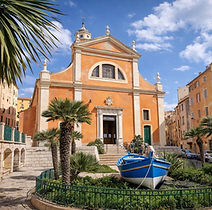
Ajaccio is inextricably linked to the figure of Napoleon, born here on August 15, 1769. The city has enshrined the Emperor's memory in a veritable historical and memorial trail.

The Maison Bonaparte: Nestled in the heart of the old town's narrow streets, this bourgeois residence is Napoleon's birthplace. Converted into a national museum, it preserves period furniture, family portraits, and the secret rooms where the history of Europe was partly shaped.

The Napoleonic Salon in the Town Hall: This state room houses an exceptional collection of paintings, marble busts, and medals retracing the epic story of the Bonaparte family, as well as the famous painting of the coronation.

Casone Square (Memorial Monument): Dominated by a monumental bronze statue of the Emperor in a frock coat atop a granite staircase, this square commemorates the great victories of the Empire. At the foot of the monument are the grottoes where, according to legend, the young Napoleon used to read and dream of conquests.

Ajaccio

The Old Genoese Town

This is the medieval heart of the city. Strolling through its cobbled streets, you'll delve into the glorious past of the Duchy of Normandy, discovering impressive civil and military buildings.

The Château des Ducs d'Alençon: Of this imposing 14th-century medieval fortress, the gatehouse, with its two impressive circular machicolated towers, still stands majestically. Its massive granite silhouette recalls the power of the lords who defied the crown.

The Maison d'Ozé: This magnificent 15th-century mansion, surrounded by a charming medieval-inspired garden, boasts an elegant brick and stone façade with corbelled turrets. Today, it houses the city's tourist office.

The half-timbered streets: While wandering around the Church of Saint-Léonard, lose yourself in the Rue de la Porte de la Barre. The medieval houses with their carved wooden structures and ochre facades now house charming art galleries and antique shops.

Alençon

Alençon lace, the queen of laces at UNESCO

Amboise's charm also lies in its incomparable "art of living."

The Historic Heart: Lose yourself in the maze of pedestrian streets at the foot of the Clock Tower (the former belfry), where 15th-century half-timbered houses stand alongside Renaissance mansions.

The Delightful Quays: On Sunday mornings, the large market along the Loire River is a celebration of the Touraine region's local produce. In the warmer months, the atmosphere becomes festive thanks to the open-air cafes that come alive as the sun sets, offering the perfect setting to enjoy a glass of Touraine-Amboise wine.

Golden Island: For the most beautiful photograph of the town, cross the bridge to Golden Island. From there, the silhouette of the château reflected in the river creates an unforgettable scene, especially at golden hour.

Amboise

The Royal Château of Amboise, the balcony overlooking the Loire

The gastronomy of Aigues-Mortes reflects a bountiful terroir, combining the riches of the land, the salt marshes, and the vineyards.

Fougasse d'Aigues-Mortes: This is the city's quintessential sweet treat. Once reserved for Christmas celebrations, this soft, golden brioche is generously flavored with sugar, butter, and orange blossom. A delight to buy in the artisan bakeries within the city walls.

Gardianne de Taureau and Camargue Rice: This traditional stew of PDO bull meat, slowly simmered in red wine and black olives, is the perfect accompaniment to the famous Camargue red or white rice (PGI).

The Wines of the Sands (AOP Sable de Camargue): Cultivated directly in the sand of the maritime dunes surrounding the city, these vineyards produce rosé and "gris" wines of exceptional finesse and freshness, perfect for pairing with seafood platters from the nearby coast.

Canal Cruises: From the landing stages outside the ramparts, board a barge to cruise along the Rhône-Sète Canal. This leisurely journey offers the chance to observe the marsh wildlife (herons, beavers) and get up close to the wild landscapes of the Sagne.

Aigues-Mortes

The monumental ramparts, an intact military masterpiece

Dominating the city from its 1,500-meter altitude, the Revard plateau is Aix-les-Bains' natural viewpoint, accessible in under thirty minutes via a stunning mountain road through the forest.

The glass walkways at the summit: Once you reach the top, walk along the transparent platforms suspended above the void. The panorama is simply breathtaking: at your feet, the entirety of Lake Bourget shimmers, while on the horizon, the Aravis mountain range and the majestic silhouette of Mont Blanc come into view.

A paradise for outdoor enthusiasts in summer: The plateau, part of the Massif des Bauges Regional Natural Park, is crisscrossed by dozens of kilometers of marked hiking trails, mountain biking trails, and paragliding launch sites for soaring over the valley.

The Nordic spirit in winter: From the first snows, Revard transforms into a charming family resort, renowned for its cross-country ski trails carved out among the fir trees, its dog sledding excursions and its snowshoeing trails.

Aix-les-Bains

Lake Bourget, a sea of turquoise and poetry

Albi brick originated from the riverbed. The Tarn River shaped the city's economic history and today offers an essential natural and heritage site.

The Old Bridge (1040): Built in the 11th century of stone and later reinforced with brick, this eight-arched bridge is a monument of historical engineering. It enabled the city's commercial development in the Middle Ages by connecting the two banks of the Tarn. A stroll across it offers one of the most beautiful views of the cathedral.

The Green Escape and Boating: The banks of the Tarn have been transformed into a bucolic pedestrian path several kilometers long (the Green Escape), ideal for observing river wildlife (herons, beavers). In the summer, traditional gabarres (flat-bottomed wooden boats) offer narrated cruises along the river.

The Madeleine district (right bank): By crossing the Pont-Vieux, discover this suburb of artisans of yesteryear, which houses the Lapérouse Museum, dedicated to the famous navigator and explorer from Albi, Jean-François de Galaup, Count of Lapérouse.

Albi

Saint Cecilia's Cathedral, a fortress of faith and a splendor of art

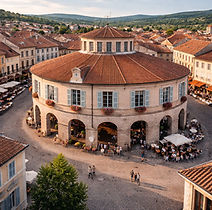
You can't leave Ambert without paying homage to its queen: Fourme d'Ambert cheese.

The Maison de la Fourme: This museum retraces the epic story of this cylindrical cheese, whose history dates back to the Gallic era.

Tasting: Its blue-veined paste, with its unparalleled mildness, reflects the fragrant herbs of the high pastures of the Forez region.

Ambert

The Round Town Hall: A Unique Curiosity

Just steps from the cathedral begins a natural site unique in the world: 300 hectares of floating gardens interwoven by 65 kilometers of canals (called "rieux" here).

A Millennial Market Garden Site: Cultivated since Gallo-Roman times by the "hortillons" (local market gardeners), these fertile islets still supply the city with fresh vegetables.

The Cornet Boat Trip: To soak up the poetry of the place, you embark on a traditional flat-bottomed boat with a raised bow (the cornet boat) propelled by a silent electric motor. You glide beneath leafy canopies, amidst flower-filled banks and fishermen's huts.

The Floating Market: Every Saturday morning (and once a year in June, dressed in traditional costume), market gardeners moor their boats laden with salads, leeks, and berries at the quayside on Place Parmentier, perpetuating an irresistible medieval tradition.

The International Garden Festival: From spring to autumn, a section of the islands hosts contemporary artworks and unusual landscape installations to be discovered on foot or by boat, blending artistic creation with environmental preservation.

Amiens

Notre-Dame Cathedral, Giant of the Gothic Building

  • 32
    Page 1
bottom of page