
The 7th arrondissement

The 7th arrondissement is a district of grandeur and regal elegance. Home to the National Assembly and numerous ministries, it is the guardian of France's political history. But it is also a district of contrasts, where wide, airy avenues stand alongside secret gardens and the banks of the Seine, a UNESCO World Heritage site.
The Icons of Iron and Greenery
It's impossible to talk about the 7th arrondissement without mentioning the monuments that define the Parisian skyline worldwide.
The Eiffel Tower: The "Iron Lady," built for the 1889 Universal Exposition, dominates the arrondissement from its 330-meter height.
The Champ de Mars: This vast public park stretches out at the foot of the Tower. It's a favorite gathering place for elegant picnics and national fireworks displays.
The École Militaire: Closing off the vista of the Champ de Mars, this masterpiece of 18th-century classical architecture stands as a testament to French military grandeur.


A Journey to the Heart of the Arts

The 7th arrondissement is home to some of Paris's most unique museums, housed in historically significant locations.
The Musée d'Orsay: Located in the former Orsay train station, it boasts the world's largest collection of Impressionist and Post-Impressionist works (Monet, Van Gogh, Renoir).
The Rodin Museum: Housed in the Hôtel Biron, this museum and its magnificent sculpture garden offer visitors the chance to admire The Thinker and The Kiss in a bucolic setting.
The Musée du Quai Branly - Jacques Chirac: Dedicated to the arts and civilizations of Africa, Asia, Oceania, and the Americas, it is distinguished by its bold architecture designed by Jean Nouvel and its spectacular living wall.

The Invalides and Power Quarter
State-owned heritage gives the 7th arrondissement its solemn and imposing character.
The Hôtel National des Invalides: Recognizable by its gilded dome, it houses the Army Museum and the Tomb of Napoleon I.
The National Assembly (Palais Bourbon): Facing the Pont de la Concorde, this temple of French democracy boasts a colonnaded façade.
The Hôtel de Matignon: The official residence of the Prime Minister, famous for its park, the largest private garden in Paris.

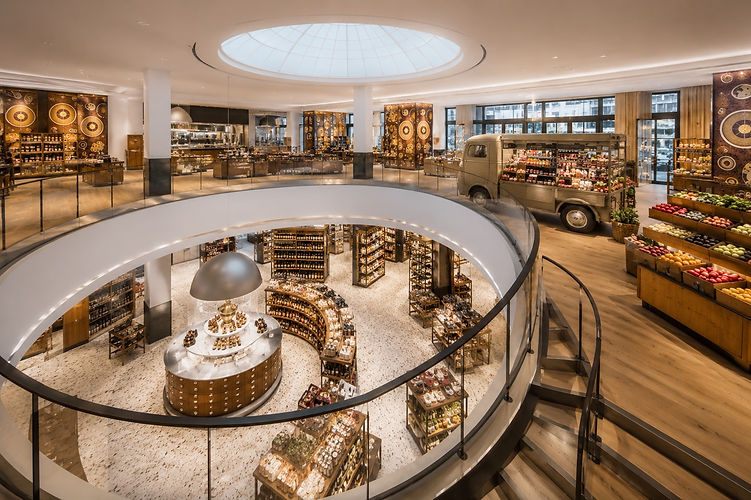
Gastronomy and Luxury Shopping
The 7th arrondissement is also home to a certain aristocracy of taste and refined living.
Le Bon Marché Rive Gauche: The world's first department store, it remains the temple of Parisian luxury, prioritizing a carefully curated selection over tourist crowds.
La Grande Épicerie de Paris: A true institution for gourmets, where you can find the finest products from around the world.
Rue Cler: A picturesque pedestrian shopping street, beloved by locals and travelers alike for its fruit stalls, florists, and authentic café terraces.

Curiosities and Unusual Walks
Beyond the main thoroughfares, the 7th arrondissement hides more discreet but equally fascinating treasures.
The Paris Sewers: For an extraordinary visit, the Sewer Museum offers a glimpse into the technical heart of the capital.
The Lavirotte Building (29 Avenue Rapp): An Art Nouveau masterpiece with an exuberant façade that seems to melt, it won the city's façade competition in 1901.
The Basilica of Sainte-Clotilde: Less well-known than Notre-Dame, this neo-Gothic basilica impresses with its twin spires and Olympian serenity.
Conclusion
Visiting the 7th arrondissement is like embracing the Paris of postcards while discovering a refined and sophisticated neighborhood life. Whether you're captivated by the grandeur of imperial architecture or the delicate beauty of a Monet painting, the 7th will charm you with its perfect balance of culture, history, and the French art of living.
Town Hall of the 7th arrondissement
Information Regarding Visuals: This website uses computer-generated images and illustrations created by artificial intelligence for atmospheric and stylistic purposes. These representations are not actual photographs and are strictly non-binding.