top of page

The Château de Saint-Germain-en-Laye
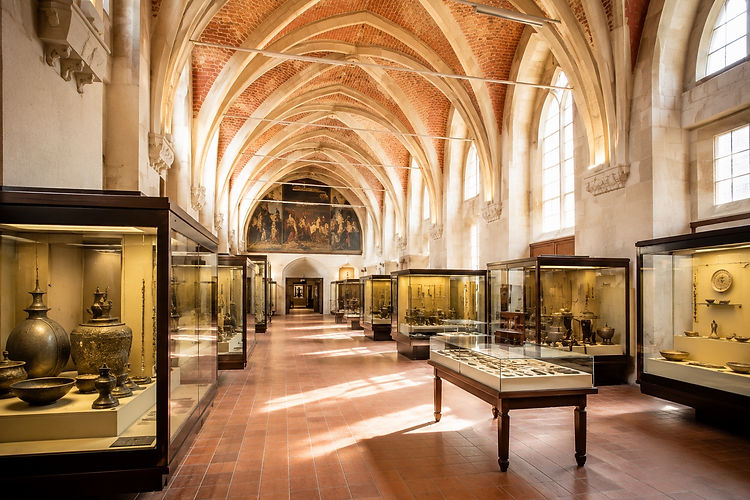
Since 1862, the château has housed some of humanity's oldest treasures found on French soil.

The Venus of Brassempouy: Admire one of the oldest known representations of a human face (approximately 25,000 years old), a remarkably delicate ivory statuette.

From Prehistory to the Merovingians: The exhibition takes you through the Bronze Age, the Iron Age, and the Gallo-Roman period, offering a fascinating glimpse into our origins.

Napoleon III's Throne Room: The emperor, a history enthusiast, was the driving force behind the creation of this museum; his influence is still visible in some of the decor.

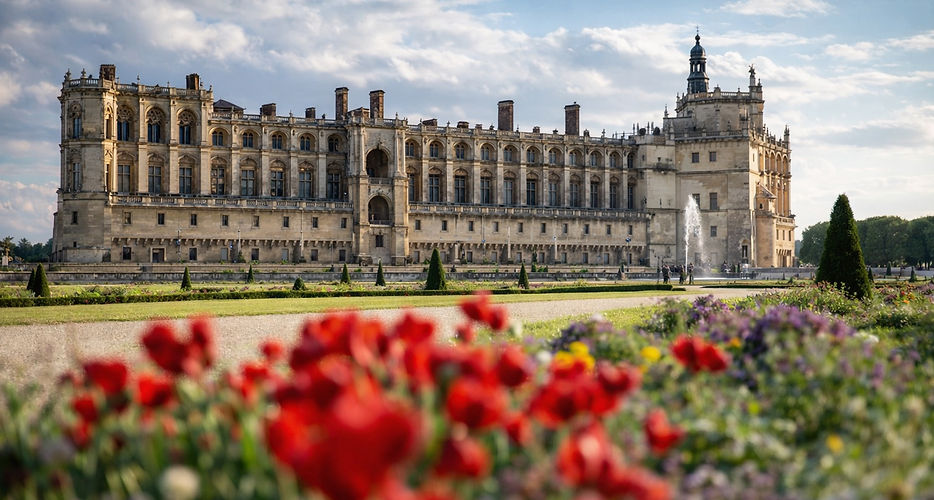
Located just 20 kilometers west of Paris, the Château de Saint-Germain-en-Laye was a favorite residence of many sovereigns before Versailles eclipsed it. Today, it houses the National Archaeology Museum, one of the richest in the world. It is a site where the strength of the stone walls meets the refinement of the gardens designed by Le Nôtre.

An Architecture of Brick and Transition

The current château is primarily the work of Francis I, who rebuilt the old medieval fortress.

The Renaissance Style: Observe the innovative use of brick and stone, as well as the flat roofs bordered by Italianate balustrades, a rarity in France at the time.

The Inner Courtyard: Pentagonal in shape, it is striking for its regularity and the elegance of its arcades. It bears witness to the sumptuous festivities of the Valois court.

The Sainte-Chapelle: Built by Saint Louis in 1238, it is a masterpiece of Rayonnant Gothic architecture. It served as a model for the famous Sainte-Chapelle in Paris.

Since 1862, the château has housed some of humanity's oldest treasures found on French soil.

The Venus of Brassempouy: Admire one of the oldest known representations of a human face (approximately 25,000 years old), a remarkably delicate ivory statuette.

From Prehistory to the Merovingians: The exhibition takes you through the Bronze Age, the Iron Age, and the Gallo-Roman period, offering a fascinating glimpse into our origins.

Napoleon III's Throne Room: The emperor, a history enthusiast, was the driving force behind the creation of this museum; his influence is still visible in some of the decor.
Since 1862, the château has housed some of humanity's oldest treasures found on French soil.

The Venus of Brassempouy: Admire one of the oldest known representations of a human face (approximately 25,000 years old), a remarkably delicate ivory statuette.

From Prehistory to the Merovingians: The exhibition takes you through the Bronze Age, the Iron Age, and the Gallo-Roman period, offering a fascinating glimpse into our origins.

Napoleon III's Throne Room: The emperor, a history enthusiast, was the driving force behind the creation of this museum; his influence is still visible in some of the decor.
Since 1862, the château has housed some of humanity's oldest treasures found on French soil.

The Venus of Brassempouy: Admire one of the oldest known representations of a human face (approximately 25,000 years old), a remarkably delicate ivory statuette.

From Prehistory to the Merovingians: The exhibition takes you through the Bronze Age, the Iron Age, and the Gallo-Roman period, offering a fascinating glimpse into our origins.

Napoleon III's Throne Room: The emperor, a history enthusiast, was the driving force behind the creation of this museum; his influence is still visible in some of the decor.

Le Nôtre's Great Terrace

Since 1862, the château has housed some of humanity's oldest treasures found on French soil.

The Venus of Brassempouy: Admire one of the oldest known representations of a human face (approximately 25,000 years old), a remarkably delicate ivory statuette.

From Prehistory to the Merovingians: The exhibition takes you through the Bronze Age, the Iron Age, and the Gallo-Roman period, offering a fascinating glimpse into our origins.

Napoleon III's Throne Room: The emperor, a history enthusiast, was the driving force behind the creation of this museum; his influence is still visible in some of the decor.

This is undoubtedly one of the most spectacular viewpoints in the Île-de-France region.

An Infinite Perspective: Stretching 2.4 kilometers, this terrace designed by André Le Nôtre offers a breathtaking panorama of the Seine River loop, the La Défense business district, and Paris in the distance.

The Belvedere: A popular spot for strolling, where one can truly appreciate the grandeur of classical landscape design.

The Optical Illusion: Le Nôtre used perspective techniques to make the terrace appear endless when viewed from the château.
Since 1862, the château has housed some of humanity's oldest treasures found on French soil.

The Venus of Brassempouy: Admire one of the oldest known representations of a human face (approximately 25,000 years old), a remarkably delicate ivory statuette.

From Prehistory to the Merovingians: The exhibition takes you through the Bronze Age, the Iron Age, and the Gallo-Roman period, offering a fascinating glimpse into our origins.

Napoleon III's Throne Room: The emperor, a history enthusiast, was the driving force behind the creation of this museum; his influence is still visible in some of the decor.

The National Archaeology Museum

Since 1862, the château has housed some of humanity's oldest treasures found on French soil.

The Venus of Brassempouy: Admire one of the oldest known representations of a human face (approximately 25,000 years old), a remarkably delicate ivory statuette.

From Prehistory to the Merovingians: The exhibition takes you through the Bronze Age, the Iron Age, and the Gallo-Roman period, offering a fascinating glimpse into our origins.

Napoleon III's Throne Room: The emperor, a history enthusiast, was the driving force behind the creation of this museum; his influence is still visible in some of the decor.

Since 1862, the château has housed some of humanity's oldest treasures found on French soil.

The Venus of Brassempouy: Admire one of the oldest known representations of a human face (approximately 25,000 years old), a remarkably delicate ivory statuette.

From Prehistory to the Merovingians: The exhibition takes you through the Bronze Age, the Iron Age, and the Gallo-Roman period, offering a fascinating glimpse into our origins.

Napoleon III's Throne Room: The emperor, a history enthusiast, was the driving force behind the creation of this museum; his influence is still visible in some of the decor.

The National Estate and the Forest

The château opens onto a vast park that was once the kings' favorite hunting ground.

The French Garden: Between the château and the terrace, the parterres, ponds, and statues reflect the order and harmony of the 17th century.

The Forest of Saint-Germain: Spanning 3,500 hectares, it offers hiking and cycling trails amidst majestic oaks and beeches.

The English Garden: More recent, it offers a more leisurely stroll, with rare trees and denser groves, contrasting with the formality of Le Nôtre's gardens.

Since 1862, the château has housed some of humanity's oldest treasures found on French soil.

The Venus of Brassempouy: Admire one of the oldest known representations of a human face (approximately 25,000 years old), a remarkably delicate ivory statuette.

From Prehistory to the Merovingians: The exhibition takes you through the Bronze Age, the Iron Age, and the Gallo-Roman period, offering a fascinating glimpse into our origins.

Napoleon III's Throne Room: The emperor, a history enthusiast, was the driving force behind the creation of this museum; his influence is still visible in some of the decor.

A Royal and Historic Quarter

The castle's influence extends throughout the town, creating an elegant "garden city" atmosphere.

Saint-Germain Church: Located directly opposite the castle entrance, it houses the tomb of King James II of England, who lived here in exile.

Private Mansions: Strolling through the adjacent streets, one discovers the residences of the nobility who once attended court, with their magnificent gateways and paved courtyards.

Gastronomy: The town is famous for being the birthplace of Béarnaise sauce and soufflé potatoes, both created at the Pavillon Henri IV, located on the site of the former new castle.

Conclusion

Saint-Germain-en-Laye is a place where the past never truly fades. Between the solemnity of the archaeological collections and the freedom offered by the Grand Terrace, the estate provides a perfect balance between culture and nature. It's the ideal place to understand the genesis of the French royal state while enjoying a breath of fresh air.

Saint Germain Boucles de Seine Tourist Office

Information Regarding Visuals: This website uses computer-generated images and illustrations created by artificial intelligence for atmospheric and stylistic purposes. These representations are not actual photographs and are strictly non-binding.

bottom of page