top of page
Beautiful French Town

The towns and villages of France

  • 32
    Page 27
Once a hunting ground for the kings of France, this park is the second "lung" of Paris, along with the Bois de Vincennes.

The Louis Vuitton Foundation: Designed by Frank Gehry, this glass and steel structure appears to float on the edge of the woods. It is an essential monument of modern architecture.

The Jardin d'Acclimatation: A historic amusement park that delights families with its rides and petting zoo.

The Lakes and Waterfalls: Perfect for a boat ride or a romantic stroll under the weeping willows.

The Jardin des Serres d'Auteuil: A 19th-century greenhouse complex housing rare plants and exotic species beneath magnificent blue iron structures.

The 16th arrondissement

The Trocadero: The balcony of Paris

This neighborhood is a vibrant mix of cultures, colors, and flavors from around the world.

The Barbès Market: Located beneath the elevated metro line, it's one of Paris's most lively and exotic markets, famous for its exotic produce and boundless energy.

The Institute of Islamic Cultures: A modern cultural center offering exhibitions, concerts, and workshops, showcasing the neighborhood's rich cultural heritage.

The Louxor: A beautifully restored historic cinema with neo-Egyptian architecture, one of the neighborhood's gems.

The 18th arrondissement

Montmartre: The Village of the Arts

A self-contained architectural complex steeped in history, located directly opposite the Louvre.

The Cour d'Honneur and the Buren Columns: The 260 black and white marble columns create a modern, graphic effect that contrasts with the classical 17th-century architecture.

The Gardens and Arcades: A favorite place for strolling, lined with luxury boutiques, art galleries, and historic cafés where revolutionaries once gathered.

The Comédie-Française Theatre: The "House of Molière" adjoins the palace, perpetuating the French theatrical tradition in a sumptuous setting.

The 1st arrondissement

The Louvre: Palace of Kings and Temple of the Arts

This historic district, once the heart of the textile and ready-to-wear industry, is now a hub for Parisian startups.

The maze of streets: Wandering through the streets of Aboukir or Cairo, one can still admire the massive industrial facades where fabrics were once piled high.

Cairo Square: Notable for its building with a facade adorned with Egyptian motifs (heads of the goddess Hathor), a testament to the Egyptomania of the early 19th century.

Entrepreneurial energy: The district is now teeming with specialty cafes and coworking spaces housed in magnificent industrial lofts.

The 2nd arrondissement

The Covered Passages: Galleries of Time

The 4th arrondissement bears witness to the golden age of French administration and revolutions.

City Hall: A magnificent Neo-Renaissance palace. Its plaza hosts numerous exhibitions and cultural events throughout the year.

Place de la Bastille: Located on the edge of the arrondissement, it symbolizes liberty. Here, one can admire the July Column and the imposing Opéra Bastille.

Saint-Jacques Tower: The only remaining vestige of a 16th-century church, this flamboyant Gothic bell tower stands like a solitary beacon in the middle of a garden, offering an unforgettable climb for the more adventurous.

The 4th arrondissement

Île de la Cité and Île Saint-Louis: Jewels of the river

The upper part of the arrondissement, near the Place de l'Étoile, is a hub of commerce and bourgeois life.

The Marché Poncelet: One of the most beautiful street markets in Paris. The stalls of fruit, cheese, and fish are displayed like works of art.

The Place des Ternes: With its famous flower market and grand brasseries, it's a constantly bustling crossroads.

The Palais des Congrès: Located at Porte Maillot, it's a key center for shows, high-end shopping, and international events.

The 17th arrondissement

The Batignolles Village: Bohemian and friendly

It's the largest urban cultural park in the capital. The Parc de la Villette is a unique complex in the world:

The Cité des Sciences et de l'Industrie (City of Science and Industry): A paradise for curious minds of all ages.

The Géode: Its shimmering steel sphere has become the futuristic emblem of the district.

The Philharmonie de Paris: An architectural masterpiece by Jean Nouvel, whose aluminum-scale façade reflects the sky and offers exceptional acoustics for music lovers.

The 19th arrondissement

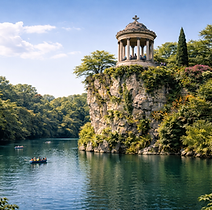
The Buttes-Chaumont Park: The rugged jewel

Nicknamed "Ménilmuche" by its residents, this neighborhood has retained a working-class village atmosphere.

Notre-Dame-de-la-Croix Church: An imposing church that overlooks the neighborhood, its steps a favorite meeting place for locals.

Nightlife: Rue de Ménilmontant and Rue Boyer are home to legendary venues like La Maroquinerie and La Bellevilloise, nerve centers of the independent music and cultural scene.

Neighborhood spirit: Here, café terraces are an extension of living rooms, and you can still feel that typically Parisian sense of community and lively banter.

The 20th arrondissement

Père-Lachaise: The City of Silence

A former clothing market, this historic site has become the heart of local life.

The Carreau du Temple: A magnificent iron and glass structure from the late 19th century, converted into a multi-purpose space hosting fashion shows, design fairs, and sporting events.

The Marché des Enfants Rouges: Established in 1615, this is the oldest food market in Paris. People come here for a quick lunch of cuisines from around the world in a lively, bohemian atmosphere.

The Square du Temple: An English-style garden located on the site of the former Templar fortress, ideal for a reading break by its waterfall.

The 3rd arrondissement

The Haut-Marais: Epicenter of contemporary art

This is where the academic heart of France has beat since the Middle Ages, when Latin was the only language spoken.

The Sorbonne: Founded in 1253, this legendary university remains the global symbol of French academic excellence. Its chapel houses the tomb of Richelieu.

The Cluny Museum (National Museum of the Middle Ages): Housed in a former medieval mansion built on the site of Roman baths, it contains the famous Lady and the Unicorn tapestries.

Independent bookstores: The neighborhood is dotted with booksellers and specialist bookstores, including the legendary Shakespeare and Company, a true haven for English-language writers opposite Notre-Dame Cathedral.

The 5th Arrondissement

The Montagne Sainte-Geneviève and the Pantheon

  • 32
    Page 27
bottom of page