top of page

The 2nd arrondissement
This historic district, once the heart of the textile and ready-to-wear industry, is now a hub for Parisian startups.

The maze of streets: Wandering through the streets of Aboukir or Cairo, one can still admire the massive industrial facades where fabrics were once piled high.

Cairo Square: Notable for its building with a facade adorned with Egyptian motifs (heads of the goddess Hathor), a testament to the Egyptomania of the early 19th century.

Entrepreneurial energy: The district is now teeming with specialty cafes and coworking spaces housed in magnificent industrial lofts.

The 2nd arrondissement is a time capsule nestled between the Grands Boulevards and the Les Halles district. Once the nerve center of finance and textiles (the famous Sentier district), it has transformed itself into an ultra-dynamic neighborhood. Here you'll find the finest examples of 19th-century commercial architecture, particularly its renowned covered passages, while also discovering the latest trends in Parisian life.

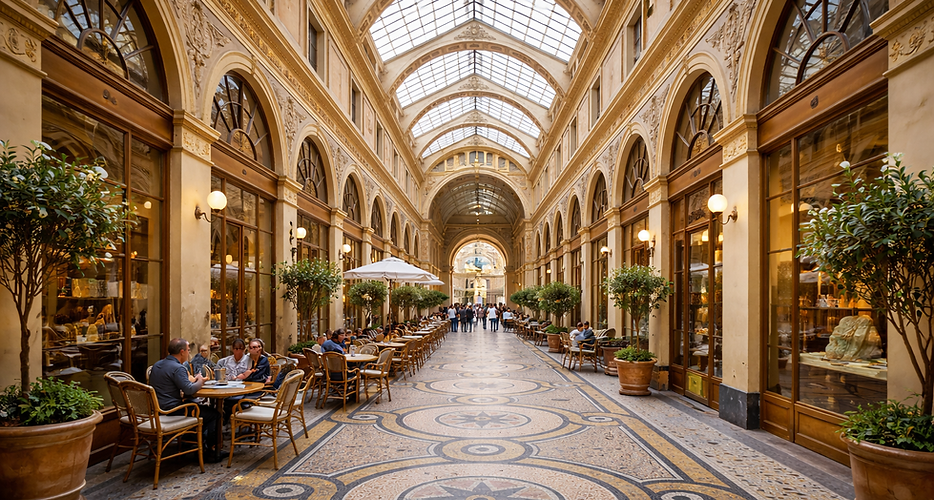
The Covered Passages: Galleries of Time

The 2nd arrondissement boasts the highest concentration of these forerunners of modern shopping malls, veritable jewels of glass and wrought iron.

Galerie Vivienne: Arguably the most elegant in Paris, with its mosaic floors, luminous glass roof, and renowned antiquarian bookstore.

Passage des Panoramas: Inaugurated in 1799, it is one of the oldest. It's a paradise for philatelists, postcard collectors, and gourmets.

Passage Choiseul: The longest in the capital, recently restored, it offers a lively atmosphere with its numerous small boutiques and fast-food outlets.

This historic district, once the heart of the textile and ready-to-wear industry, is now a hub for Parisian startups.

The maze of streets: Wandering through the streets of Aboukir or Cairo, one can still admire the massive industrial facades where fabrics were once piled high.

Cairo Square: Notable for its building with a facade adorned with Egyptian motifs (heads of the goddess Hathor), a testament to the Egyptomania of the early 19th century.

Entrepreneurial energy: The district is now teeming with specialty cafes and coworking spaces housed in magnificent industrial lofts.
This historic district, once the heart of the textile and ready-to-wear industry, is now a hub for Parisian startups.

The maze of streets: Wandering through the streets of Aboukir or Cairo, one can still admire the massive industrial facades where fabrics were once piled high.

Cairo Square: Notable for its building with a facade adorned with Egyptian motifs (heads of the goddess Hathor), a testament to the Egyptomania of the early 19th century.

Entrepreneurial energy: The district is now teeming with specialty cafes and coworking spaces housed in magnificent industrial lofts.
This historic district, once the heart of the textile and ready-to-wear industry, is now a hub for Parisian startups.

The maze of streets: Wandering through the streets of Aboukir or Cairo, one can still admire the massive industrial facades where fabrics were once piled high.

Cairo Square: Notable for its building with a facade adorned with Egyptian motifs (heads of the goddess Hathor), a testament to the Egyptomania of the early 19th century.

Entrepreneurial energy: The district is now teeming with specialty cafes and coworking spaces housed in magnificent industrial lofts.

Rue Montorgueil: The art of gourmet living

This historic district, once the heart of the textile and ready-to-wear industry, is now a hub for Parisian startups.

The maze of streets: Wandering through the streets of Aboukir or Cairo, one can still admire the massive industrial facades where fabrics were once piled high.

Cairo Square: Notable for its building with a facade adorned with Egyptian motifs (heads of the goddess Hathor), a testament to the Egyptomania of the early 19th century.

Entrepreneurial energy: The district is now teeming with specialty cafes and coworking spaces housed in magnificent industrial lofts.

This pedestrian street is one of the most famous and delightful in Paris.

Stohrer Pastry Shop: The oldest in Paris (founded in 1730 by Louis XV's pastry chef). Its façade and interior decorations are listed historical monuments, and its rum baba is legendary.

Food stalls: Between the fishmongers, cheese shops, and florists, the street maintains a permanent market atmosphere that delights the senses.

L'Escargot Montorgueil: A culinary institution recognizable by its golden snail on the façade, a symbol of traditional French gastronomy.

This historic district, once the heart of the textile and ready-to-wear industry, is now a hub for Parisian startups.

The maze of streets: Wandering through the streets of Aboukir or Cairo, one can still admire the massive industrial facades where fabrics were once piled high.

Cairo Square: Notable for its building with a facade adorned with Egyptian motifs (heads of the goddess Hathor), a testament to the Egyptomania of the early 19th century.

Entrepreneurial energy: The district is now teeming with specialty cafes and coworking spaces housed in magnificent industrial lofts.

Le Sentier: From garment manufacturing to "French Tech"

This historic district, once the heart of the textile and ready-to-wear industry, is now a hub for Parisian startups.

The maze of streets: Wandering through the streets of Aboukir or Cairo, one can still admire the massive industrial facades where fabrics were once piled high.

Cairo Square: Notable for its building with a facade adorned with Egyptian motifs (heads of the goddess Hathor), a testament to the Egyptomania of the early 19th century.

Entrepreneurial energy: The district is now teeming with specialty cafes and coworking spaces housed in magnificent industrial lofts.

This historic district, once the heart of the textile and ready-to-wear industry, is now a hub for Parisian startups.

The maze of streets: Wandering through the streets of Aboukir or Cairo, one can still admire the massive industrial facades where fabrics were once piled high.

Cairo Square: Notable for its building with a facade adorned with Egyptian motifs (heads of the goddess Hathor), a testament to the Egyptomania of the early 19th century.

Entrepreneurial energy: The district is now teeming with specialty cafes and coworking spaces housed in magnificent industrial lofts.

Curiosities and Unusual Heritage

The second area is full of historical details that only observant visitors will notice.

The Jean-sans-Peur Tower: The tallest remaining example of medieval civil architecture in Paris. This fortified tower offers insight into the lives of the Dukes of Burgundy in the 15th century.

The Grand Rex: Located on the Grands Boulevards, this legendary cinema with its Art Deco facade is the largest in Europe. Its atmospheric auditorium, designed to simulate a starry sky, is a marvel.

Rue des Degrés: The smallest street in Paris (consisting solely of a 14-step staircase), connecting Rue de Cléry to Rue Beauregard.

This historic district, once the heart of the textile and ready-to-wear industry, is now a hub for Parisian startups.

The maze of streets: Wandering through the streets of Aboukir or Cairo, one can still admire the massive industrial facades where fabrics were once piled high.

Cairo Square: Notable for its building with a facade adorned with Egyptian motifs (heads of the goddess Hathor), a testament to the Egyptomania of the early 19th century.

Entrepreneurial energy: The district is now teeming with specialty cafes and coworking spaces housed in magnificent industrial lofts.

The Palais Brongniart and the Stock Exchange

For nearly two centuries, this area was the beating financial heart of France.

The Palais Brongniart: A neoclassical temple with majestic columns. While it no longer houses the stock exchange, it remains a prestigious venue for events and conferences.

The National Library of France (Richelieu site): Located on the edge of the district, its reading room (the Labrouste Room) is a breathtaking architectural masterpiece of iron and light.

Notre-Dame-des-Victoires: A basilica famous for its thousands of ex-votos covering the walls, offering a unique atmosphere of contemplation amidst the urban bustle.

Conclusion

The 2nd arrondissement is a shining example that the grandeur of Paris isn't measured by its size. It's a microcosm of French elegance, where every covered passage is an invitation to travel and every pedestrian street a celebration of gastronomy. Visiting the 2nd is like stepping into an enchanting interlude, a blend of medieval history, 19th-century splendor, and the creative energy of contemporary Paris.

The Information Point at Les Halles (1st arrondissement)

Information Regarding Visuals: This website uses computer-generated images and illustrations created by artificial intelligence for atmospheric and stylistic purposes. These representations are not actual photographs and are strictly non-binding.

bottom of page