top of page
Beautiful French Town

The towns and villages of France

  • 32
    Page 9
Châteauneuf's geographical location offers unique viewpoints overlooking the surrounding landscape.

The Auxois Belvedere: From the ramparts, the view encompasses verdant hedgerows, deep forests, and small villages nestled in the valleys.

The View of the Burgundy Canal: Below, the canal's silver ribbon meanders, offering a striking contrast between the village's gray stone and the gentle water.

The Mission Cross Viewpoint: At the entrance to the village, this is the ideal spot to photograph the citadel in all its splendor, especially at sunset when the stone is bathed in light.

Châteauneuf-en-Auxois

The Castle, an imposing and majestic fortress

You can't understand Clermont without mentioning the saga of the "Manufacture," which transformed the city into a global innovation hub.

The Michelin Adventure: This 2,000 m² interactive museum retraces the epic story of the Michelin brothers. From the first removable tire to the creation of Bibendum, it's a captivating journey through the history of mobility.

The Marcel-Michelin Stadium: A true temple of rugby, this stadium is the beating heart of local passion. Attending an ASM match is to experience firsthand the passionate spirit of the people of Clermont.

The Cataroux District: A testament to industrial urban planning, this area is now being transformed into a creative and digital hub, symbolizing the city's renewal.

Clermont-Ferrand

The Lava Cathedral and the Historic Heart

Cognac offers havens of peace where landscaped beauty meets urban relaxation.

The Public Garden: Located around the Town Hall (a former private mansion), this English-style park, designed by landscape architect Édouard André, is one of the few listed parks in France. Its grottoes, waterfalls, and rose garden make it an enchanting place.

The François I Park: A vast 48-hectare urban forest, a listed natural site, offering shaded trails perfect for athletes and forestry enthusiasts.

The Cognac Country Discovery Center: Housed in former industrial buildings, this center showcases the biodiversity and geological history of the Charente region.

Cognac

The Epic of Trade and the Great Houses

Collonges-la-Rouge is a town best discovered slowly, in the shade of the vines that climb its walls.

The Grain and Wine Market: Dating from the 16th century, it still has its communal oven where the locals used to bake their bread. Today, it's a shaded passageway that recalls the town's commercial past.

Straw Wine: An age-old local specialty, this sweet wine made from grapes dried on straw racks is a rare delicacy to be enjoyed in the village shops.

Artisans: The village attracts many artisans (potters, jewelers, leatherworkers) who find an inexhaustible source of inspiration in the red sandstone.

Collonges-la-Rouge

The Splendor of Stone and Prestigious Architecture

Beyond its imperial character, Compiègne's city center reveals a charming and vibrant architectural heritage.

The Town Hall: A magnificent Flamboyant Gothic building with its belfry and its "Picantins," sculpted automata that strike the hours before the eyes of passersby.

The Museum of Historical Figurines: An unusual collection of thousands of small lead soldiers and dioramas recreating major historical battles.

The Church of Saint-Jacques: A UNESCO World Heritage Site as part of the Routes of Santiago de Compostela, it impresses with its stained-glass windows and elegant Gothic architecture.

Compiègne

The Imperial Palace: A Masterpiece of the Art of Living

Châteauroux is home to treasures that bear witness to an often overlooked intellectual and artistic richness.

The Bertrand Museum-Hotel: Housed in the former private mansion of General Bertrand, Napoleon's loyal companion on Saint Helena, this museum offers collections ranging from Gallo-Roman archaeology to memorabilia of the Empire.

The Cordeliers Convent: This former 13th-century Franciscan establishment has become a major contemporary art exhibition venue, combining the simplicity of medieval architecture with modern creativity.

The American Heritage: The city still bears the marks of a major US Air Force base in the 1950s, a period that profoundly influenced local culture and urban development.

Châteauroux

The Historic Center and Raoul Castle

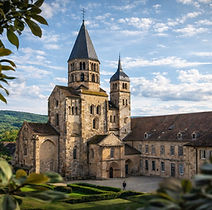
The abbey's influence extended far beyond its walls, shaping a charming medieval town that thrives at the foot of its spiritual fortresses.

The Romanesque houses of the town: Cluny boasts the highest concentration of Romanesque houses in Europe. Strolling along Rue d'Avril or Rue de la République, admire the stone facades adorned with arched windows and 12th-century sculpted decorations.

The Cheese Tower and the panorama: Formerly a watchtower on the abbey's ramparts, it offers, after climbing its steps, a breathtaking panoramic view of the monastery structures, the rooftops of the town, and the rolling hills of the Cluniac landscape.

The Cluny National Stud Farm: Established by Napoleon I in 1806 on the abbey's land, this historic stud farm bears witness to another local tradition. Its brick and stone stables house thoroughbred horses, equestrian shows and perpetuate the art of carriage driving in the heart of the city.

Cluny Abbey

The Maior Ecclesia, the vertigo of medieval excess

The picturesque heart of Collioure beats in the old fishermen's and sailors' quarter.

The Fauvist Facades: The steep, bougainvillea-lined alleyways display vibrant colors (ochre, pink, blue), the very same colors that inspired Matisse and Derain at the beginning of the 20th century.

The Fauvist Trail: An open-air route allows visitors to discover reproductions of famous paintings placed exactly where the artists set up their easels, creating a dialogue between art and reality.

Artists' Studios: Even today, numerous galleries and artisan workshops fill the vaulted ground floors, perpetuating the village's creative tradition.

Collioure

The Church of Our Lady of the Angels, Feet in the Water

Colmar's historic center is a living catalog of medieval and Renaissance architecture.

The Pfister House: A 16th-century gem, this is the first Renaissance-style house in Colmar. With its carved wooden gallery and murals, it symbolizes the bourgeois refinement of the era.

The House of Heads: An architectural curiosity adorned with 106 grimacing heads and masks, it testifies to the Renaissance taste for the unusual and the grotesque.

The Koïfhus (Old Customs House): The oldest public building in the city, recognizable by its colorful glazed tile roof, it was once the beating heart of regional commercial activity.

Colmar

Little Venice and the Market Gardeners' Quarter

The Concarneau coastline offers a diverse range of seascapes, from rocky coves to vast stretches of fine sand.

Plage des Sables Blancs (White Sands Beach): The most famous beach, nestled in a sheltered cove, is ideal for family swimming and water sports such as paddleboarding and windsurfing.

The GR34 (Long-Distance Hiking Trail): This coastal path winds along the shore, offering breathtaking views of the Glénan archipelago in the distance.

La Corniche (The Corniche): A landscaped promenade connecting the town center to the beaches, popular with walkers and cyclists for its spectacular sunsets over the Atlantic.

Concarneau

The Walled City: A Heart of Stone on the Water

  • 32
    Page 9
bottom of page