top of page

Uzès and the Pont du Gard

Just a 15-minute drive from Uzès, the Pont du Gard rises majestically over the Gardon River. It is the most spectacular section of a 50-kilometer-long Roman aqueduct, built in the 1st century AD to supply water to the city of Nîmes.

Monumental Architecture on Three Levels: Reaching a height of nearly 49 meters, this giant is the tallest known aqueduct bridge from the Roman world. It features three tiers of superimposed arches of surgical regularity and aesthetic precision, constructed entirely dry (without mortar) using blocks of local limestone weighing up to six tons.

The Upper Channel and the Hiking Trail: The third level of the bridge houses the channel through which the water once flowed. Exclusive guided tours allow visitors to walk through this ancient conduit and understand the topographical genius of the Romans, who managed to maintain a gradient of only 12 meters along the entire 50-kilometer route.

The Site's Museum Space: On the left bank, a modern and interactive high-tech interpretation center offers large-scale models, projections and virtual reconstructions to immerse oneself in Roman daily life and the history of the construction of this stone colossus.

In the heart of the Gard department, in the Occitanie region, lies a perfectly harmonious tourist duo: Uzès and the Pont du Gard. The first duchy of France, Uzès is a haven of architectural elegance where the golden limestone glows under the Mediterranean sun. Just a few kilometers away, the Pont du Gard, a colossus of Roman antiquity and a UNESCO World Heritage Site, defies time above the emerald waters of the Gardon River. Together, the ducal city and the stone giant tell the story of two thousand years of history, engineering, and the art of living. Between the splendor of its shaded squares, the majesty of its Roman ruins, the poetry of its garrigue landscapes, and the delights of its sun-drenched local produce, this destination, a true ode to travelers, is a hymn to refinement and the gentle Provençal way of life.

The Duchy of Uzès, the Shining Heart of the Royal City

Nicknamed the "First Duchy of France," Uzès boasts a perfectly preserved historic center dominated by the monumental Château des Ducs, inhabited by the same family for over a thousand years.

The Château du Duché, a Historical Summary: This spectacular building is striking for the layering of architectural styles on its façade. It blends the medieval style of its keep, the Renaissance style of its main building (designed according to the classical principles of Philibert Delorme), and the classicism of the 17th century, offering a vivid interpretation of French history.

The Bermonde Tower (12th century): This is the castle's proud fortified keep. Climbing its narrow steps leads to a top platform offering a breathtaking 360° panoramic view of the Roman tile roofs of the old town, the garrigue hills, and the Alzon Valley.

The Three Towers of the Uzès Silhouette: Besides the Bermonde tower, the unique silhouette of Uzès is punctuated by two other majestic medieval towers: the King's Tower and the Bishop's Tower, which recall the historical sharing of power in the city during the Middle Ages.

Just a 15-minute drive from Uzès, the Pont du Gard rises majestically over the Gardon River. It is the most spectacular section of a 50-kilometer-long Roman aqueduct, built in the 1st century AD to supply water to the city of Nîmes.

Monumental Architecture on Three Levels: Reaching a height of nearly 49 meters, this giant is the tallest known aqueduct bridge from the Roman world. It features three tiers of superimposed arches of surgical regularity and aesthetic precision, constructed entirely dry (without mortar) using blocks of local limestone weighing up to six tons.

The Upper Channel and the Hiking Trail: The third level of the bridge houses the channel through which the water once flowed. Exclusive guided tours allow visitors to walk through this ancient conduit and understand the topographical genius of the Romans, who managed to maintain a gradient of only 12 meters along the entire 50-kilometer route.

The Site's Museum Space: On the left bank, a modern and interactive high-tech interpretation center offers large-scale models, projections and virtual reconstructions to immerse oneself in Roman daily life and the history of the construction of this stone colossus.
Just a 15-minute drive from Uzès, the Pont du Gard rises majestically over the Gardon River. It is the most spectacular section of a 50-kilometer-long Roman aqueduct, built in the 1st century AD to supply water to the city of Nîmes.

Monumental Architecture on Three Levels: Reaching a height of nearly 49 meters, this giant is the tallest known aqueduct bridge from the Roman world. It features three tiers of superimposed arches of surgical regularity and aesthetic precision, constructed entirely dry (without mortar) using blocks of local limestone weighing up to six tons.

The Upper Channel and the Hiking Trail: The third level of the bridge houses the channel through which the water once flowed. Exclusive guided tours allow visitors to walk through this ancient conduit and understand the topographical genius of the Romans, who managed to maintain a gradient of only 12 meters along the entire 50-kilometer route.

The Site's Museum Space: On the left bank, a modern and interactive high-tech interpretation center offers large-scale models, projections and virtual reconstructions to immerse oneself in Roman daily life and the history of the construction of this stone colossus.
Just a 15-minute drive from Uzès, the Pont du Gard rises majestically over the Gardon River. It is the most spectacular section of a 50-kilometer-long Roman aqueduct, built in the 1st century AD to supply water to the city of Nîmes.

Monumental Architecture on Three Levels: Reaching a height of nearly 49 meters, this giant is the tallest known aqueduct bridge from the Roman world. It features three tiers of superimposed arches of surgical regularity and aesthetic precision, constructed entirely dry (without mortar) using blocks of local limestone weighing up to six tons.

The Upper Channel and the Hiking Trail: The third level of the bridge houses the channel through which the water once flowed. Exclusive guided tours allow visitors to walk through this ancient conduit and understand the topographical genius of the Romans, who managed to maintain a gradient of only 12 meters along the entire 50-kilometer route.

The Site's Museum Space: On the left bank, a modern and interactive high-tech interpretation center offers large-scale models, projections and virtual reconstructions to immerse oneself in Roman daily life and the history of the construction of this stone colossus.

The Place aux Herbes and the Labyrinth of Private Mansions

Just a 15-minute drive from Uzès, the Pont du Gard rises majestically over the Gardon River. It is the most spectacular section of a 50-kilometer-long Roman aqueduct, built in the 1st century AD to supply water to the city of Nîmes.

Monumental Architecture on Three Levels: Reaching a height of nearly 49 meters, this giant is the tallest known aqueduct bridge from the Roman world. It features three tiers of superimposed arches of surgical regularity and aesthetic precision, constructed entirely dry (without mortar) using blocks of local limestone weighing up to six tons.

The Upper Channel and the Hiking Trail: The third level of the bridge houses the channel through which the water once flowed. Exclusive guided tours allow visitors to walk through this ancient conduit and understand the topographical genius of the Romans, who managed to maintain a gradient of only 12 meters along the entire 50-kilometer route.

The Site's Museum Space: On the left bank, a modern and interactive high-tech interpretation center offers large-scale models, projections and virtual reconstructions to immerse oneself in Roman daily life and the history of the construction of this stone colossus.

The charm of Uzès works its magic instantly as you wander its cobbled pedestrian streets and plane tree-shaded squares, where a hint of Italy lingers in the air.

The Place aux Herbes, a hub of conviviality: Lined with magnificent 17th- and 18th-century arcaded houses, this central square is the beating heart of Uzès. Its central fountain murmurs in the cool shade of the plane trees, welcoming café terraces and strollers year-round.

The Uzès Market, a Southern French Institution: On Saturday mornings, the Place aux Herbes comes alive with its famous traditional market, renowned as one of the most beautiful in all of Southern France. The stalls overflow with colors and aromas: olives, Provençal herbs, glazed pottery, and Provençal fabrics.

The Private Mansions of the 17th Century: By wandering through the cobbled streets (rue de la République, rue Saint-Étienne), the traveler discovers magnificent residences of the nobles of the robe and merchant class, equipped with heavy carriage doors, chiseled mullioned windows and secret inner courtyards of classical elegance.

Just a 15-minute drive from Uzès, the Pont du Gard rises majestically over the Gardon River. It is the most spectacular section of a 50-kilometer-long Roman aqueduct, built in the 1st century AD to supply water to the city of Nîmes.

Monumental Architecture on Three Levels: Reaching a height of nearly 49 meters, this giant is the tallest known aqueduct bridge from the Roman world. It features three tiers of superimposed arches of surgical regularity and aesthetic precision, constructed entirely dry (without mortar) using blocks of local limestone weighing up to six tons.

The Upper Channel and the Hiking Trail: The third level of the bridge houses the channel through which the water once flowed. Exclusive guided tours allow visitors to walk through this ancient conduit and understand the topographical genius of the Romans, who managed to maintain a gradient of only 12 meters along the entire 50-kilometer route.

The Site's Museum Space: On the left bank, a modern and interactive high-tech interpretation center offers large-scale models, projections and virtual reconstructions to immerse oneself in Roman daily life and the history of the construction of this stone colossus.

The Pont du Gard, the Absolute Masterpiece of Roman Engineering

Just a 15-minute drive from Uzès, the Pont du Gard rises majestically over the Gardon River. It is the most spectacular section of a 50-kilometer-long Roman aqueduct, built in the 1st century AD to supply water to the city of Nîmes.

Monumental Architecture on Three Levels: Reaching a height of nearly 49 meters, this giant is the tallest known aqueduct bridge from the Roman world. It features three tiers of superimposed arches of surgical regularity and aesthetic precision, constructed entirely dry (without mortar) using blocks of local limestone weighing up to six tons.

The Upper Channel and the Hiking Trail: The third level of the bridge houses the channel through which the water once flowed. Exclusive guided tours allow visitors to walk through this ancient conduit and understand the topographical genius of the Romans, who managed to maintain a gradient of only 12 meters along the entire 50-kilometer route.

The Site's Museum Space: On the left bank, a modern and interactive high-tech interpretation center offers large-scale models, projections and virtual reconstructions to immerse oneself in Roman daily life and the history of the construction of this stone colossus.

Just a 15-minute drive from Uzès, the Pont du Gard rises majestically over the Gardon River. It is the most spectacular section of a 50-kilometer-long Roman aqueduct, built in the 1st century AD to supply water to the city of Nîmes.

Monumental Architecture on Three Levels: Reaching a height of nearly 49 meters, this giant is the tallest known aqueduct bridge from the Roman world. It features three tiers of superimposed arches of surgical regularity and aesthetic precision, constructed entirely dry (without mortar) using blocks of local limestone weighing up to six tons.

The Upper Channel and the Hiking Trail: The third level of the bridge houses the channel through which the water once flowed. Exclusive guided tours allow visitors to walk through this ancient conduit and understand the topographical genius of the Romans, who managed to maintain a gradient of only 12 meters along the entire 50-kilometer route.

The Site's Museum Space: On the left bank, a modern and interactive high-tech interpretation center offers large-scale models, projections and virtual reconstructions to immerse oneself in Roman daily life and the history of the construction of this stone colossus.

The Eure Valley and the Wild Nature of the Gardon

Uzès and the Pont du Gard flourish in the heart of a pristine, wild natural environment, shaped by water and Mediterranean vegetation.

The Eure Valley, the Cradle of Water: Located at the foot of Uzès, this verdant and cool valley shelters the sources of the Eure River, the starting point of the Roman aqueduct. It is a bucolic park shaded by centuries-old poplars and plane trees, ideal for a peaceful stroll along the banks of clear streams.

The Gorges du Gardon, a Hiking Paradise: The Gardon River has carved spectacular white limestone cliffs near the bridge. Designated a biosphere reserve, its gorges can be explored on foot via marked trails amidst thyme and rosemary, or by canoe or kayak to pass directly under the magnificent arches of the Pont du Gard.

The Garrigue Memories Trail: Located on the Pont du Gard site, this 15-hectare open-air trail allows you to discover the history of the Mediterranean landscape, ancient agriculture (olive trees, vines, cereals) and the dry stone architecture (capitelles) typical of the region.
Just a 15-minute drive from Uzès, the Pont du Gard rises majestically over the Gardon River. It is the most spectacular section of a 50-kilometer-long Roman aqueduct, built in the 1st century AD to supply water to the city of Nîmes.

Monumental Architecture on Three Levels: Reaching a height of nearly 49 meters, this giant is the tallest known aqueduct bridge from the Roman world. It features three tiers of superimposed arches of surgical regularity and aesthetic precision, constructed entirely dry (without mortar) using blocks of local limestone weighing up to six tons.

The Upper Channel and the Hiking Trail: The third level of the bridge houses the channel through which the water once flowed. Exclusive guided tours allow visitors to walk through this ancient conduit and understand the topographical genius of the Romans, who managed to maintain a gradient of only 12 meters along the entire 50-kilometer route.

The Site's Museum Space: On the left bank, a modern and interactive high-tech interpretation center offers large-scale models, projections and virtual reconstructions to immerse oneself in Roman daily life and the history of the construction of this stone colossus.

Flavors of Uzège: Black Truffles, Potters and Sweet Treats of Provence

The art of living between Uzès and the Pont du Gard is intensely savored at the table and appreciated through internationally renowned craftsmanship.

The Black Diamond: The Uzès Truffle: Uzès is one of the capitals of truffle cultivation in France. In January, the village celebrates the black truffle (Tuber melanosporum). Local restaurants showcase this black diamond in creamy scrambled eggs, fragrant oils, and exquisite gourmet dishes.

The Pottery of Saint-Quentin-la-Poterie: A few kilometers from Uzès, this pottery village, designated a "City and Crafts," has perpetuated a ceramic tradition since the 14th century. Its art galleries and workshops unveil contemporary creations and traditional glazed pottery in the warm colors of the South of France.

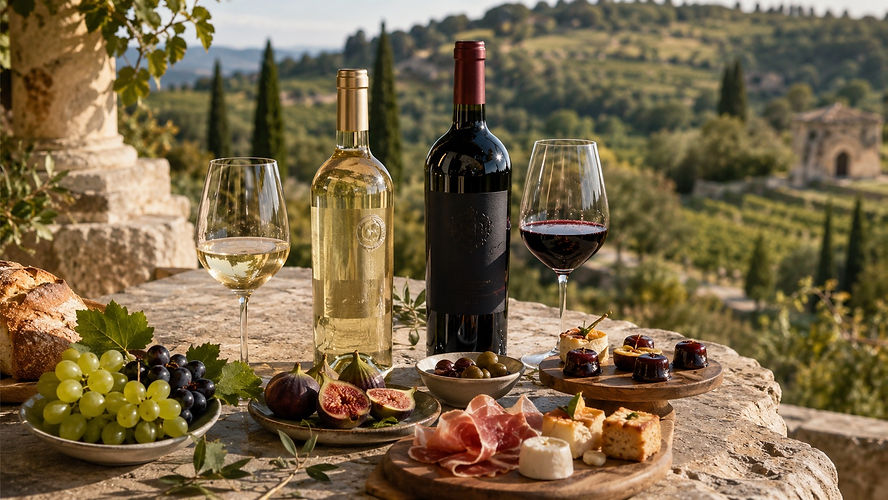
Duché d'Uzès Wines (AOC) and Sweet Treats: The sun-drenched hills of the Uzège region are home to exceptional vineyards. Meals are ideally complemented by Duché d'Uzès AOC wines (full-bodied reds with notes of garrigue, and fresh, mineral whites). For a sweet touch, indulge in the famous candies from the Haribo confectionery company, whose historical museum is located in Uzès itself.

Conclusion

Uzès and the Pont du Gard form a magnificent tourist destination, a charming and historic stopover that captivates every traveler with its aesthetic and spiritual power. By successfully combining the elegant, golden architecture of its first French duchy, the temporal and monumental challenge of its Roman giant spanning the Gardon River, the wild serenity of its limestone gorges, and the vibrant culinary scene of its Place aux Herbes market, this region of Uzège offers a complete travel experience. Whether one comes to admire the Renaissance influence on the ducal facades, paddle a canoe under two-thousand-year-old arches at sunset, or savor a wine from the duchy beneath the plane trees, Uzès and the Pont du Gard leave an indelible memory of a luminous, welcoming, and timeless escape to the heart of southern France.

Destination Pays d'Uzès Pont du Gard - Uzès Office

Information Regarding Visuals: This website uses computer-generated images and illustrations created by artificial intelligence for atmospheric and stylistic purposes. These representations are not actual photographs and are strictly non-binding.

bottom of page