top of page

Turenne

The lower village of Turenne winds around the rocky spur. Entirely pedestrianized, it invites you to lose yourself in its old-fashioned cobbled streets.

The Chemin des Commings and the Medieval Stalls: As you wander through these winding alleyways, you'll notice curious openings on the ground floor of the houses: wide, horizontal stone slabs that served as stalls for cloth merchants, tanners, and blacksmiths during the great free fairs of the Middle Ages.

The Lauze and Slate Roofs of Corrèze: Turenne's charm also lies in the texture of its roofs. The steeply pitched roofs alternate between traditional limestone slabs, heavy and protective, and dark slate from Corrèze, creating a patchwork of textures that shift in the light.

The Market Square: The convivial heart of the lower town, this square once hosted the covered market and gatherings of the town's bourgeoisie. Lined with half-timbered houses and charming artisan shops, its shaded terraces invite contemplation.

Perched with dramatic nobility on an isolated limestone spur in the middle of a verdant valley, Turenne is a fairytale vision. Located in the Corrèze department of the Nouvelle-Aquitaine region, this gem of art and history is officially listed among the Most Beautiful Villages of France. While its white stone silhouette and slate roofs captivate the eye, it is its extraordinary past that truly stirs the soul: for over seven centuries, Turenne was the capital of a sovereign viscounty, a veritable "state within a state," exempt from taxes and owing allegiance only to itself. Between the raw power of its suspended medieval remains, the Renaissance elegance of its princely officials' mansions, and its bucolic charm, this Limousin eagle's nest promises a timeless journey of rare refinement.

The Viscounts' Castle, the Sentinel of the Sovereign State

Crowning the hilltop, the fortified castle of Turenne stands as a symbol of the past power of an indomitable dynasty. Sold to the French Crown in 1738 to settle the debts of the last viscount, it was largely dismantled, but its remains are nonetheless monumental.

Caesar's Tower (13th century): The only surviving circular keep of the fortress, this massive watchtower defied anyone approaching the viscounty's border. Climbing its narrow stone staircase leads to a top platform offering a breathtaking 360° panorama of the hills of the Corrèze, Lot, and neighboring Dordogne regions.

The Treasury Tower (14th century): Formerly a square guardroom, this tower once housed the archives, charters of privileges, and the lords' treasury. Its magnificent pointed arches now host historical exhibitions recounting the great moments of Turenne's independence.

The Hanging Garden of the Ruins: The former perimeter of the lord's high court has given way to a magnificent pleasure garden. Strolling among the rose beds, clipped boxwood, and lilies, visitors enjoy natural views overlooking the village's pointed rooftops below.

The lower village of Turenne winds around the rocky spur. Entirely pedestrianized, it invites you to lose yourself in its old-fashioned cobbled streets.

The Chemin des Commings and the Medieval Stalls: As you wander through these winding alleyways, you'll notice curious openings on the ground floor of the houses: wide, horizontal stone slabs that served as stalls for cloth merchants, tanners, and blacksmiths during the great free fairs of the Middle Ages.

The Lauze and Slate Roofs of Corrèze: Turenne's charm also lies in the texture of its roofs. The steeply pitched roofs alternate between traditional limestone slabs, heavy and protective, and dark slate from Corrèze, creating a patchwork of textures that shift in the light.

The Market Square: The convivial heart of the lower town, this square once hosted the covered market and gatherings of the town's bourgeoisie. Lined with half-timbered houses and charming artisan shops, its shaded terraces invite contemplation.
The lower village of Turenne winds around the rocky spur. Entirely pedestrianized, it invites you to lose yourself in its old-fashioned cobbled streets.

The Chemin des Commings and the Medieval Stalls: As you wander through these winding alleyways, you'll notice curious openings on the ground floor of the houses: wide, horizontal stone slabs that served as stalls for cloth merchants, tanners, and blacksmiths during the great free fairs of the Middle Ages.

The Lauze and Slate Roofs of Corrèze: Turenne's charm also lies in the texture of its roofs. The steeply pitched roofs alternate between traditional limestone slabs, heavy and protective, and dark slate from Corrèze, creating a patchwork of textures that shift in the light.

The Market Square: The convivial heart of the lower town, this square once hosted the covered market and gatherings of the town's bourgeoisie. Lined with half-timbered houses and charming artisan shops, its shaded terraces invite contemplation.
The lower village of Turenne winds around the rocky spur. Entirely pedestrianized, it invites you to lose yourself in its old-fashioned cobbled streets.

The Chemin des Commings and the Medieval Stalls: As you wander through these winding alleyways, you'll notice curious openings on the ground floor of the houses: wide, horizontal stone slabs that served as stalls for cloth merchants, tanners, and blacksmiths during the great free fairs of the Middle Ages.

The Lauze and Slate Roofs of Corrèze: Turenne's charm also lies in the texture of its roofs. The steeply pitched roofs alternate between traditional limestone slabs, heavy and protective, and dark slate from Corrèze, creating a patchwork of textures that shift in the light.

The Market Square: The convivial heart of the lower town, this square once hosted the covered market and gatherings of the town's bourgeoisie. Lined with half-timbered houses and charming artisan shops, its shaded terraces invite contemplation.

The Upper Town, the Officers' Palace and the Mint

The lower village of Turenne winds around the rocky spur. Entirely pedestrianized, it invites you to lose yourself in its old-fashioned cobbled streets.

The Chemin des Commings and the Medieval Stalls: As you wander through these winding alleyways, you'll notice curious openings on the ground floor of the houses: wide, horizontal stone slabs that served as stalls for cloth merchants, tanners, and blacksmiths during the great free fairs of the Middle Ages.

The Lauze and Slate Roofs of Corrèze: Turenne's charm also lies in the texture of its roofs. The steeply pitched roofs alternate between traditional limestone slabs, heavy and protective, and dark slate from Corrèze, creating a patchwork of textures that shift in the light.

The Market Square: The convivial heart of the lower town, this square once hosted the covered market and gatherings of the town's bourgeoisie. Lined with half-timbered houses and charming artisan shops, its shaded terraces invite contemplation.

Descending from the castle along steep paths, one enters the quarter of high-ranking officials, lawyers, and nobles who formed the heart of the princely administration.

The Mint (16th century): A striking testament to Turenne's sovereign status, this fortified building housed the mint where the viscounts struck their own coins, an absolute royal privilege. Its façade boasts superb mullioned windows and a tall polygonal stair tower.

The Hôtel des Miremont and the Watchtowers: This urban palace impresses with its classical majesty and its white limestone architecture. Its corner turrets, perched on the cliffside, serve as a reminder that every residence in the upper town had to contribute to the overall defense of the city.

The Mauriolles Gate: The only remaining fortified gate of the inner enclosure, this massive stone arch served as a control gate between the high aristocracy of the castle and the people of artisans settled at the foot of the rock.
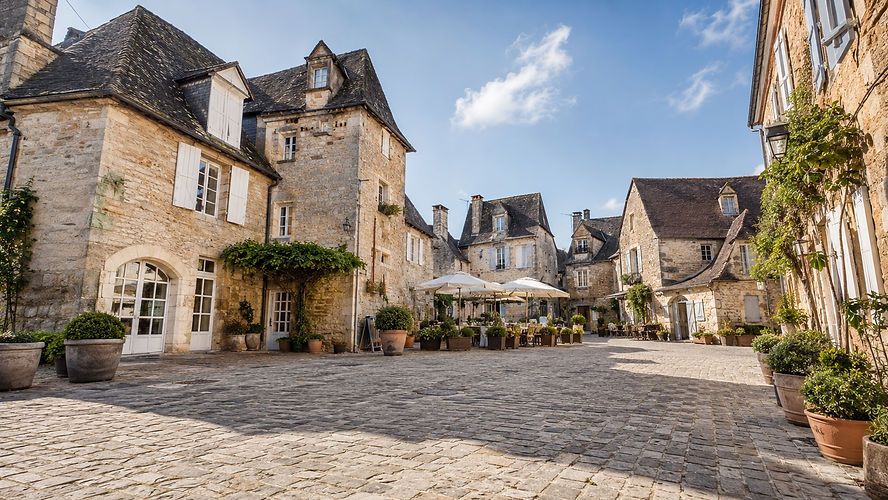
The lower village of Turenne winds around the rocky spur. Entirely pedestrianized, it invites you to lose yourself in its old-fashioned cobbled streets.

The Chemin des Commings and the Medieval Stalls: As you wander through these winding alleyways, you'll notice curious openings on the ground floor of the houses: wide, horizontal stone slabs that served as stalls for cloth merchants, tanners, and blacksmiths during the great free fairs of the Middle Ages.

The Lauze and Slate Roofs of Corrèze: Turenne's charm also lies in the texture of its roofs. The steeply pitched roofs alternate between traditional limestone slabs, heavy and protective, and dark slate from Corrèze, creating a patchwork of textures that shift in the light.

The Market Square: The convivial heart of the lower town, this square once hosted the covered market and gatherings of the town's bourgeoisie. Lined with half-timbered houses and charming artisan shops, its shaded terraces invite contemplation.

A stroll through the Labyrinth of Alleyways and the Lower Town

The lower village of Turenne winds around the rocky spur. Entirely pedestrianized, it invites you to lose yourself in its old-fashioned cobbled streets.

The Chemin des Commings and the Medieval Stalls: As you wander through these winding alleyways, you'll notice curious openings on the ground floor of the houses: wide, horizontal stone slabs that served as stalls for cloth merchants, tanners, and blacksmiths during the great free fairs of the Middle Ages.

The Lauze and Slate Roofs of Corrèze: Turenne's charm also lies in the texture of its roofs. The steeply pitched roofs alternate between traditional limestone slabs, heavy and protective, and dark slate from Corrèze, creating a patchwork of textures that shift in the light.

The Market Square: The convivial heart of the lower town, this square once hosted the covered market and gatherings of the town's bourgeoisie. Lined with half-timbered houses and charming artisan shops, its shaded terraces invite contemplation.

The lower village of Turenne winds around the rocky spur. Entirely pedestrianized, it invites you to lose yourself in its old-fashioned cobbled streets.

The Chemin des Commings and the Medieval Stalls: As you wander through these winding alleyways, you'll notice curious openings on the ground floor of the houses: wide, horizontal stone slabs that served as stalls for cloth merchants, tanners, and blacksmiths during the great free fairs of the Middle Ages.

The Lauze and Slate Roofs of Corrèze: Turenne's charm also lies in the texture of its roofs. The steeply pitched roofs alternate between traditional limestone slabs, heavy and protective, and dark slate from Corrèze, creating a patchwork of textures that shift in the light.

The Market Square: The convivial heart of the lower town, this square once hosted the covered market and gatherings of the town's bourgeoisie. Lined with half-timbered houses and charming artisan shops, its shaded terraces invite contemplation.

The Collegiate Church of Notre-Dame and the Spiritual Heritage

In the 17th century, religious fervor in Turenne was expressed through the construction of highly theatrical monuments, largely financed by the local bourgeoisie.

The Collegiate Church of Notre-Dame-Saint-Pantaléon (17th century): Built thanks to the generosity of the inhabitants to thank the Virgin Mary for sparing the town from an epidemic, this church is striking for its impressive size. Its luminous nave is surmounted by a superb rectangular bell tower-porch that overlooks the valley.

The Sumptuous Baroque Altarpiece: An absolute masterpiece of Limousin sacred art, the carved and gilded wooden altarpiece in the choir (1675) is of unparalleled splendor. Adorned with twisted columns, statues of saints, and cherubs, it is magnificently illuminated by the sun's rays streaming through the tall windows.

The Capuchin Chapel: Formerly a convent dedicated to the Counter-Reformation, this small, discreet chapel retains an atmosphere of peace and absolute sobriety, contrasting with the baroque splendor of the neighboring collegiate church.

The lower village of Turenne winds around the rocky spur. Entirely pedestrianized, it invites you to lose yourself in its old-fashioned cobbled streets.

The Chemin des Commings and the Medieval Stalls: As you wander through these winding alleyways, you'll notice curious openings on the ground floor of the houses: wide, horizontal stone slabs that served as stalls for cloth merchants, tanners, and blacksmiths during the great free fairs of the Middle Ages.

The Lauze and Slate Roofs of Corrèze: Turenne's charm also lies in the texture of its roofs. The steeply pitched roofs alternate between traditional limestone slabs, heavy and protective, and dark slate from Corrèze, creating a patchwork of textures that shift in the light.

The Market Square: The convivial heart of the lower town, this square once hosted the covered market and gatherings of the town's bourgeoisie. Lined with half-timbered houses and charming artisan shops, its shaded terraces invite contemplation.

Local Flavors of Corrèze and Delicacies of the Vicomté

The art of living in Turenne is best savored at the table, where Limousin tradition meets the gourmet influences of neighboring Périgord and Quercy.

Candelou and Valley Truffles: A star of local tables, candelou is a specialty of warm goat cheese marinated in honey and wild herbs from the limestone hills. The region also boasts the black diamond: the Périgord truffle, which thrives at the foot of the valley's oak trees.

Mique Landaise, Confit, and Chestnuts: In the traditional inns at the foot of the rock, one can enjoy an authentic mique (leavened bread cooked in pot-au-feu broth), accompanied by meltingly tender duck confit, wild ceps, and blanched chestnuts, the emblematic fruit of Corrèze.

Straw Wine and Brive Violet Mustard: To accompany these feasts, local winemakers offer tastings of Corrèze Straw Wine, a rare sweet nectar obtained by drying grapes on beds of straw. The charcuterie platters are enhanced with a touch of Brive violet mustard, flavored with red grape must.

Conclusion

Turenne is a magnificent tourist destination, a charming and historic stopover that suspends the flow of time to enchant the traveler. By achieving the remarkable feat of blending the geometric strength of its Caesar's Tower with the Renaissance elegance of its Mint buildings, the mystical poetry of its Baroque altarpiece, and the convivial culinary delights of its exceptional local produce, this former sovereign republic asserts an extraordinary personality. Whether one comes to capture the golden light setting over the Limousin hills from its hanging gardens, lose oneself in the cool shade of its medieval alleyways, or savor a glass of straw wine on a terrace, Turenne leaves a luminous, warm, and forever unforgettable impression on the heart of French heritage.

Brive Agglomeration Tourist Office - Turenne Office

Information Regarding Visuals: This website uses computer-generated images and illustrations created by artificial intelligence for atmospheric and stylistic purposes. These representations are not actual photographs and are strictly non-binding.

bottom of page