top of page

Sens

The heart of Sens, encircled by wide, tree-lined boulevards that replaced the old medieval ramparts, invites you on a bucolic stroll through the centuries.

The House of Abraham (16th Century): Located at the corner of Rue de la République and Rue Jean Cousin, this sumptuous half-timbered house is the city's civic jewel. Its oak corner post is entirely carved with a Tree of Jesse representing the genealogy of Christ, a masterpiece of Renaissance craftsmanship.

The Labyrinth of Private Mansions: Wandering the cobbled streets, visitors discover magnificent bourgeois residences from the 17th and 18th centuries, built of brick and tufa stone, with heavy wrought-iron carriage gates that open onto secret winter gardens.

The Covered Market (La Halle Baltard): Opposite the cathedral, this superb 19th-century Baltard-style market hall, blending cast iron, brick, and glass, comes alive every week. It is the vibrant heart of Sens' convivial atmosphere, where local producers share their love of their land.

A majestic gateway to Burgundy, nestled in the Yonne department, Sens is a royal city with a monumental past and understated elegance. Proudly situated on the banks of the Yonne River, this former Gallo-Roman metropolis became, in the Middle Ages, the beating heart of a vast archbishopric that included Paris itself. The undisputed cradle of European Gothic architecture, Sens has preserved an exceptionally rich heritage from its princely history. Between the luminous whiteness of its pioneering cathedral, the splendor of its archbishop's palaces, the verdant parks, and the delights of its local produce, the city of Sens promises a rare and refined escape from the tourist crowds.

Saint-Étienne Cathedral, the World Cradle of Gothic Art

Dominating the city with its colossal silhouette, Sens Cathedral is a monument of paramount historical importance: it is historically the very first great Gothic cathedral in France and the world.

The First Impetus of the Ribbed Vault: Begun around 1130 by Archbishop Henri Sanglier, even before Notre-Dame de Paris or Chartres Cathedral, it revolutionized architecture. The pioneering use of the ribbed vault allowed for the opening of the walls to let in light, initiating the transition from the Romanesque gloom to the Gothic luminosity.

Exceptional Medieval Stained Glass Windows: The sanctuary is illuminated by a collection of stained glass windows spanning the 12th to the 16th centuries. The absolute masterpiece remains the stained-glass window of Saint Thomas Becket (Archbishop of Canterbury who took refuge in Sens), which recounts his life with vibrant colors and exquisite detail.

The Cathedral Treasury: Ranked among the richest in Europe, along with those of Conques and Aachen, the Sens Treasury contains priceless pieces: 15th-century tapestries, gold reliquaries, precious ivories, and the authentic silk liturgical vestments of Thomas Becket.

The heart of Sens, encircled by wide, tree-lined boulevards that replaced the old medieval ramparts, invites you on a bucolic stroll through the centuries.

The House of Abraham (16th Century): Located at the corner of Rue de la République and Rue Jean Cousin, this sumptuous half-timbered house is the city's civic jewel. Its oak corner post is entirely carved with a Tree of Jesse representing the genealogy of Christ, a masterpiece of Renaissance craftsmanship.

The Labyrinth of Private Mansions: Wandering the cobbled streets, visitors discover magnificent bourgeois residences from the 17th and 18th centuries, built of brick and tufa stone, with heavy wrought-iron carriage gates that open onto secret winter gardens.

The Covered Market (La Halle Baltard): Opposite the cathedral, this superb 19th-century Baltard-style market hall, blending cast iron, brick, and glass, comes alive every week. It is the vibrant heart of Sens' convivial atmosphere, where local producers share their love of their land.
The heart of Sens, encircled by wide, tree-lined boulevards that replaced the old medieval ramparts, invites you on a bucolic stroll through the centuries.

The House of Abraham (16th Century): Located at the corner of Rue de la République and Rue Jean Cousin, this sumptuous half-timbered house is the city's civic jewel. Its oak corner post is entirely carved with a Tree of Jesse representing the genealogy of Christ, a masterpiece of Renaissance craftsmanship.

The Labyrinth of Private Mansions: Wandering the cobbled streets, visitors discover magnificent bourgeois residences from the 17th and 18th centuries, built of brick and tufa stone, with heavy wrought-iron carriage gates that open onto secret winter gardens.

The Covered Market (La Halle Baltard): Opposite the cathedral, this superb 19th-century Baltard-style market hall, blending cast iron, brick, and glass, comes alive every week. It is the vibrant heart of Sens' convivial atmosphere, where local producers share their love of their land.
The heart of Sens, encircled by wide, tree-lined boulevards that replaced the old medieval ramparts, invites you on a bucolic stroll through the centuries.

The House of Abraham (16th Century): Located at the corner of Rue de la République and Rue Jean Cousin, this sumptuous half-timbered house is the city's civic jewel. Its oak corner post is entirely carved with a Tree of Jesse representing the genealogy of Christ, a masterpiece of Renaissance craftsmanship.

The Labyrinth of Private Mansions: Wandering the cobbled streets, visitors discover magnificent bourgeois residences from the 17th and 18th centuries, built of brick and tufa stone, with heavy wrought-iron carriage gates that open onto secret winter gardens.

The Covered Market (La Halle Baltard): Opposite the cathedral, this superb 19th-century Baltard-style market hall, blending cast iron, brick, and glass, comes alive every week. It is the vibrant heart of Sens' convivial atmosphere, where local producers share their love of their land.

The Museums of Sens and the Synodal Palace
The heart of Sens, encircled by wide, tree-lined boulevards that replaced the old medieval ramparts, invites you on a bucolic stroll through the centuries.

The House of Abraham (16th Century): Located at the corner of Rue de la République and Rue Jean Cousin, this sumptuous half-timbered house is the city's civic jewel. Its oak corner post is entirely carved with a Tree of Jesse representing the genealogy of Christ, a masterpiece of Renaissance craftsmanship.

The Labyrinth of Private Mansions: Wandering the cobbled streets, visitors discover magnificent bourgeois residences from the 17th and 18th centuries, built of brick and tufa stone, with heavy wrought-iron carriage gates that open onto secret winter gardens.

The Covered Market (La Halle Baltard): Opposite the cathedral, this superb 19th-century Baltard-style market hall, blending cast iron, brick, and glass, comes alive every week. It is the vibrant heart of Sens' convivial atmosphere, where local producers share their love of their land.

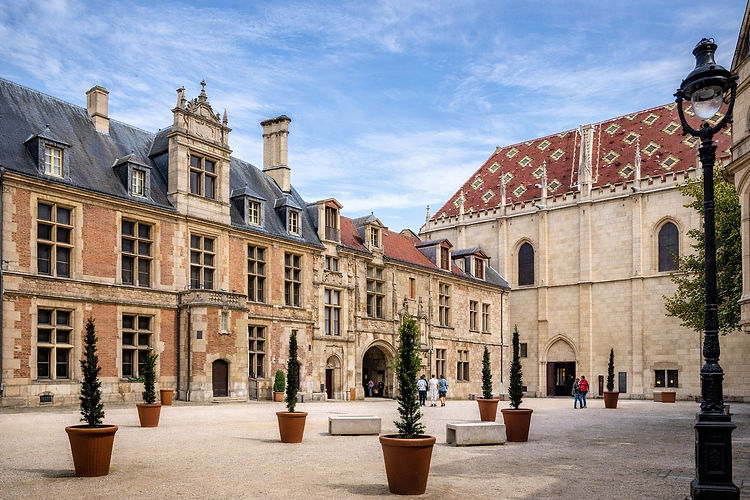
Adjoining the cathedral, the former archbishops' complex forms a monumental architectural ensemble that now houses the city's rich museums.

The Synodal Palace and its Polychrome Roofs: A masterpiece of 13th-century Gothic civil architecture, this palace impresses with its large mullioned windows and polychrome glazed tiles that create typically Burgundian geometric patterns. Its large synodal hall, where councils were held, boasts magnificent vaulted ceilings.

The Impressive Gallo-Roman Collections: Sens (ancient Agedincum) was one of the wealthiest cities of Roman Gaul. The museum's cellars reveal a collection unique in France: engraved funerary stelae, monumental mosaics in pristine condition, and the reconstructed remains of highly sophisticated Roman baths.

The Art Collection and the Marrey Donation: The museum's floors housed masterpieces of painting and sculpture, complemented by the prestigious Jean Marrey donation, which brought together works by Flemish painters and bronzes by Auguste Rodin.

The heart of Sens, encircled by wide, tree-lined boulevards that replaced the old medieval ramparts, invites you on a bucolic stroll through the centuries.

The House of Abraham (16th Century): Located at the corner of Rue de la République and Rue Jean Cousin, this sumptuous half-timbered house is the city's civic jewel. Its oak corner post is entirely carved with a Tree of Jesse representing the genealogy of Christ, a masterpiece of Renaissance craftsmanship.

The Labyrinth of Private Mansions: Wandering the cobbled streets, visitors discover magnificent bourgeois residences from the 17th and 18th centuries, built of brick and tufa stone, with heavy wrought-iron carriage gates that open onto secret winter gardens.

The Covered Market (La Halle Baltard): Opposite the cathedral, this superb 19th-century Baltard-style market hall, blending cast iron, brick, and glass, comes alive every week. It is the vibrant heart of Sens' convivial atmosphere, where local producers share their love of their land.

Stroll through the Historic Centre and its Wooden Treasures

The heart of Sens, encircled by wide, tree-lined boulevards that replaced the old medieval ramparts, invites you on a bucolic stroll through the centuries.

The House of Abraham (16th Century): Located at the corner of Rue de la République and Rue Jean Cousin, this sumptuous half-timbered house is the city's civic jewel. Its oak corner post is entirely carved with a Tree of Jesse representing the genealogy of Christ, a masterpiece of Renaissance craftsmanship.

The Labyrinth of Private Mansions: Wandering the cobbled streets, visitors discover magnificent bourgeois residences from the 17th and 18th centuries, built of brick and tufa stone, with heavy wrought-iron carriage gates that open onto secret winter gardens.

The Covered Market (La Halle Baltard): Opposite the cathedral, this superb 19th-century Baltard-style market hall, blending cast iron, brick, and glass, comes alive every week. It is the vibrant heart of Sens' convivial atmosphere, where local producers share their love of their land.

The heart of Sens, encircled by wide, tree-lined boulevards that replaced the old medieval ramparts, invites you on a bucolic stroll through the centuries.

The House of Abraham (16th Century): Located at the corner of Rue de la République and Rue Jean Cousin, this sumptuous half-timbered house is the city's civic jewel. Its oak corner post is entirely carved with a Tree of Jesse representing the genealogy of Christ, a masterpiece of Renaissance craftsmanship.

The Labyrinth of Private Mansions: Wandering the cobbled streets, visitors discover magnificent bourgeois residences from the 17th and 18th centuries, built of brick and tufa stone, with heavy wrought-iron carriage gates that open onto secret winter gardens.

The Covered Market (La Halle Baltard): Opposite the cathedral, this superb 19th-century Baltard-style market hall, blending cast iron, brick, and glass, comes alive every week. It is the vibrant heart of Sens' convivial atmosphere, where local producers share their love of their land.

Sens la Verte, between Parc du Moulin à Tan and Rives de l'Yonne

Awarded the "National Grand Prize for Floral Displays," Sens gives pride of place to nature, offering true havens of peace and verdant coolness.

The Moulin à Tan Park and its Tropical Greenhouses: Spanning nearly 15 hectares at the confluence of two rivers, this park, designated a "Remarkable Garden," is the city's green lung. Its network of wooden walkways leads to spectacular tropical greenhouses housing collections of cacti, orchids, and the famous giant water lilies, Victoria amazonica.

The Promenade of the Courtyards and Ramparts: Laid out on the former route of the Gallo-Roman and medieval fortifications, this green belt shaded by centuries-old trees allows visitors to walk around the historic center, marked by the remains of the Yonne postern gate and old watchtowers.

The banks of the Yonne: Completely renovated, the quays of the Yonne offer an ideal setting for a sunset stroll. It's the starting point for lovely bike rides along the Blue Route or for watching the barges and birds glide by on the water.

The heart of Sens, encircled by wide, tree-lined boulevards that replaced the old medieval ramparts, invites you on a bucolic stroll through the centuries.

The House of Abraham (16th Century): Located at the corner of Rue de la République and Rue Jean Cousin, this sumptuous half-timbered house is the city's civic jewel. Its oak corner post is entirely carved with a Tree of Jesse representing the genealogy of Christ, a masterpiece of Renaissance craftsmanship.

The Labyrinth of Private Mansions: Wandering the cobbled streets, visitors discover magnificent bourgeois residences from the 17th and 18th centuries, built of brick and tufa stone, with heavy wrought-iron carriage gates that open onto secret winter gardens.

The Covered Market (La Halle Baltard): Opposite the cathedral, this superb 19th-century Baltard-style market hall, blending cast iron, brick, and glass, comes alive every week. It is the vibrant heart of Sens' convivial atmosphere, where local producers share their love of their land.

Flavors of Burgundy and Sweet Treats from Sens

The art of living in Sens is expressed with relish through a generous table, at the crossroads of Burgundian tradition and the expertise of local artisans.

The Epic Story of Soumaintrain Cheese: In the city's markets, Soumaintrain (PGI) reigns supreme. This raw cow's milk cheese, with its washed, orange rind and melting texture, boasts powerful and fruity aromas, perfectly reflecting the terroir of the Yonne region.

Gougères, Snails, and Burgundian Classics: At the tables of restaurants in the historic center, gourmets savor traditional gougères (small, golden-brown cheese puffs), Burgundy snails with parsley butter, slow-cooked beef bourguignon, or eggs meurette.

The Palace of Jean Cousin and the Wines of the Yonne: To end the meal on a sweet note, local chocolatiers offer Pavés de Sens, delicious praline chocolates. The meals pair wonderfully with the great white wines of Chablis, Irancy, or the neighboring Joigny, whose verdant slopes border the valley.

Conclusion

Sens is a magnificent tourist destination, a charming and distinctive stopover that proves to be a dazzling revelation for every traveler. By successfully achieving the remarkable feat of blending the architectural audacity of its pioneering Gothic cathedral, the historical significance of its Roman collections, the elegance of its half-timbered houses, and the verdant serenity of the Moulin à Tan park, the imperial city offers a journey of perfect harmony. Whether one comes to uncover the mysteries of medieval builders, stroll beneath the canopy of its tropical greenhouses, or savor a Soumaintrain on a terrace overlooking the Synodal Palace, Sens stands out as a luminous, welcoming, and profoundly unforgettable stopover at the gateway to Burgundy.

Sens and Sénonais Tourist Office

Information Regarding Visuals: This website uses computer-generated images and illustrations created by artificial intelligence for atmospheric and stylistic purposes. These representations are not actual photographs and are strictly non-binding.

bottom of page