
Saumur
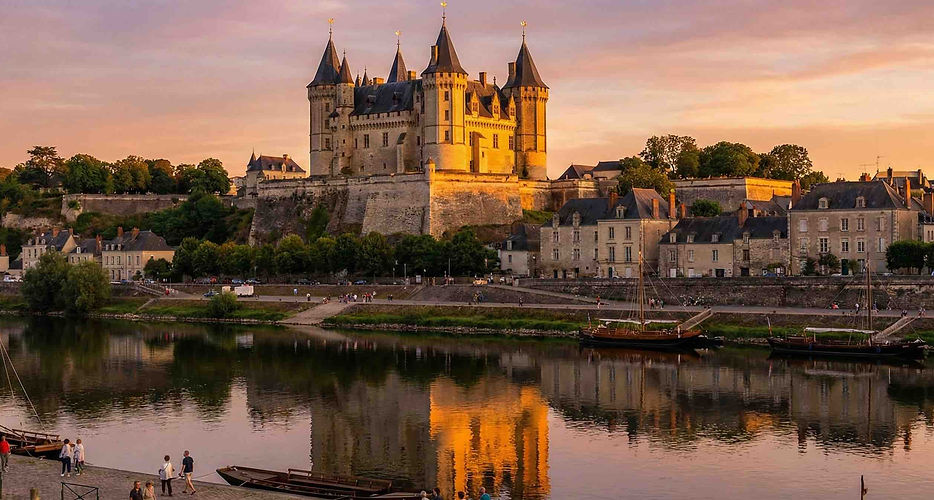
Majestically perched above the Loire River, Saumur is a jewel of absolute elegance, nestled in the Maine-et-Loire department of the Pays de la Loire region. Nicknamed the "Pearl of Anjou" or the "White City" because of the dazzling whiteness of its tufa stone, this royal city superbly blends military history, equestrian splendor, and the Loire Valley art of living. From the soaring turrets of its fairytale castle to the prestigious riding school of the Cadre Noir, and its kilometers of underground troglodytic galleries, Saumur invites you on a sensory escape of rare refinement.
Saumur Castle, the Fortress of Fairy Tales
Proudly dominating the river and the town with its stately silhouette, the Château de Saumur is the emblem of the city, immortalized as early as the 15th century in the manuscript of the Très Riches Heures du Duc de Berry.
A Royal Architecture of Tuffeau and Slate: Successively a medieval fortress under Philip Augustus, then a sumptuous pleasure residence under King René, the château captivates with its lines. Its mullioned windows, its sculpted balustrades, and its dark slate roofs topped with gilded weathervanes create a unique royal aesthetic.
The Panoramic View of the Valley of the Kings: From the terraces and the ramparts of the château, the view encompasses a magnificent landscape, a UNESCO World Heritage Site. The silver ribbon of the Loire, the stone bridges, and the white roofs of the old town unfold in a light of rare purity.
The Decorative Arts and Horse Museums: The castle now houses extensive collections, including an exceptional section dedicated to decorative arts (Nevers earthenware, tapestries) and the Horse Museum, which traces the history of man's greatest conquest through the ages and civilizations.


The Cadre Noir and the Equestrian Tradition of Excellence

Saumur is the undisputed capital of French equestrianism. It is home to a unique institution, whose art is inscribed on UNESCO's Representative List of the Intangible Cultural Heritage of Humanity.
The Cadre Noir of Saumur: Founded in the 19th century to rebuild the military cavalry after the Napoleonic Wars, the Cadre Noir is today the elite corps of riders of the National Riding School. Dressed in their famous black tunics and lorgnette hats, the riders perpetuate the excellence of traditional French horsemanship.
Galops and School Jumps: Attending public presentations or official galas in the Grand Manège is a breathtaking experience. The riders execute figures of absolute technical skill and grace (courbettes, croupades, caprioles), where horse and rider seem to become one.
The Great Stables Tour: Travelers can explore behind the scenes of this equestrian temple. Discovering the modern stables, the tack room rich in leather and gleaming brass, and interacting with the grooms offers a fascinating immersion into the daily lives of the estate's 300 horses.

The Mysterious Universe of the Underground Troglodytes
The subsoil of Saumur and its surrounding region is a veritable Swiss cheese. The extraction of tuffeau stone gave rise to the largest network of underground galleries in Europe.
The Saumur Brut Cellars: Carved directly into the chalk cliff, hundreds of kilometers of dark, cool galleries (naturally maintained at 12°C) provide the perfect setting for aging great sparkling wines. World-renowned houses (such as Bouvet-Ladubay, Ackerman, and Veuve Amiot) offer spectacular tours, sometimes by bicycle, through the heart of sculpted underground cathedrals.
The Mystery of Troglodytic Dwellings: Just a few minutes from the town (notably in Louresse-Rochemenier), you can discover veritable underground villages. These farms and dwellings carved into the rock, inhabited from the Middle Ages to the 20th century, bear witness to fascinating rural architectural ingenuity.
The Cultivation of the Paris Mushroom: The cool, humid atmosphere of these galleries proved ideal for mushrooms. Saumur now produces more than half of France's Paris mushrooms. The Mushroom Museum offers insight into this unusual traditional cultivation method in the heart of period cellars.


Strolling through the Historic Quarter and along the Quays
The historic center of Saumur invites you to a leisurely stroll, punctuated by flower-filled squares and reminders of the Grand Siècle (17th century).
Place Saint-Pierre and its Half-Timbered Houses: The welcoming heart of the old town, this cobbled square is dominated by the Church of Saint-Pierre and lined with magnificent half-timbered houses from the 15th and 16th centuries. It's the perfect place to sit on a terrace and enjoy the Angevin way of life.
The Town Hall and Classical Architecture: Walking along the Loire River, you can admire the Town Hall, a superb building that blends a fortified 15th-century Gothic façade on the river with an elegant Neoclassical extension. The private mansions in the Ponts district tell the story of the wealth of the merchants during the era of river trade.
The Tank Museum: A testament to the city's modern military past (which still houses the Cavalry School), this museum displays a unique collection of over 800 tanks and combat vehicles, from the First World War to the present day, a paradise for enthusiasts of technical history.

Flavors of the Loire and Vineyards of Character
Saumur's gastronomy reflects a generous terroir, celebrated in the riverside cafés along the Loire and at the tables of renowned chefs.
The Great Wines of Saumur-Champigny: The tuffeau hills are home to exceptional vineyards. The Cabernet Franc grape variety gives rise to the famous Saumur-Champigny, an elegant red wine with notes of red fruit and violet. On the white side, the Chenin Blanc grape variety produces great dry wines and incomparable sparkling Saumur Brut.
The Tradition of Fouées (or Fouaces): This is the essential culinary experience in troglodyte restaurants. Fouées are small loaves of bread that puff up instantly when tossed into a blazing wood-fired oven. Served piping hot, they are opened and filled with Anjou rillettes, mogettes (white beans), or semi-salted butter.
Loire Fish and Beurre Blanc: At the tables of the quayside restaurants or along the water on a toue cabanée (traditional boat), gourmets savor locally caught pike-perch or shad, topped with a smooth Angevin beurre blanc, accompanied by thin slices of dried pork tenderloin or local asparagus.
Conclusion
Saumur is a magnificent tourist destination, a regal and poetic stopover that leaves a lasting impression on every traveler with its harmonious contrasts. By successfully achieving the remarkable feat of blending the feudal grandeur of its white sandstone castle, the aesthetic rigor and grace of its Cadre Noir equestrian academy, the subterranean mystery of its troglodytic galleries, and the sparkling conviviality of its grand vineyards, the White City embodies the very essence of the renowned "gentle Anjou" charm. Whether one comes to feel the rhythm of hooves in the ceremonial riding arena, marvel at the Loire at sunset, or share a steaming fouée (a local bread) amidst the rocks, Saumur stands out as a luminous, welcoming, and forever unforgettable stop in the heart of the Loire Valley.
Tourist Office - SAUMUR VAL DE LOIRE
Information Regarding Visuals: This website uses computer-generated images and illustrations created by artificial intelligence for atmospheric and stylistic purposes. These representations are not actual photographs and are strictly non-binding.