
Saint-Enimie

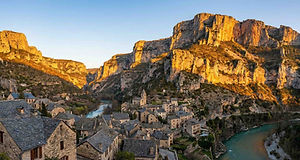
Nestled in the heart of the magnificent Tarn Gorges, Sainte-Énimie is a medieval gem, listed among the "Most Beautiful Villages of France." Located in a bend of the river, at the foot of the immense limestone cliffs of the Causse de Sauveterre and the Causse Méjean, this Lozère village seems straight out of a fairy tale. Between pious legends, ancient stones gilded by the southern sun, and unspoiled nature, Sainte-Énimie offers an enchanting escape from time.
The origins and the legend – The soul of the Merovingian princess
The history of Sainte-Énimie is inextricably linked to its patron saint, a royal princess whose destiny shaped the very identity of the village.
The Legend of Princess Énimie: Sister of King Dagobert, the young and pious Énimie was so radiantly beautiful that she attracted many suitors. To escape an arranged marriage and dedicate herself to God, she begged the Lord to take away her beauty. She was then struck by leprosy. A vision commanded her to bathe in the distant Burle spring. Miraculously cured, her illness returned as soon as she tried to leave the gorges. She understood that her destiny was to remain there.
The Burle Spring: Located at the foot of the village, this Vaucluse spring, with its hypnotic emerald-green waters, is the original site of the miracle. A haven of coolness and mystery where water springs from the depths of the limestone bedrock.
The Hermitage: Perched on the cliff overlooking the village, this hermitage was created in a cave where the princess retreated to pray. Accessible via a steep hiking trail, the site offers a breathtaking and spiritual view of the canyon.


The medieval alleyways – A labyrinth of pebbles and stones

Strolling through Sainte-Énimie is like stepping back in time. The village has preserved its medieval layout, characterized by limestone architecture perfectly integrated into its surroundings.
The Tarn Pebble Lanes: The village's cobbled lanes, called calades, are unique in that they are paved with round pebbles gathered directly from the Tarn riverbed. They meander picturesquely between the tall houses.
Half-Timbered Houses and Covered Passages: Around every corner of the small squares, you'll discover centuries-old dwellings with dry-stone facades, sometimes adorned with timber framing, as well as mysterious vaulted passageways that once sheltered the inhabitants from the sun and inclement weather.
The Old Benedictine Abbey: Founded in the 10th century to honor the memory of the saint, today only magnificent remains exist, notably the chapter house (the monks' refectory) and a defensive tower which testify to the past power of the monastery.

The banks of the Tarn – Between cool air and water sports
The Tarn River is the lifeblood of the village. Its clear, ever-changing waters offer a striking contrast to the arid limestone plateaus surrounding the region.
The Sainte-Énimie Bridge: A true link between the two banks, this stone bridge provides one of the most iconic postcard views in the area. It's the perfect vantage point for photographing the village as it clings to the hillside.
Gravier Beach: Located just at the foot of the village, this pebble beach is a popular spot for swimmers on hot summer days. The water is crystal clear, ideal for a refreshing family dip.
Canoe-Kayak Paradise: Sainte-Énimie is one of the main starting points for paddling down the Tarn Gorges. Glide along the water, between 400-meter-high cliffs, while watching herons and trout, is an unforgettable experience.


Lozère cuisine – Authentic flavors of the Causses
Local cuisine reflects the ruggedness and bounty of this mid-mountain region, where pastoral traditions still reign supreme.
Sheep and Goat Cheeses: Thanks to its proximity to Roquefort, the Causses plateaus abound with distinctive cheeses (Pélardon, Fédou). Enjoy them with country bread and a glass of Côtes de Millau wine.
Coupetados and Charcuterie: Coupetado is a traditional Lozère dessert, a kind of baked prune and walnut pudding. For savory options, fricandeaux (pork meatballs wrapped in caul fat) and manouls (sheep tripe) will delight lovers of rustic cuisine.
Local Honey and Truffles: The village is home to artisans who offer wildflower honey from the Causses (thyme, heather) and, in season, the highly sought-after black truffle of Lozère.

Breathtaking panoramas – Open doors to the Causses
Around Sainte-Énimie, nature reclaims its territory in a spectacular fashion. Leaving the bottom of the gorges allows you to gain altitude and appreciate the immensity of the landscapes.
The Gorges Road: Carved directly into the rock, this panoramic road offers exceptional views at every turn, punctuated by natural tunnels and viewpoints suspended above the void.
The Trails of the Causse Méjean: By taking the hiking trails that climb from the village, you reach a steppe plateau reminiscent of Mongolia. It is here that you can spot majestic griffon vultures and cinereous vultures soaring in the azure sky.
Domaine des Boissets: Located on the heights, this typical Caussenard hamlet, fully restored, allows you to understand the life of the peasants of yesteryear, their stone architecture without wooden frames (the lauze roofs) and their water management.
Conclusion
Sainte-Énimie is more than just a tourist destination; it's a true immersion into a timeless and unspoiled France. By achieving a perfect balance between a miraculously preserved medieval heritage and a wild, powerful natural environment, this village in the Tarn Gorges leaves a lasting impression. Whether you come to experience the thrill of outdoor activities or to soak up the serenity of its ancient stones, Sainte-Énimie offers a journey that leaves you feeling profoundly refreshed.
Sainte-Enimie Gorges du Tarn Tourist Office
Information Regarding Visuals: This website uses computer-generated images and illustrations created by artificial intelligence for atmospheric and stylistic purposes. These representations are not actual photographs and are strictly non-binding.