
Saint-Nazaire

At the mouth of France's longest river, where the Atlantic Ocean embraces the Loire, Saint-Nazaire is a Loire-Atlantique destination with a phenomenal history and singular beauty. Long reduced to its status as the shipbuilding capital, the city of Saint-Nazaire has undergone a spectacular urban transformation to become a cutting-edge seaside and cultural resort. Between the infinite poetry of its 20 beaches, the industrial majesty of its legendary cruise ships, and the mystical atmosphere of its restored submarine base, Saint-Nazaire offers a captivating tourist experience. A luminous, invigorating stopover, resolutely open to the open sea.
The Submarine Base: From the Shadow of History to the Splendor of Culture
A reinforced concrete monolith inherited from the Second World War, the submarine base is now the beating heart of Saint-Nazaire's cultural revival, transformed into a place offering experiences unlike any other in the world.
Escal'Atlantic, the Voyage of Legendary Ocean Liners: Located within the submarine base itself, this immersive museum space, unique in Europe, recreates the atmosphere of the great transatlantic ocean liners (such as the Normandie and France) built in Saint-Nazaire. Visitors wander among reconstructed cabins, bustling engine rooms, and original Art Deco lounges, experiencing a truly immersive ocean voyage.
The Espadon Submarine: Floating in the base's fortified lock, the Espadon was the very first French Navy submarine to dive beneath the Arctic Circle ice floes. An audio-guided tour immerses visitors in the heroic and confined daily lives of the 65 crew members in the 1960s.
LiFE and VIP, Showcases of Modern Creation: The immense concrete cells now house LiFE, a contemporary art space of cathedral-like proportions, and VIP, a renowned venue for contemporary music. This dialogue between raw architecture and artistic avant-garde gives the neighborhood a unique energy.


The Chantiers de l'Atlantique shipyard and Airbus, Giga-Tourism
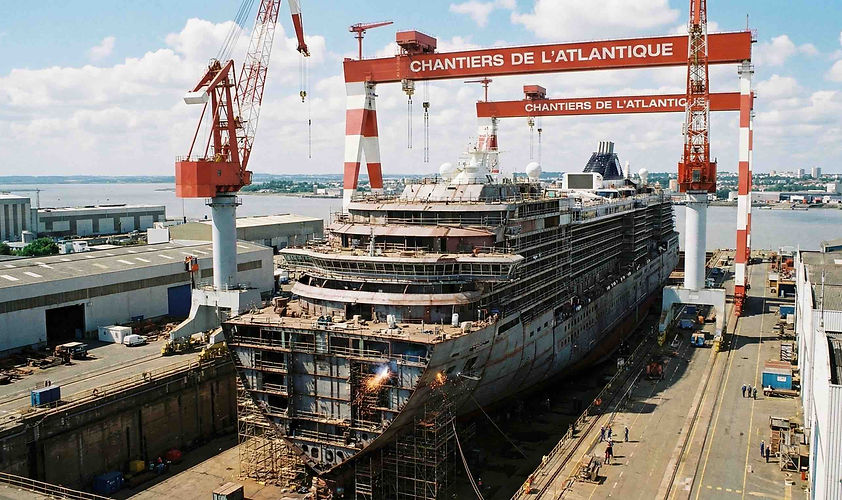
Saint-Nazaire possesses a genius for grandeur. The city opens its doors to travelers eager to discover the greatest industrial giants of our time.
Chantiers de l'Atlantique: This is one of the largest shipyards in the world. A guided tour of this 150-hectare site allows visitors to witness the spectacular ballet of giant gantries lifting steel blocks weighing several hundred tons. It is here that the world's largest cruise ships and the sailing vessels of the future are born.
The Airbus site in Saint-Nazaire: Specializing in the assembly, outfitting, and testing of the nose sections and center fuselages of the entire Airbus aircraft range, this cutting-edge industrial site reveals to visitors the secrets of global aeronautical high technology.
The Port of All Voyages: On the edge of the estuary, the commercial port (fourth largest French port) comes alive to the rhythm of cargo ships and LNG carriers, recalling the historical role of Saint-Nazaire as the starting point for maritime links to Central America and the Caribbean in the 19th century.

The Seafront and the Customs Officers' Path, the Salty Invigorating Air
Completely redesigned, the Saint-Nazaire seafront stretches for several kilometers, offering a seamless transition between modern urban development and unspoiled nature.
The Seafront Promenade: Lined with a long cycle path, skateparks, and lively café terraces, this pedestrian esplanade offers breathtaking views of the estuary and the comings and goings of ships. It is punctuated by poignant monuments such as the American monument (the Samurai) commemorating the arrival of American troops in 1917.
The Stilt Houses: Iconic silhouettes of the Loire landscape, the wooden fishing huts suspended above the water—the fish houses—dot the coastline. Their large square nets (carrelets) stand out gracefully against the horizon at sunset, embodying a poetic way of life close to the waves.
The Customs Officers' Path (GR34) towards Saint-Marc-sur-Mer: Starting from Place du Commando, this steep path follows a rocky coastline dotted with secluded coves, russet cliffs, and holm oaks. It leads to the seaside resort of Saint-Marc-sur-Mer, famous for its Monsieur Hulot beach, immortalized by filmmaker Jacques Tati in his 1953 masterpiece.

Architecture, reconstruction and urban art
Destroyed by more than 85% Allied bombing, Saint-Nazaire rose from the ashes thanks to its bold post-war architecture, now recognized for its heritage value.
The linear, modernist city center: Designed by architect Noël Le Maresquier, the city's reconstruction prioritized wide, light-filled avenues and an open connection to the sea. The clean lines, geometric facades, and integrated green spaces create an urban ensemble unique in France.
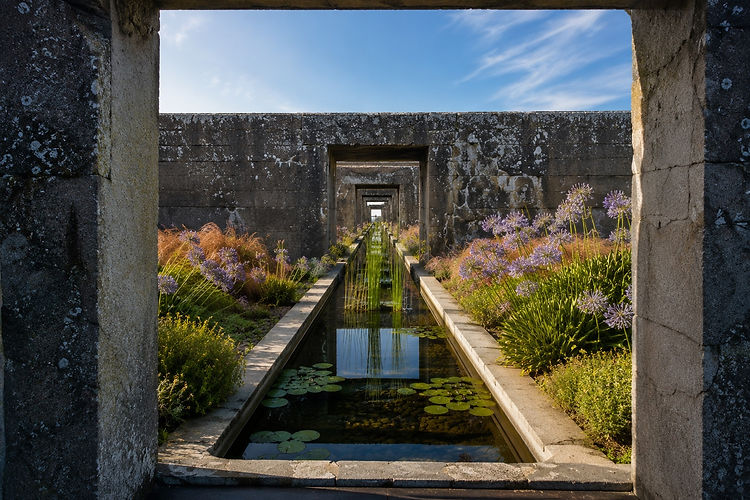
The Third Landscape Garden: Conceived by landscape architect Gilles Clément on the roof of the submarine base, this experimental garden allows wild flora to colonize the concrete. It is a powerful symbol of nature reclaiming military architecture.
The contemporary art trail: As you wander, you will come across contemporary works of art in the open air, such as the famous Triangles by Felice Varini which play with the perspectives of the port, or the poetic installations which mark the city's public art trail.

The gateway to the Brière, between land and marsh
Saint-Nazaire doesn't just overlook the ocean; it also boasts one of the region's most beautiful natural gems: the Brière Regional Natural Park.
The Brière Marshes: Located on the outskirts of the city, this is the second largest marshland in France after the Camargue. This labyrinth of water, reeds, and floodplains is best explored aboard a chaland, the traditional flat-bottomed boat, guided by a salt worker or a local guide.
Thatched-roof villages: The Brière region is home to unique traditional architecture. Villages like Kerhinet feature magnificent, fully restored thatched houses, testaments to a preserved ancestral way of life.
Wild flora and fauna: A paradise for birdwatchers, the Brière marshes shelter thousands of migratory birds (herons, harriers, spoonbills) and exceptionally rich aquatic flora. A much-needed break from nature after the hustle and bustle of the industrial basins.
Conclusion
Saint-Nazaire is unlike any other coastal city. It doesn't try to hide its concrete wrinkles or industrial structures; on the contrary, it elevates them to become a remarkable playground for exploration. A city of stark contrasts, it achieves the remarkable feat of combining the poetry of great maritime voyages, the raw power of shipbuilding, and the gentle pace of life on a pristine coastline. To visit Saint-Nazaire is to embrace surprise and to see the successful marriage of humankind, technology, and nature in a new light.
Saint-Nazaire Tourist Office
Information Regarding Visuals: This website uses computer-generated images and illustrations created by artificial intelligence for atmospheric and stylistic purposes. These representations are not actual photographs and are strictly non-binding.