top of page

Saint-Jean-de-Luz

Unlike its neighbors Biarritz and Anglet, the beach at Saint-Jean-de-Luz offers calm, safe waters thanks to a feat of maritime engineering unique in the world.

The Three Breakwaters of Socoa, Sainte-Barbe, and Artha: In the 19th century, the town was threatened with complete destruction by winter Atlantic storms. Napoleon III ordered the construction of three colossal granite breakwaters to close off the bay. This bulwark breaks the force of the open sea waves, transforming the coastline into a peaceful harbor.

The Grande Plage and the Napoleon III Footbridges: Stretching for over a kilometer of fine sand, this family-friendly beach is bordered by a magnificent pedestrian promenade. It is lined with neo-Basque houses connected to the breakwater by elegant wooden footbridges, offering an irresistible Belle Époque architectural charm.

Pointe de Sainte-Barbe: Located at the northern end of the bay, this verdant promontory is the city's green lung. A walk along its steep paths leads to a small sailors' chapel and reveals a breathtaking 360-degree panorama of the entire bay, the waves of the Belharra surf structure offshore, and the cliffs of the Basque Corniche.

Nestled in the heart of the Basque coast, in the Pyrénées-Atlantiques department, Saint-Jean-de-Luz (or Donibane Lohizune in Basque) is a seaside gem of timeless elegance. Cradled at the end of a crescent-shaped bay, sheltered from the Atlantic Ocean's onslaught, this former privateering town boldly blends the splendor of French history with a profoundly authentic Basque way of life. From the white facades with red half-timbering built by its shipowners to the memory of Louis XIV's royal wedding, Saint-Jean-de-Luz invites you to a luminous, invigorating, and refined immersion, all under the watchful gaze of La Rhune mountain.

The Church of Saint John the Baptist, Temple of Basque Fervor

Considered one of the most beautiful and monumental churches in the Basque Country, the Church of Saint John the Baptist is an architectural masterpiece of unparalleled spiritual richness.

The Walled Royal Gate: It was through this gate on the west façade that the procession of Louis XIV and the Infanta departed after the wedding ceremony. In accordance with tradition, to sanctify the event and prevent any other mortal from passing through, the gate was walled up immediately after the royal couple had left.

The Traditional Wooden Galleries: Inside, the space is striking for its immense single nave, typical of Basque sanctuaries. It is surrounded on three levels by galleries carved from black oak, once reserved exclusively for the men of the parish during services.

The Gilded Wooden Altarpiece: The chancel is illuminated by a monumental 17th-century altarpiece, entirely covered in gold. The work of sculptor Martin de Bidache, it displays a multitude of statues, twisted columns, and angels, forming one of the most impressive Baroque decorations in the region. Suspended from the ceiling, a votive offering in the shape of a ship recalls the devotion of local sailors.
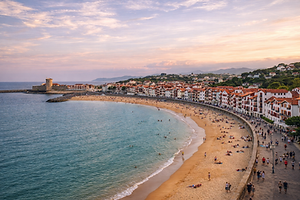
Unlike its neighbors Biarritz and Anglet, the beach at Saint-Jean-de-Luz offers calm, safe waters thanks to a feat of maritime engineering unique in the world.

The Three Breakwaters of Socoa, Sainte-Barbe, and Artha: In the 19th century, the town was threatened with complete destruction by winter Atlantic storms. Napoleon III ordered the construction of three colossal granite breakwaters to close off the bay. This bulwark breaks the force of the open sea waves, transforming the coastline into a peaceful harbor.

The Grande Plage and the Napoleon III Footbridges: Stretching for over a kilometer of fine sand, this family-friendly beach is bordered by a magnificent pedestrian promenade. It is lined with neo-Basque houses connected to the breakwater by elegant wooden footbridges, offering an irresistible Belle Époque architectural charm.

Pointe de Sainte-Barbe: Located at the northern end of the bay, this verdant promontory is the city's green lung. A walk along its steep paths leads to a small sailors' chapel and reveals a breathtaking 360-degree panorama of the entire bay, the waves of the Belharra surf structure offshore, and the cliffs of the Basque Corniche.
Unlike its neighbors Biarritz and Anglet, the beach at Saint-Jean-de-Luz offers calm, safe waters thanks to a feat of maritime engineering unique in the world.

The Three Breakwaters of Socoa, Sainte-Barbe, and Artha: In the 19th century, the town was threatened with complete destruction by winter Atlantic storms. Napoleon III ordered the construction of three colossal granite breakwaters to close off the bay. This bulwark breaks the force of the open sea waves, transforming the coastline into a peaceful harbor.

The Grande Plage and the Napoleon III Footbridges: Stretching for over a kilometer of fine sand, this family-friendly beach is bordered by a magnificent pedestrian promenade. It is lined with neo-Basque houses connected to the breakwater by elegant wooden footbridges, offering an irresistible Belle Époque architectural charm.

Pointe de Sainte-Barbe: Located at the northern end of the bay, this verdant promontory is the city's green lung. A walk along its steep paths leads to a small sailors' chapel and reveals a breathtaking 360-degree panorama of the entire bay, the waves of the Belharra surf structure offshore, and the cliffs of the Basque Corniche.
Unlike its neighbors Biarritz and Anglet, the beach at Saint-Jean-de-Luz offers calm, safe waters thanks to a feat of maritime engineering unique in the world.

The Three Breakwaters of Socoa, Sainte-Barbe, and Artha: In the 19th century, the town was threatened with complete destruction by winter Atlantic storms. Napoleon III ordered the construction of three colossal granite breakwaters to close off the bay. This bulwark breaks the force of the open sea waves, transforming the coastline into a peaceful harbor.

The Grande Plage and the Napoleon III Footbridges: Stretching for over a kilometer of fine sand, this family-friendly beach is bordered by a magnificent pedestrian promenade. It is lined with neo-Basque houses connected to the breakwater by elegant wooden footbridges, offering an irresistible Belle Époque architectural charm.

Pointe de Sainte-Barbe: Located at the northern end of the bay, this verdant promontory is the city's green lung. A walk along its steep paths leads to a small sailors' chapel and reveals a breathtaking 360-degree panorama of the entire bay, the waves of the Belharra surf structure offshore, and the cliffs of the Basque Corniche.

The Royal Wedding Memorial and the Shipowners' Residences

Unlike its neighbors Biarritz and Anglet, the beach at Saint-Jean-de-Luz offers calm, safe waters thanks to a feat of maritime engineering unique in the world.

The Three Breakwaters of Socoa, Sainte-Barbe, and Artha: In the 19th century, the town was threatened with complete destruction by winter Atlantic storms. Napoleon III ordered the construction of three colossal granite breakwaters to close off the bay. This bulwark breaks the force of the open sea waves, transforming the coastline into a peaceful harbor.

The Grande Plage and the Napoleon III Footbridges: Stretching for over a kilometer of fine sand, this family-friendly beach is bordered by a magnificent pedestrian promenade. It is lined with neo-Basque houses connected to the breakwater by elegant wooden footbridges, offering an irresistible Belle Époque architectural charm.

Pointe de Sainte-Barbe: Located at the northern end of the bay, this verdant promontory is the city's green lung. A walk along its steep paths leads to a small sailors' chapel and reveals a breathtaking 360-degree panorama of the entire bay, the waves of the Belharra surf structure offshore, and the cliffs of the Basque Corniche.

Saint-Jean-de-Luz was the setting for one of the most momentous events in French history: the marriage of Louis XIV to the Infanta Maria Theresa of Spain, celebrated on June 9, 1660.

The Infanta's House (Joanoenia): Standing proudly overlooking the port, this sumptuous residence, built of pink brick and dressed stone in the Italo-Flemish style, housed the young Maria Theresa before the wedding. Its elegant facades and painted ceilings testify to the wealth of the shipowning dynasty that built it.

The Louis XIV House (Lohobiague Enea): Located on the main square, this imposing classical-style building served as the Sun King's residence for over a month. Still inhabited by the same family since the 17th century, it opens its state rooms, period kitchens, and royal bedrooms for an intimate glimpse into the Grand Siècle (the 17th century).

Place Louis XIV: This is the beating heart of the city. Shaded by large plane trees, lined with historic cafe terraces and animated by painters and musicians, this paved square has a pretty bandstand in its center where traditional Basque songs resonate in the summer.

Unlike its neighbors Biarritz and Anglet, the beach at Saint-Jean-de-Luz offers calm, safe waters thanks to a feat of maritime engineering unique in the world.

The Three Breakwaters of Socoa, Sainte-Barbe, and Artha: In the 19th century, the town was threatened with complete destruction by winter Atlantic storms. Napoleon III ordered the construction of three colossal granite breakwaters to close off the bay. This bulwark breaks the force of the open sea waves, transforming the coastline into a peaceful harbor.

The Grande Plage and the Napoleon III Footbridges: Stretching for over a kilometer of fine sand, this family-friendly beach is bordered by a magnificent pedestrian promenade. It is lined with neo-Basque houses connected to the breakwater by elegant wooden footbridges, offering an irresistible Belle Époque architectural charm.

Pointe de Sainte-Barbe: Located at the northern end of the bay, this verdant promontory is the city's green lung. A walk along its steep paths leads to a small sailors' chapel and reveals a breathtaking 360-degree panorama of the entire bay, the waves of the Belharra surf structure offshore, and the cliffs of the Basque Corniche.

The Protective Bay and the Great Seaside Beach

Unlike its neighbors Biarritz and Anglet, the beach at Saint-Jean-de-Luz offers calm, safe waters thanks to a feat of maritime engineering unique in the world.

The Three Breakwaters of Socoa, Sainte-Barbe, and Artha: In the 19th century, the town was threatened with complete destruction by winter Atlantic storms. Napoleon III ordered the construction of three colossal granite breakwaters to close off the bay. This bulwark breaks the force of the open sea waves, transforming the coastline into a peaceful harbor.

The Grande Plage and the Napoleon III Footbridges: Stretching for over a kilometer of fine sand, this family-friendly beach is bordered by a magnificent pedestrian promenade. It is lined with neo-Basque houses connected to the breakwater by elegant wooden footbridges, offering an irresistible Belle Époque architectural charm.

Pointe de Sainte-Barbe: Located at the northern end of the bay, this verdant promontory is the city's green lung. A walk along its steep paths leads to a small sailors' chapel and reveals a breathtaking 360-degree panorama of the entire bay, the waves of the Belharra surf structure offshore, and the cliffs of the Basque Corniche.

Unlike its neighbors Biarritz and Anglet, the beach at Saint-Jean-de-Luz offers calm, safe waters thanks to a feat of maritime engineering unique in the world.

The Three Breakwaters of Socoa, Sainte-Barbe, and Artha: In the 19th century, the town was threatened with complete destruction by winter Atlantic storms. Napoleon III ordered the construction of three colossal granite breakwaters to close off the bay. This bulwark breaks the force of the open sea waves, transforming the coastline into a peaceful harbor.

The Grande Plage and the Napoleon III Footbridges: Stretching for over a kilometer of fine sand, this family-friendly beach is bordered by a magnificent pedestrian promenade. It is lined with neo-Basque houses connected to the breakwater by elegant wooden footbridges, offering an irresistible Belle Époque architectural charm.

Pointe de Sainte-Barbe: Located at the northern end of the bay, this verdant promontory is the city's green lung. A walk along its steep paths leads to a small sailors' chapel and reveals a breathtaking 360-degree panorama of the entire bay, the waves of the Belharra surf structure offshore, and the cliffs of the Basque Corniche.

The Fishing Port, from the Epic of the Corsairs to the Tuna Boats

Nestled at the mouth of the Nivelle River, opposite its twin town of Ciboure, the port of Saint-Jean-de-Luz is a place steeped in maritime history and authenticity.

The Legacy of the King's Corsairs: In the 17th and 18th centuries, sailors from Saint-Jean-de-Luz, armed with letters of marque issued by the king, hunted English and Spanish ships. These formidable corsairs, like the legendary Johannes de Suhigaraychipi (known as Coursic), brought wealth to the town.

The Ballet of the Tuna and Line Fishing Boats: Today, the port maintains a thriving artisanal fishing industry. Colorful boats unload highly prized fish at the fish market: bluefin tuna, line-caught hake (the local specialty), sardines, and anchovies.

The Quayside Promenade: Strolling along the Quai de l'Infante as the boats return offers a picturesque spectacle. It is the starting point for beautiful sea excursions to explore the Basque coastline or to learn big game fishing.

Unlike its neighbors Biarritz and Anglet, the beach at Saint-Jean-de-Luz offers calm, safe waters thanks to a feat of maritime engineering unique in the world.

The Three Breakwaters of Socoa, Sainte-Barbe, and Artha: In the 19th century, the town was threatened with complete destruction by winter Atlantic storms. Napoleon III ordered the construction of three colossal granite breakwaters to close off the bay. This bulwark breaks the force of the open sea waves, transforming the coastline into a peaceful harbor.

The Grande Plage and the Napoleon III Footbridges: Stretching for over a kilometer of fine sand, this family-friendly beach is bordered by a magnificent pedestrian promenade. It is lined with neo-Basque houses connected to the breakwater by elegant wooden footbridges, offering an irresistible Belle Époque architectural charm.

Pointe de Sainte-Barbe: Located at the northern end of the bay, this verdant promontory is the city's green lung. A walk along its steep paths leads to a small sailors' chapel and reveals a breathtaking 360-degree panorama of the entire bay, the waves of the Belharra surf structure offshore, and the cliffs of the Basque Corniche.

Sweet and Savory Flavors and the Sweetness of Rue Gambetta

The art of living in Saint-Jean-de-Luz is savored intensely through exceptional local cuisine, steeped in centuries-old culinary secrets.

The Authentic Macaron from Maison Adam: Created in 1660 by pastry chef Monsieur Adam to delight King Louis XIV at his wedding, this small, soft biscuit made with almonds, sugar, and egg whites is an institution. Its secret recipe, unchanged and passed down through generations, draws gourmets from all over the world to Rue Gambetta.

The Basque Cake and Muxu from Maison Pariès: Another temple of indulgence, Maison Pariès excels in the creation of the traditional Basque cake (filled with almond cream or Itxassou black cherries) and Muxus (kisses in Basque), melt-in-your-mouth almond treats with an airy texture.

The Saint-Jean-de-Luz Market Hall and Txakoli: Open every morning, the town's market hall is a festival of colors and aromas. Here you can buy Espelette pepper, Bayonne ham, Ossau-Iraty sheep's cheese, and Kaxu (hake), which you can enjoy in the neighborhood bistros accompanied by a glass of Txakoli, a slightly sparkling Basque white wine with absolute freshness.

Conclusion

Saint-Jean-de-Luz is an exceptional town that has managed to stand the test of time without losing its authenticity. It offers a rare alchemy: the simple charm of a bustling fishing port, the solemnity of a grand royal past, and the relaxed lifestyle of a family-friendly seaside resort. It is the Basque Country at its noblest and most welcoming.

Saint Jean de Luz Tourist Office - Donibane Lohizune

Information Regarding Visuals: This website uses computer-generated images and illustrations created by artificial intelligence for atmospheric and stylistic purposes. These representations are not actual photographs and are strictly non-binding.

bottom of page