
Saint-Étienne

Nestled between the Forez plain and the hills of the Massif Central, Saint-Étienne is a fascinating city that has undergone a spectacular transformation. Once the industrial capital of coal, arms, and ribbon manufacturing, it is now France's only UNESCO Creative City of Design. Bold, welcoming, and resolutely forward-looking, the "black city" has become a vibrant and surprising metropolis where industrial heritage blends seamlessly with contemporary design and unspoiled nature.
Metamorphosis through Design – A UNESCO Creative City
The only city in France to be designated a "Creative City of Design" by UNESCO, Saint-Étienne has reinvented its urban landscape through the lens of art, innovative street furniture, and modern architecture.
The Cité du Design: Located on the site of the former Royal Arms Factory, it symbolizes Saint-Étienne's urban renewal. Its flagship building, La Platine, is striking for its futuristic geometric structure composed of thousands of glass triangles. It is the heart of the renowned International Design Biennial.
Street Furniture and Street Art: As you stroll through the city, keep your eyes peeled: public benches, lighting, and bus shelters are the result of designers' research. The city walls also come alive with monumental street art murals, particularly in the Crêt de Roch district.
The Museum of Modern and Contemporary Art (MAMC+): Possessing one of the most important collections of 20th and 21st century art in France, this museum presents works by Warhol, Dubuffet or Soulages in a building with a facade of black glass slabs of great purity.


The DNA of Saint-Étienne – Magnified industrial heritage

Saint-Étienne doesn't deny its past; it celebrates it. The history of miners, gunsmiths, and ribbon makers is recounted through exceptionally rich museums.
The Couriot Pit – Mining Museum: Crowned with its impressive iron headframe, this historic site offers a striking immersion into the daily lives of the miners. The guided tour takes you through the reconstructed underground galleries, the "hanging room" (the showers), and the engine room.
The Museum of Art and Industry: Housed in a magnificent 19th-century building, it contains the city's three major historical collections: the world's first collection of ribbons, an impressive history of cycling (Saint-Étienne is the birthplace of the bicycle in France), and a collection of art and hunting weapons.
The Slag Heaps: These two imposing hills of mining waste dominate the urban landscape. Silent witnesses to past labor, they are now an integral part of the city's visual identity.

The "Green" fervor and popular culture
Saint-Étienne possesses a vibrant, working-class soul and a legendary culture of conviviality, fueled by its culinary traditions and its unconditional love of football.
The Geoffroy-Guichard Stadium (Le Chaudron) and its Museum: Whether you're a football fan or not, the mythical stadium of A.S. Saint-Étienne is a place of pilgrimage. The Musée des Verts (Green Museum) retraces the epic run of the 1970s that thrilled all of France.
The "Gaga dialect" and the Saint-Étienne welcome: Gaga is the local dialect, still very much alive. Don't be surprised if someone mentions "babet" (pine cone), "gandot" (mess bowl), or says that it makes you tumble! The warmth of the locals is one of the city's greatest assets.
Gourmet specialties: Try the rapée stéphanoise (a pancake of grated potatoes fried in a pan), the sarasson (a curdled white cheese with herbs), and finish with chocolates from the famous Weiss house or a glass of verbena liqueur.


Urban strolls – Lively squares and architecture
Saint-Étienne's city center, characterized by Haussmannian architecture and Art Deco style, is best explored on foot or aboard its historic tramway (the only one in France to have operated continuously since its creation in 1881).
Place du Peuple and Grand'Rue: This is the city's historic thoroughfare. Grand'Rue stretches for several kilometers, lined with 19th-century bourgeois buildings with sculpted facades, independent boutiques, and lively cafés.
The Saint-Jacques Quarter: With its pedestrian streets, cobblestones, and small squares, this is the medieval heart of Saint-Étienne. Perfect for relaxing on a terrace or discovering artisan shops.
Place Jean-Jaurès: Nicknamed "Place Marengo" by locals, this is the green heart of the city center. Surrounded by the magnificent Saint-Charles Cathedral and the Town Hall, it comes alive every week with its local producers' markets.
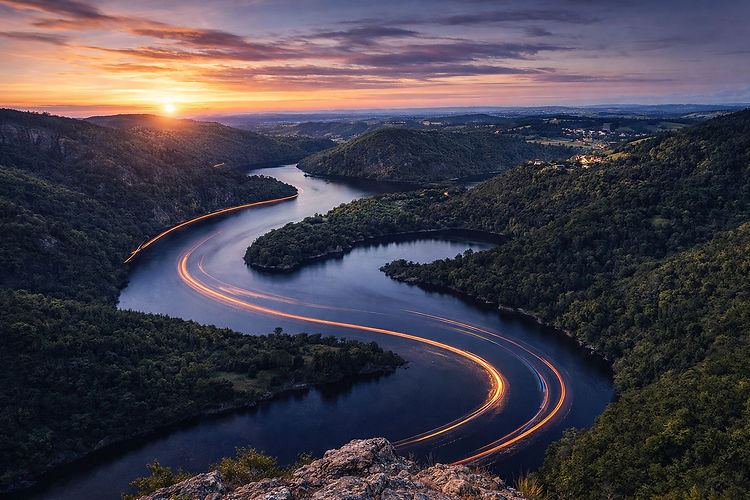
Nature escape – Between river and mountains
In less than 15 minutes, the urban environment gives way to magnificent natural spaces. Saint-Étienne is one of the few major cities in France to have a regional natural park right on its doorstep.
The Le Corbusier Site in Firminy: Located on the outskirts of the city, this is the largest architectural complex designed by Le Corbusier in Europe. The Maison de la Culture (House of Culture), the stadium, the apartment building, and the incredible Saint-Pierre Church (a UNESCO World Heritage Site) constitute a masterpiece of modern architecture.
The Loire Gorges and Saint-Victor-sur-Loire: The still-wild Loire River meanders through steep gorges. The medieval village of Saint-Victor-sur-Loire serves as a seaside resort for the residents of Saint-Étienne, with its marina, sandy beach, and hiking trails offering spectacular views.
The Pilat Regional Natural Park: A veritable water tower and green paradise of the region, the Pilat massif rises to over 1,400 meters. In summer, it's a haven for hiking, mountain biking, and blueberry picking. In winter, the Crêts du Pilat transform into cross-country skiing and snowshoeing trails.
Conclusion
Saint-Étienne deserves to be better known. Far from the industrial clichés of the past, it is a resilient and proud city that has transformed its former factories into laboratories of visual creation and its mining history into a powerful source of cultural experiences. Ideally located at the gateway to wild and unspoiled nature, it offers curious visitors an authentic, surprising, and profoundly human experience.
Saint-Étienne Métropole Tourist Office
Information Regarding Visuals: This website uses computer-generated images and illustrations created by artificial intelligence for atmospheric and stylistic purposes. These representations are not actual photographs and are strictly non-binding.