
Saint-Denis

On the northern edge of Paris, Saint-Denis is a city with an extraordinary destiny, where France's millennia-old history intertwines with the future. Often reduced to its contemporary urban dynamism, this City of Art and History possesses a cultural heritage of breathtaking depth. The cradle of the Gothic style that revolutionized European architecture, the eternal necropolis of kings and queens, Saint-Denis was also the beating heart of the Industrial Revolution before becoming a global symbol of sport and urban culture. Between historical fervor, architectural splendor, and cosmopolitan vitality, Saint-Denis offers a captivating and truly unique tourist experience.
The Basilica of Saint-Denis, the Necropolis of the Kings of France
An absolute jewel of French heritage, the Basilica-Cathedral of Saint-Denis is the city's founding monument, a place imbued with mystical solemnity.
The World Cradle of Gothic Art: Built under the impetus of Abbot Suger in the 12th century, the basilica is considered the very first masterpiece of Gothic art. Thanks to the invention of the ribbed vault, the walls were opened up to make way for immense stained-glass windows, flooding the sanctuary with the divine light known as the Lux Nova.
The Royal Necropolis: Saint-Denis is the final resting place of the French monarchy. It houses the tombs of 42 kings, 32 queens, and 63 princes, from Dagobert I to Louis XVI and Marie Antoinette. Wandering among this unique collection of recumbent effigies in marble and stone is a striking historical experience.
The Tomb of Saint Denis: Built on the site of an ancient Gallo-Roman cemetery, the basilica houses in its archaeological crypt the relics of Denis, the first bishop of Paris martyred in the 3rd century, whose legend of the cephalophore saint (walking with his severed head under his arm) gave birth to the city.


The Stade de France and the La Plaine district, Temples of the Future

South of the city, the Plaine-Saint-Denis district embodies the contemporary metamorphosis of a former industrial area into a global showcase for sports and media.
The Stade de France, the Arena of Legends: Inaugurated in 1998 for the FIFA World Cup, this architectural colossus with 80,000 seats has become the temple of French sport. Guided tours allow visitors to explore behind the scenes, the players' locker rooms, and the tunnel leading to the pitch, all steeped in the history of the French national team's victory in 1998 and the Paris 2024 Olympic and Paralympic Games.
The Street Art Avenue along the Canal: The Saint-Denis Canal, which runs through this district, has been transformed into a vast open-air contemporary art gallery. The Street Art Avenue trail showcases gigantic murals, graffiti, and art installations by international artists.
The Cité du Cinéma and the Studios: Led by director Luc Besson, this gigantic film complex, housed in a former 1930s power station (a masterpiece of industrial architecture), makes Saint-Denis the "European Hollywood," hosting the filming of global blockbusters.

The Paul Éluard Museum of Art and History and the Old Carmel
Nestled in a beautifully preserved former Carmelite convent, the city museum offers a tranquil and surprisingly rich artistic escape.
The Mystical Setting of the Carmel (17th century): The museum is housed in the Carmelite convent, one of whose illustrious figures was Louise of France, daughter of Louis XV. Visitors can explore the original cloister, the former nuns' cells, and the neoclassical chapel, all preserving an atmosphere of absolute serenity.
The Paul Éluard Collection: Born in Saint-Denis, the renowned surrealist poet Paul Éluard bequeathed an exceptional collection to his city. The museum houses precious manuscripts, first editions, and works by his artist friends, such as Pablo Picasso, Joan Miró, and Man Ray.
The Memory of the Paris Commune: The museum displays one of the most important documentary collections in Europe on the Franco-Prussian War of 1870 and the Paris Commune (1871). Through lithographs, period posters, and everyday objects, it offers a vibrant testimony to popular and working-class history.


The City's Fabric and Industrial Heritage
In the 19th century, Saint-Denis was the largest industrial zone in Europe. The city has successfully rehabilitated this heritage of brick and steel with remarkable architectural boldness.
The Archaeological Site of the City Factory: Located a stone's throw from the basilica, this unusual space is a laboratory of urban history. Topped with a contemporary wooden structure, the site allows visitors to understand the evolution of a city house through the centuries, from the medieval period to the present day, revealing the foundations of the old rampart.
The Factory Rehabilitation (Christofle Silversmiths): The former Christofle silversmith factories, a jewel of 19th-century industrial architecture with their red brick chimneys, have been transformed into a vast hub for artists, designers, and craftspeople, creating a dialogue between the skilled craftsmanship of yesteryear and the creativity of tomorrow.
The Legion of Honour School: Housed in the buildings of the former royal abbey adjoining the basilica, this institution of excellence created by Napoleon I sometimes opens its doors to reveal its monumental 18th-century cloister, its majestic refectory and its superb listed gardens.
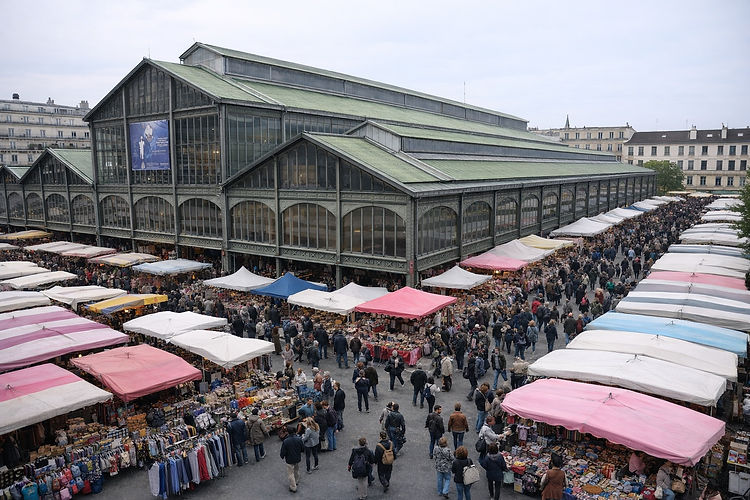
The Saint-Denis Market and Cosmopolitan Vitality
Saint-Denis is experienced and savored through the incredible energy of its meeting places, reflecting a young, diverse, and festive city.
The Largest Market in Île-de-France: Three times a week, the Place du Caquet and its grand 19th-century Baltard market hall come alive for the Saint-Denis market. It's a whirlwind of colors, accents, and flavors where local produce, spices from around the world, African fabrics, and culinary specialties from all five continents mingle. A complete sensory journey.
The Saint-Denis Festival: Every summer, the basilica and the Maison de la Légion d'Honneur host this internationally renowned classical and contemporary music festival. The world's greatest conductors and virtuosos come to perform the scores of Mozart, Verdi, and Bach under the thousand-year-old Gothic vaults.
The Art of Living and Third Places: Like 6b, a vast renovated office building on the banks of the Seine, Saint-Denis is a haven for cultural third places. Artists, residents, and travelers gather there for exhibitions, open-air concerts, and shared workshops, embodying the conviviality and boundless creativity of Seine-Saint-Denis (department 93).
Conclusion
Saint-Denis is a destination for the curious, those who like to dig beneath the surface to find hidden gems. Between the majesty of its thousand-year-old cathedral and the vibrancy of its cosmopolitan youth, the city offers a unique journey through time and humanity on the outskirts of Paris. It is here that the history of France continues to be written, with passion and audacity.
Saint-Denis Basilica Tourist Office
Information Regarding Visuals: This website uses computer-generated images and illustrations created by artificial intelligence for atmospheric and stylistic purposes. These representations are not actual photographs and are strictly non-binding.