top of page

Rueil-Malmaison

In the 19th century, Rueil-Malmaison became a popular Sunday destination for Parisians and painters alike, drawn to capture the ever-changing light of the river.

The Impressionists' Park: Directly inspired by Claude Monet's famous gardens in Giverny, this landscaped park of over one hectare is a botanical tribute to the masters of light. It is laid out around a large pond crossed by a wooden bridge, surrounded by water lilies, wisteria, and a fragrant rose garden.

The Banks of the Seine and the Towpath: Completely renovated, the quays of Rueil invite leisurely walks or bike rides. It was on these banks that Renoir, Manet, and Monet would set up their easels to paint the lively atmosphere of the riverside cafes, the boaters, and the silvery reflections on the water.

The Château de la Petite Malmaison: Located on the edge of the large parks, this Directoire-style pavilion was built for Josephine to serve as a transition between the main château and its former, enormous greenhouse. Its elegantly decorated salons evoke the tranquility of country retreats of the period.

On the western edge of Paris, nestled within a bend of the Seine and overlooked by Mont Valérien, Rueil-Malmaison is a town of understated elegance, blending the solemnity of its rich history with the gentle charm of the Île-de-France region. While it was beloved by Richelieu and the Impressionist painters, it is above all the legendary couple, Napoleon Bonaparte and Empress Josephine, who left their indelible mark. Becoming the political heart of France during the Consulate, Rueil-Malmaison has preserved from this epic period a unique imperial heritage, enveloped in serene, tree-lined parks. This detailed five-chapter guide invites you to stroll in the footsteps of these sovereigns, along the riverbanks and through the heart of a residential town with timeless charm.

The Malmaison Estate and the private life of the imperial couple

Purchased in 1799 by Josephine de Beauharnais, the Malmaison estate is the jewel of the city, a seat of power that has become a sanctuary of Napoleonic memory.

The Château de Malmaison: Designed by the renowned architects Percier and Fontaine, this country residence became, between 1800 and 1802, the seat of the French government, alongside the Tuileries Palace. It was in its refined atmosphere, between the mahogany library and the Council Chamber shaped like a military tent, that the Civil Code and the Legion of Honor were conceived.

The Rose Garden and Botanical Passions: Passionate about natural sciences, Empress Josephine transformed her estate into an open-air laboratory. She had a unique rose garden planted there, bringing together nearly 250 varieties of rare roses, and acclimatized exotic plants as well as animals brought back from distant expeditions, such as majestic black swans from Australia.

The Château de Bois-Préau and the Memories of Exile: An inseparable complement to the Malmaison estate, the neighboring Château de Bois-Préau, acquired by Josephine in 1810, houses a captivating national museum. Its rooms are dedicated to the Emperor's epic story and preserve a collection of personal objects related to his exile and his final days on the island of Saint Helena.

In the 19th century, Rueil-Malmaison became a popular Sunday destination for Parisians and painters alike, drawn to capture the ever-changing light of the river.

The Impressionists' Park: Directly inspired by Claude Monet's famous gardens in Giverny, this landscaped park of over one hectare is a botanical tribute to the masters of light. It is laid out around a large pond crossed by a wooden bridge, surrounded by water lilies, wisteria, and a fragrant rose garden.

The Banks of the Seine and the Towpath: Completely renovated, the quays of Rueil invite leisurely walks or bike rides. It was on these banks that Renoir, Manet, and Monet would set up their easels to paint the lively atmosphere of the riverside cafes, the boaters, and the silvery reflections on the water.

The Château de la Petite Malmaison: Located on the edge of the large parks, this Directoire-style pavilion was built for Josephine to serve as a transition between the main château and its former, enormous greenhouse. Its elegantly decorated salons evoke the tranquility of country retreats of the period.
In the 19th century, Rueil-Malmaison became a popular Sunday destination for Parisians and painters alike, drawn to capture the ever-changing light of the river.

The Impressionists' Park: Directly inspired by Claude Monet's famous gardens in Giverny, this landscaped park of over one hectare is a botanical tribute to the masters of light. It is laid out around a large pond crossed by a wooden bridge, surrounded by water lilies, wisteria, and a fragrant rose garden.

The Banks of the Seine and the Towpath: Completely renovated, the quays of Rueil invite leisurely walks or bike rides. It was on these banks that Renoir, Manet, and Monet would set up their easels to paint the lively atmosphere of the riverside cafes, the boaters, and the silvery reflections on the water.

The Château de la Petite Malmaison: Located on the edge of the large parks, this Directoire-style pavilion was built for Josephine to serve as a transition between the main château and its former, enormous greenhouse. Its elegantly decorated salons evoke the tranquility of country retreats of the period.
In the 19th century, Rueil-Malmaison became a popular Sunday destination for Parisians and painters alike, drawn to capture the ever-changing light of the river.

The Impressionists' Park: Directly inspired by Claude Monet's famous gardens in Giverny, this landscaped park of over one hectare is a botanical tribute to the masters of light. It is laid out around a large pond crossed by a wooden bridge, surrounded by water lilies, wisteria, and a fragrant rose garden.

The Banks of the Seine and the Towpath: Completely renovated, the quays of Rueil invite leisurely walks or bike rides. It was on these banks that Renoir, Manet, and Monet would set up their easels to paint the lively atmosphere of the riverside cafes, the boaters, and the silvery reflections on the water.

The Château de la Petite Malmaison: Located on the edge of the large parks, this Directoire-style pavilion was built for Josephine to serve as a transition between the main château and its former, enormous greenhouse. Its elegantly decorated salons evoke the tranquility of country retreats of the period.

The Church of Saint Peter and Saint Paul and the resting place of sovereigns

In the 19th century, Rueil-Malmaison became a popular Sunday destination for Parisians and painters alike, drawn to capture the ever-changing light of the river.

The Impressionists' Park: Directly inspired by Claude Monet's famous gardens in Giverny, this landscaped park of over one hectare is a botanical tribute to the masters of light. It is laid out around a large pond crossed by a wooden bridge, surrounded by water lilies, wisteria, and a fragrant rose garden.

The Banks of the Seine and the Towpath: Completely renovated, the quays of Rueil invite leisurely walks or bike rides. It was on these banks that Renoir, Manet, and Monet would set up their easels to paint the lively atmosphere of the riverside cafes, the boaters, and the silvery reflections on the water.

The Château de la Petite Malmaison: Located on the edge of the large parks, this Directoire-style pavilion was built for Josephine to serve as a transition between the main château and its former, enormous greenhouse. Its elegantly decorated salons evoke the tranquility of country retreats of the period.

The town center of Rueil is home to a major religious building, a true place of pilgrimage for enthusiasts of the First and Second Empires.

A Renaissance façade: Begun under Francis I and completed thanks to Cardinal Richelieu, the Church of Saint-Pierre-Saint-Paul is striking for its superb Renaissance façade and its slender bell tower overlooking the market square.

The Tomb of Empress Josephine: Josephine, who died at Malmaison in 1814, rests in the right-hand side chapel. Her funerary monument in white Carrara marble, sculpted by Cartellier, depicts her kneeling in her coronation robes, a memorial of great artistic purity.

Queen Hortense and the Cavaillé-Coll organ: Directly opposite her mother's tomb lies Hortense de Beauharnais, Queen of Holland and mother of Napoleon III. Emperor Napoleon III, who was very fond of the city, gave the church an exceptional organ case made by the famous organ builder Aristide Cavaillé-Coll, in memory of his mother.
In the 19th century, Rueil-Malmaison became a popular Sunday destination for Parisians and painters alike, drawn to capture the ever-changing light of the river.

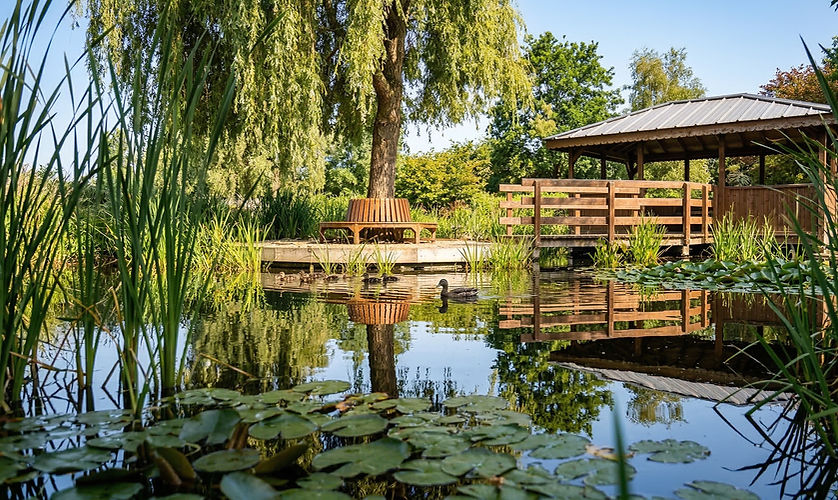
The Impressionists' Park: Directly inspired by Claude Monet's famous gardens in Giverny, this landscaped park of over one hectare is a botanical tribute to the masters of light. It is laid out around a large pond crossed by a wooden bridge, surrounded by water lilies, wisteria, and a fragrant rose garden.

The Banks of the Seine and the Towpath: Completely renovated, the quays of Rueil invite leisurely walks or bike rides. It was on these banks that Renoir, Manet, and Monet would set up their easels to paint the lively atmosphere of the riverside cafes, the boaters, and the silvery reflections on the water.

The Château de la Petite Malmaison: Located on the edge of the large parks, this Directoire-style pavilion was built for Josephine to serve as a transition between the main château and its former, enormous greenhouse. Its elegantly decorated salons evoke the tranquility of country retreats of the period.

The banks of the Seine and the spirit of the Impressionists

In the 19th century, Rueil-Malmaison became a popular Sunday destination for Parisians and painters alike, drawn to capture the ever-changing light of the river.

The Impressionists' Park: Directly inspired by Claude Monet's famous gardens in Giverny, this landscaped park of over one hectare is a botanical tribute to the masters of light. It is laid out around a large pond crossed by a wooden bridge, surrounded by water lilies, wisteria, and a fragrant rose garden.

The Banks of the Seine and the Towpath: Completely renovated, the quays of Rueil invite leisurely walks or bike rides. It was on these banks that Renoir, Manet, and Monet would set up their easels to paint the lively atmosphere of the riverside cafes, the boaters, and the silvery reflections on the water.

The Château de la Petite Malmaison: Located on the edge of the large parks, this Directoire-style pavilion was built for Josephine to serve as a transition between the main château and its former, enormous greenhouse. Its elegantly decorated salons evoke the tranquility of country retreats of the period.

In the 19th century, Rueil-Malmaison became a popular Sunday destination for Parisians and painters alike, drawn to capture the ever-changing light of the river.

The Impressionists' Park: Directly inspired by Claude Monet's famous gardens in Giverny, this landscaped park of over one hectare is a botanical tribute to the masters of light. It is laid out around a large pond crossed by a wooden bridge, surrounded by water lilies, wisteria, and a fragrant rose garden.

The Banks of the Seine and the Towpath: Completely renovated, the quays of Rueil invite leisurely walks or bike rides. It was on these banks that Renoir, Manet, and Monet would set up their easels to paint the lively atmosphere of the riverside cafes, the boaters, and the silvery reflections on the water.

The Château de la Petite Malmaison: Located on the edge of the large parks, this Directoire-style pavilion was built for Josephine to serve as a transition between the main château and its former, enormous greenhouse. Its elegantly decorated salons evoke the tranquility of country retreats of the period.

A historical stroll through Old Rueil

Behind its modern economic dynamism, the historic heart of Rueil-Malmaison has retained the atmosphere of a traditional Brie village with lively little squares.

The Local History Museum: Housed in the former town hall, a magnificent 19th-century building, this museum traces the town's evolution since the Middle Ages. Visitors can discover collections of earthenware, memorabilia of the Swiss Guard, and an impressive collection of historical figurines.

The Imperial Walk in the heart of the town: The Tourist Office has marked out a heritage trail through the old town center, identified by bronze markers adorned with the imperial bee. This path connects ten key locations in the town, winding between historic houses and refreshing fountains.

The Grognard Workshop: Just steps from the center, this former 19th-century industrial factory has been transformed into a vast contemporary cultural space. Throughout the year, it hosts leading temporary exhibitions of modern art and photography.

In the 19th century, Rueil-Malmaison became a popular Sunday destination for Parisians and painters alike, drawn to capture the ever-changing light of the river.

The Impressionists' Park: Directly inspired by Claude Monet's famous gardens in Giverny, this landscaped park of over one hectare is a botanical tribute to the masters of light. It is laid out around a large pond crossed by a wooden bridge, surrounded by water lilies, wisteria, and a fragrant rose garden.

The Banks of the Seine and the Towpath: Completely renovated, the quays of Rueil invite leisurely walks or bike rides. It was on these banks that Renoir, Manet, and Monet would set up their easels to paint the lively atmosphere of the riverside cafes, the boaters, and the silvery reflections on the water.

The Château de la Petite Malmaison: Located on the edge of the large parks, this Directoire-style pavilion was built for Josephine to serve as a transition between the main château and its former, enormous greenhouse. Its elegantly decorated salons evoke the tranquility of country retreats of the period.

Green lungs and exceptional panoramas

Rueil-Malmaison surprises with its omnipresence of nature, offering vast forests and spectacular views of western Paris.

The Malmaison State Forest (Bois de Saint-Cucufa): This immense 200-hectare forest, centered around a large, romantic pond, is a haven for joggers, families, and cyclists. It was once one of Empress Josephine's favorite walking areas.

The Mont-Valérien Park: Located on the heights shared with Suresnes, this major historical site houses the Memorial to the Fighting France. Its tree-lined paths offer breathtaking panoramas of the La Défense district and the silhouette of the Eiffel Tower.

Friendship Park and its Japanese garden: A true haven of secret peace in the heart of the city, this park houses a magnificent Japanese-inspired garden with its traditional red bridge, its earth and stone garden (Zen), as well as a remarkable collection of azaleas and bamboos.

Conclusion

Visiting Rueil-Malmaison is to offer a moment of elegance and history just minutes from the hustle and bustle of Paris. By preserving the bucolic charm that captivated Joséphine de Beauharnais while embracing modernity in its parks, this imperial city provides a serene setting for exploration. Whether you come to dream beneath the ancient trees of Malmaison, to find peace before the marble of its church, or to stroll along the Seine in the footsteps of the Impressionist painters, Rueil-Malmaison stands out as a luminous, refined, and profoundly restorative cultural destination.

Rueil-Malmaison Tourist Information Office

Information Regarding Visuals: This website uses computer-generated images and illustrations created by artificial intelligence for atmospheric and stylistic purposes. These representations are not actual photographs and are strictly non-binding.

bottom of page