top of page

Riquewihr

Riquewihr is inseparable from its prestigious vineyards, renowned for producing some of the world's finest white wines.

The Grands Crus Wine Trail: A superb walk starting from the village, climbing through the vineyards. Informative panels explain the work of the winemakers and the unique geology that gives rise to the famous grape varieties (Riesling, Gewurztraminer, Pinot Gris).

The Schoenenbourg Grand Cru: This south-facing slope overlooks the village. It is Riquewihr's crown jewel, famous since the Middle Ages for producing Rieslings with exceptional aging potential and remarkable minerality.

The centuries-old cellars: The village is dotted with historic family wineries. Descending into their cool cellars, amidst century-old oak casks, is an essential ritual for a guided tasting.

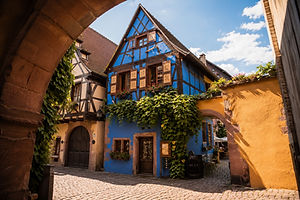
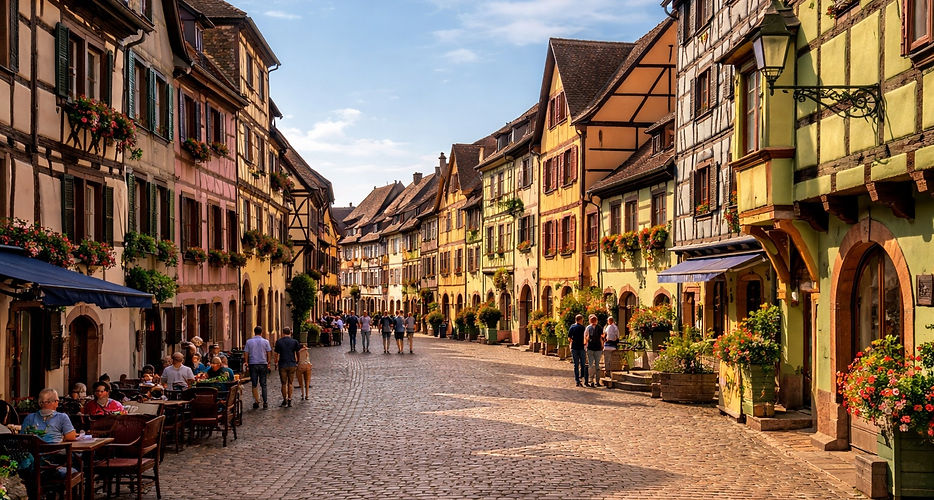
Nestled at the foot of the rolling Vosges hills and surrounded by exceptional vineyards, Riquewihr is the undisputed jewel of the Alsace Wine Route. This medieval gem, miraculously spared the destruction of the great wars, has preserved its picture-postcard 16th-century charm. Classified as one of the Most Beautiful Villages of France, Riquewihr is a veritable open-air museum where colorful half-timbered facades, hanging geraniums, and period cobblestones instantly transport visitors into a fairytale.

General de Gaulle Street, the axis of wonders

This cobbled street forms the backbone of old Riquewihr. It climbs gently from the lower part of the village, revealing a dazzling array of architecture.

The Neoclassical Town Hall: Built of red sandstone in 1789, it marks the majestic entrance to the fortified town and serves as a transition between the modern world and a journey back in time.

Uncle Hansi's House: Located further up the street, this house pays homage to the famous Alsatian illustrator Jean-Jacques Waltz. Its facade and wrought-iron signs perfectly encapsulate the romantic Alsatian aesthetic.

Hidden courtyards: Along the way, dare to peek through the half-open doorways. Cobbled courtyards, old sandstone wells, and carved wooden galleries lie hidden away, far from the bustle of the main street.

Riquewihr is inseparable from its prestigious vineyards, renowned for producing some of the world's finest white wines.

The Grands Crus Wine Trail: A superb walk starting from the village, climbing through the vineyards. Informative panels explain the work of the winemakers and the unique geology that gives rise to the famous grape varieties (Riesling, Gewurztraminer, Pinot Gris).

The Schoenenbourg Grand Cru: This south-facing slope overlooks the village. It is Riquewihr's crown jewel, famous since the Middle Ages for producing Rieslings with exceptional aging potential and remarkable minerality.

The centuries-old cellars: The village is dotted with historic family wineries. Descending into their cool cellars, amidst century-old oak casks, is an essential ritual for a guided tasting.
Riquewihr is inseparable from its prestigious vineyards, renowned for producing some of the world's finest white wines.

The Grands Crus Wine Trail: A superb walk starting from the village, climbing through the vineyards. Informative panels explain the work of the winemakers and the unique geology that gives rise to the famous grape varieties (Riesling, Gewurztraminer, Pinot Gris).

The Schoenenbourg Grand Cru: This south-facing slope overlooks the village. It is Riquewihr's crown jewel, famous since the Middle Ages for producing Rieslings with exceptional aging potential and remarkable minerality.

The centuries-old cellars: The village is dotted with historic family wineries. Descending into their cool cellars, amidst century-old oak casks, is an essential ritual for a guided tasting.
Riquewihr is inseparable from its prestigious vineyards, renowned for producing some of the world's finest white wines.

The Grands Crus Wine Trail: A superb walk starting from the village, climbing through the vineyards. Informative panels explain the work of the winemakers and the unique geology that gives rise to the famous grape varieties (Riesling, Gewurztraminer, Pinot Gris).

The Schoenenbourg Grand Cru: This south-facing slope overlooks the village. It is Riquewihr's crown jewel, famous since the Middle Ages for producing Rieslings with exceptional aging potential and remarkable minerality.

The centuries-old cellars: The village is dotted with historic family wineries. Descending into their cool cellars, amidst century-old oak casks, is an essential ritual for a guided tasting.

The Dolder and the Stone Sentinels
Riquewihr is inseparable from its prestigious vineyards, renowned for producing some of the world's finest white wines.

The Grands Crus Wine Trail: A superb walk starting from the village, climbing through the vineyards. Informative panels explain the work of the winemakers and the unique geology that gives rise to the famous grape varieties (Riesling, Gewurztraminer, Pinot Gris).

The Schoenenbourg Grand Cru: This south-facing slope overlooks the village. It is Riquewihr's crown jewel, famous since the Middle Ages for producing Rieslings with exceptional aging potential and remarkable minerality.

The centuries-old cellars: The village is dotted with historic family wineries. Descending into their cool cellars, amidst century-old oak casks, is an essential ritual for a guided tasting.

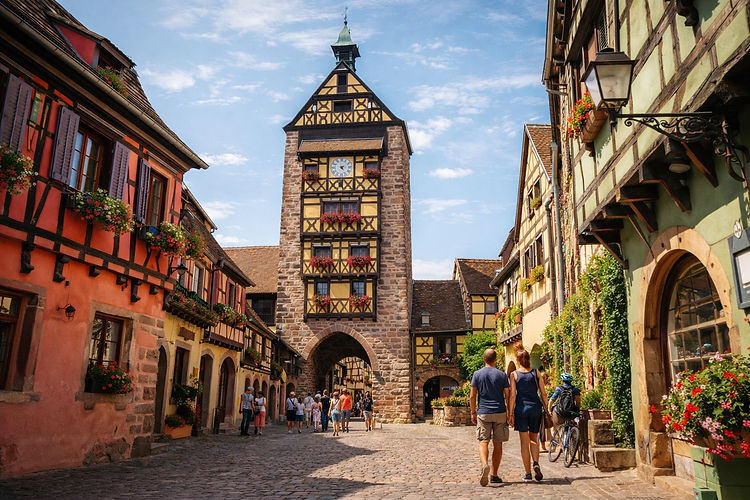
The town's defensive system testifies to its former wealth and power, when Riquewihr had to protect its valuable wine trade.

The Dolder Tower: This 25-meter-high monument, built in 1291, served as a belfry, defensive gate, and watchtower. Its exterior façade presents a severe appearance in dressed stone, while its interior reveals a magnificent half-timbered interior.

The Upper Gate: Located just beyond the Dolder, this second line of defense, reinforced in the 16th century, retains the site of a drawbridge and a heavy, period wooden gate, designed to withstand external attacks.

The Thieves' Tower: A former square watchtower that served as the town's prison. It houses an authentic dungeon and a torture chamber with its original instruments, a striking testament to the feudal justice of the Middle Ages.

Riquewihr is inseparable from its prestigious vineyards, renowned for producing some of the world's finest white wines.

The Grands Crus Wine Trail: A superb walk starting from the village, climbing through the vineyards. Informative panels explain the work of the winemakers and the unique geology that gives rise to the famous grape varieties (Riesling, Gewurztraminer, Pinot Gris).

The Schoenenbourg Grand Cru: This south-facing slope overlooks the village. It is Riquewihr's crown jewel, famous since the Middle Ages for producing Rieslings with exceptional aging potential and remarkable minerality.

The centuries-old cellars: The village is dotted with historic family wineries. Descending into their cool cellars, amidst century-old oak casks, is an essential ritual for a guided tasting.

The Golden Terroir - Grands Crus and Tastings

Riquewihr is inseparable from its prestigious vineyards, renowned for producing some of the world's finest white wines.

The Grands Crus Wine Trail: A superb walk starting from the village, climbing through the vineyards. Informative panels explain the work of the winemakers and the unique geology that gives rise to the famous grape varieties (Riesling, Gewurztraminer, Pinot Gris).

The Schoenenbourg Grand Cru: This south-facing slope overlooks the village. It is Riquewihr's crown jewel, famous since the Middle Ages for producing Rieslings with exceptional aging potential and remarkable minerality.

The centuries-old cellars: The village is dotted with historic family wineries. Descending into their cool cellars, amidst century-old oak casks, is an essential ritual for a guided tasting.

Riquewihr is inseparable from its prestigious vineyards, renowned for producing some of the world's finest white wines.

The Grands Crus Wine Trail: A superb walk starting from the village, climbing through the vineyards. Informative panels explain the work of the winemakers and the unique geology that gives rise to the famous grape varieties (Riesling, Gewurztraminer, Pinot Gris).

The Schoenenbourg Grand Cru: This south-facing slope overlooks the village. It is Riquewihr's crown jewel, famous since the Middle Ages for producing Rieslings with exceptional aging potential and remarkable minerality.

The centuries-old cellars: The village is dotted with historic family wineries. Descending into their cool cellars, amidst century-old oak casks, is an essential ritual for a guided tasting.

Christmas magic and culinary traditions

Riquewihr cultivates a warm and welcoming way of life that reaches its peak during the holiday season and is expressed through its artisan shops.

The "Christmas Magic" shop: Located in the heart of the village, this legendary shop allows you to immerse yourself in the magic of an Alsatian Christmas 365 days a year, amidst a recreated Christmas village inside, beneath a giant Christmas tree.

The traditional Christmas Market: In December, the ramparts and houses are illuminated with a thousand lights. Wooden huts line the streets, filling the air with the aromas of gingerbread, roasted chestnuts, and mulled wine with cinnamon.

Artisanal biscuits: Local bakeries and biscuit shops tempt passersby with traditional Riquewihr macarons (soft almond and coconut cakes), kougelhopfs, and handmade bredele.

Riquewihr is inseparable from its prestigious vineyards, renowned for producing some of the world's finest white wines.

The Grands Crus Wine Trail: A superb walk starting from the village, climbing through the vineyards. Informative panels explain the work of the winemakers and the unique geology that gives rise to the famous grape varieties (Riesling, Gewurztraminer, Pinot Gris).

The Schoenenbourg Grand Cru: This south-facing slope overlooks the village. It is Riquewihr's crown jewel, famous since the Middle Ages for producing Rieslings with exceptional aging potential and remarkable minerality.

The centuries-old cellars: The village is dotted with historic family wineries. Descending into their cool cellars, amidst century-old oak casks, is an essential ritual for a guided tasting.

The exceptional homes of the master winemakers

Riquewihr's golden age was during the Renaissance, a prosperous era when the wine trade enriched the town's prominent families.

The Dissler House: A masterpiece of Rhenish Renaissance style (17th century), it is distinguished by its scrolled gable, sculpted windows, and a magnificent oriel window (a projecting window) in carved stone.

The Preiss-Zimmer House: An impressive building notable for its intricate half-timbering and its former vaulted entrance porch, sized to allow the passage of carts laden with barrels of wine.

The former castle of the Counts of Württemberg: Built in the 16th century, this building breaks with the ubiquitous half-timbering of the area with its Renaissance style in stone. It serves as a reminder that Riquewihr was under the suzerainty of this Germanic dynasty for over three centuries.

Conclusion

Riquewihr is not simply a stop on the Alsace Wine Route; it's a magical embodiment of the Alsatian soul. By successfully preserving the beauty of its Renaissance architecture and blending it so harmoniously with its pervasive wine culture, the village offers a rare sensory experience. Whether you come to stroll in the benevolent shade of the Dolder mountain, hike on the heights of the Schoenenbourg, or marvel at the light on a winter evening, Riquewihr remains an unforgettable destination, forever etched in the memories of those who visit it.

Tourist Office – Riquewihr Welcome Center

Information Regarding Visuals: This website uses computer-generated images and illustrations created by artificial intelligence for atmospheric and stylistic purposes. These representations are not actual photographs and are strictly non-binding.

bottom of page