
Montargis

Rightly nicknamed the "Venice of the Gâtinais," Montargis is a gem of history, water, and greenery nestled in the Loiret department, just an hour south of Paris. Classified as one of the "Most Beautiful Detours in France," this former royal city reveals a unique picturesque charm, where canals embrace medieval facades and waterways murmur beneath flower-adorned bridges.
A city on the water — The canals and the bridge circuit
Water is the lifeblood of Montargis. Crisscrossed by the Briare Canal, the Loing, the Puiseaux, and the Vernisson rivers, the town offers an omnipresent aquatic landscape that invites leisurely strolls.
The Bridges Trail: The town boasts no fewer than 131 bridges and footbridges. A marked walking route allows visitors to discover the most spectacular of them, often adorned with superb floral displays that have earned it the "4 Flowers" award.
The Fishing Quarter: The true romantic heart of the town, this district reveals old half-timbered houses whose foundations plunge directly into the water, enhanced by charming hanging gardens.
The Briare Canal and its Locks: A major artery for river tourism, the canal runs through the town center. Watching the barges pass through the locks in the heart of the town is a spectacle that never gets old.
Zia cruises: For total immersion, you can embark from April to October for a narrated river cruise departing from Port Saint-Roch, the city's modern marina.


Green spaces and getaways in the surrounding area
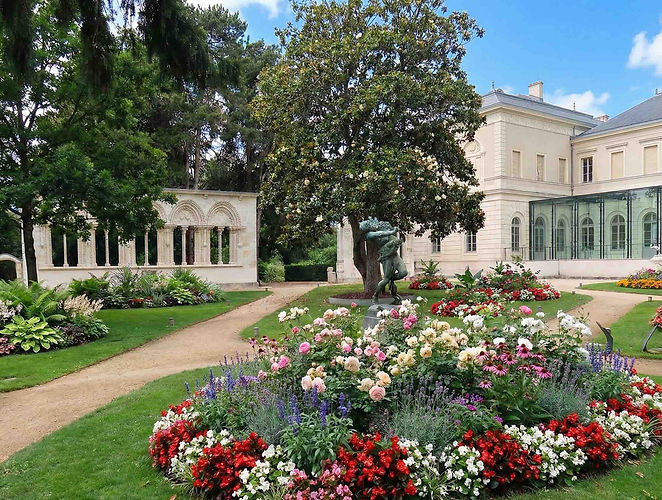
Nature beautifully frames the city, offering superb spaces for relaxation just steps from the urban center.
The Durzy Garden and the Collerette Gardens: The Durzy Garden, created in the 19th century, is a magnificent English-style park boasting rare species and centuries-old conifers. On the hillside, the Collerette Gardens recreate the spirit of the Renaissance gardens envisioned by Renée de France.
The Closiers Lake: Located on the edge of the city center, this large, wooded recreational area is ideal for a walk, a run, or family water sports.
The Montargis State Forest (Paucourt): Just a few kilometers away, this oak forest stretches across thousands of hectares. The village of Paucourt offers themed trails dotted with wooden sculptures.
The Tanneries Contemporary Art Centre (Amilly): Located in the immediate vicinity, this former industrial site, rehabilitated on the waterfront, has become a nationally significant exhibition venue, perfect for linking nature and culture.

Sweet treats and culinary traditions
Montargis knows how to delight its visitors' taste buds with its top-notch artisanal expertise and legendary sweet specialties.
The Prasline de Montargis (Maison Mazet): Invented in 1636 during the reign of Louis XIII by the cook of Marshal de Plessis-Praslin, this confection is the oldest in France. It consists of a roasted and caramelized almond made according to a secret, unchanging recipe. The historic Mazet shop, opposite the church, is worth a visit for its period decor.
The Crottes du Chien de Montargis (Montargis Dog Droppings): A sweet nod to the famous legend! Rest assured, this is a delicious chocolate specialty made of hazelnut praline coated in nougatine and dark chocolate.
The Praslin Market: An unmissable event to immerse yourself in the local way of life, meet producers from the Gâtinais region and taste the region's cheeses, honeys and ciders.


A rich royal and architectural heritage
Montargis has long been a favorite city of the kings of France, particularly the Valois, which has bequeathed it magnificent monuments.
The Royal Castle of Montargis: Proudly overlooking the city from its hilltop, this former medieval fortress was an important royal residence. While part of it is now occupied by a school, its restored ramparts and imposing defensive walls remain majestic.
The Church of Sainte-Marie-Madeleine: This impressive 12th- and 16th-century building is distinguished by its exceptionally bright Renaissance choir and a remarkable collection of carefully restored 19th-century stained-glass windows.
The Town Hall and the Reception Hall: The town hall boasts elegant architecture, while the Reception Hall reveals a superb Art Deco interior hidden behind a Neo-Louis XVI façade.
The Legend of the Dog of Montargis: It's impossible to visit the town without encountering the story of Macaire, the faithful dog who unmasked his master's murderer in a judicial duel ordered by the king in the 14th century. A statue in the town's gardens pays tribute to him.

Museums and secrets of international history
The Venice of the Gâtinais region hides a surprising cultural life and unexpected historical ties that extend far beyond the region's borders.
The Girodet Museum: Designated a "Musée de France," this institution is dedicated to Anne-Louis Girodet-Trioson, the renowned Neoclassical and Romantic painter born in Montargis (a student of David). The museum exhibits his masterpieces as well as sculptures by Henry de Triqueti.
The Historical Museum of Franco-Chinese Friendship: Housed in a building in the city center, this museum recounts an incredible story: in the 1920s, Montargis welcomed hundreds of young Chinese intellectuals who came to study in France. Among them were the future leaders of modern China, including Deng Xiaoping and Zhou Enlai.
The Chinese Trail: Complementing the museum, a specific urban trail allows visitors to walk in the footsteps of these Chinese students and understand how this small town in the Loiret region became part of contemporary Chinese history.
Conclusion
Montargis successfully combines the tranquility of a riverside getaway with the rich cultural heritage of a major historical city. Whether you stop to stroll along its Eiffel-style metal footbridges, admire the paintings in the Girodet Museum, or savor a praline in the shade of its canals, the Venice of the Gâtinais is a welcoming destination that leaves a lasting impression and irresistibly invites you to slow down and enjoy your stay.
Montargis Agglomeration Tourist Office
Information Regarding Visuals: This website uses computer-generated images and illustrations created by artificial intelligence for atmospheric and stylistic purposes. These representations are not actual photographs and are strictly non-binding.