
Milly-la-Forêt
Located in the heart of the Gâtinais Français Regional Natural Park, less than an hour south of Paris, Milly-la-Forêt is a charming small town that immediately captivates visitors. A verdant haven bordered by the majestic Fontainebleau forest, this historic town elegantly blends a rich medieval past, a centuries-old tradition of medicinal plants, and the vibrant legacy of great 20th-century artists.
The Historic Centre and the Medieval Market Hall
The town center of Milly-la-Forêt invites you on a true journey through time, structured around preserved monuments that recount the golden age of commerce and aristocratic life.
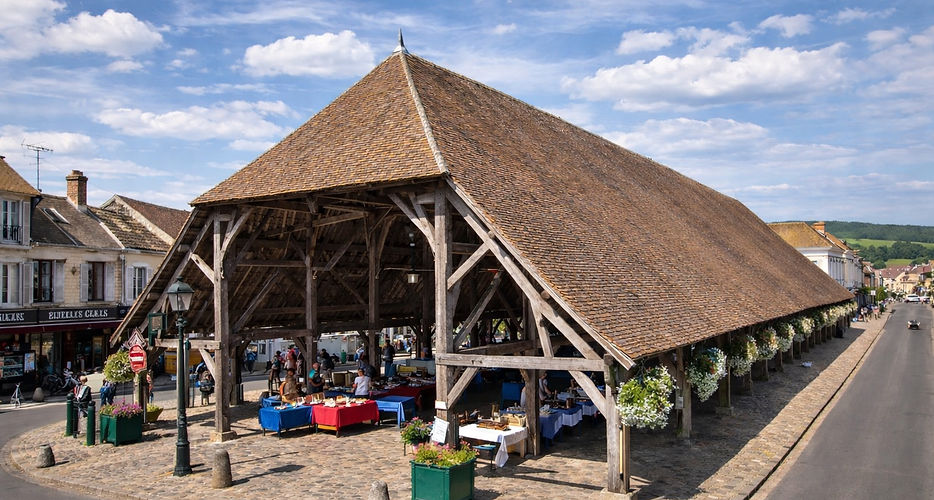
The Admiral de Graville Market Hall (1479): A true masterpiece of wooden architecture, this immense market hall stands proudly in the center of the main square. Supported by 48 massive oak pillars resting on stone plinths, it testifies to the town's commercial prosperity from the 15th century onwards. It still houses a lively traditional market every Thursday afternoon.
The Château de la Bonde: Rebuilt at the end of the 15th century by Admiral de Graville on 13th-century foundations, this private castle lends the town a romantic air. From the outside, one can admire its water-filled moat, its stone bridge (which replaced the old drawbridge), and its two beautiful crenellated round towers.
The Church of Our Lady of the Assumption: Built between the 11th and 15th centuries, this church boasts an imposing bell tower that rises above the village rooftops. Inside, it houses remarkable works of sacred art and a nave with a roof structure shaped like an inverted ship's hull.
Water Heritage: Strolling along the École River, one discovers picturesque buildings such as the perfectly restored wash house in the Coul'd'eau alley, a reminder of the daily lives of inhabitants in centuries past.


Historical Capital of Medicinal Plants

Since the Middle Ages, Milly-la-Forêt has cultivated a unique expertise in medicinal plants, fostered by the quality of its sandy soils and wetlands.
Milly Peppermint: It's the local star! Introduced in the 19th century, this variety of mint (Mentha x piperita 'Milly') is world-renowned for its aromatic potency, its high menthol content, and its digestive properties. Today, it can be found in herbal teas, syrups, candies, and liqueurs at the shops in the town center.
The National Plant Conservatory (CNPMAI): This unique reference center covers several hectares. It is dedicated to preserving, studying, and promoting aromatic, medicinal, and perfume plants. For visitors, it's a wonderful living museum with themed gardens (sensory trail, poisonous plants, useful plants) and collection greenhouses.
The Herbalist Tradition: Browsing through local shops, one can still feel the weight of this tradition. Specialized boutiques offer blends of dried plants, essential oils, and natural remedies made from local or regional produce.
Jean Tinguely's Cyclops, a Monster in the Forest
Nestled in the heart of the "Bois des Pauvres" (Poor Man's Wood), on the outskirts of the city, lies one of Europe's most monumental and unusual contemporary artworks: the Cyclops.
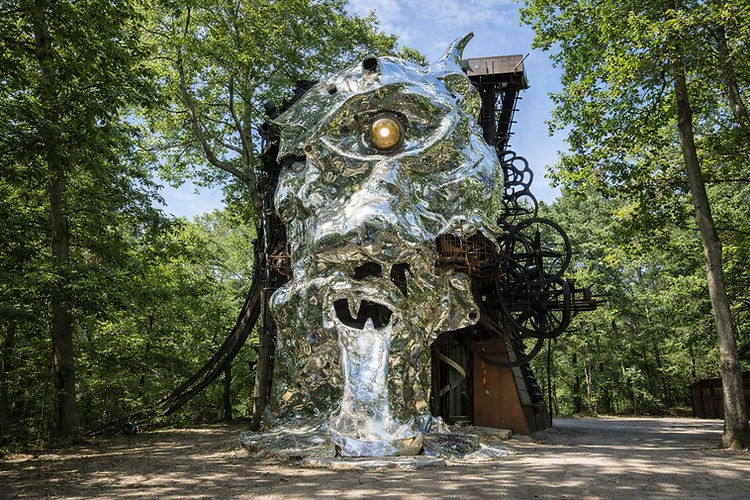
A Monumental and Collaborative Work: Conceived in secret starting in 1969 by the Swiss sculptor Jean Tinguely and his partner Niki de Saint Phalle, this architectural sculpture stands over 22 meters tall and weighs approximately 350 tons of steel and concrete. It incorporates contributions from some fifteen artist friends (such as Daniel Spoerri and César).
A Dazzling Structure: The monster has a single golden eye, a one-ton articulated ear, and an immense face covered in thousands of mirrors that reflect the surrounding forest, perfectly integrating the wild art with nature. Its tongue is a giant metal slide.
An Interior Mechanical Labyrinth: During guided tours (suitable for ages 8 and up), visitors enter the mind to discover a surreal universe. Scrap metal gears come to life with a metallic clatter, giant marbles travel on rails, and numerous clandestine works of art (including a tribute to Yves Klein at the top) punctuate the different levels.


The Poetic Universe of Jean Cocteau
Milly-la-Forêt was the refuge of the illustrious poet, filmmaker, and illustrator Jean Cocteau, who spent the last seventeen years of his life there. The town is imbued with his unique aesthetic.
The Chapel of Saint-Blaise-des-Simples: This 12th-century monument is the last vestige of a former leper colony. In 1959, Jean Cocteau completely decorated its interior. His simple murals depict the Resurrection of Christ, surrounded by drawings of medicinal plants (known locally as "simples") that pay homage to the town's traditions. The poet is also buried here.
The House of Jean Cocteau: Located a stone's throw from the castle, this former fortified manor house was the home of the artist and Jean Marais. Transformed into a museum, it offers a glimpse into the poet's private life by showcasing his grand living room, his untouched study, and a rich collection of drawings, manuscripts, and photographs.
The Chapelle Botanical Garden: Located outside Saint-Blaise Church, a traditional garden boasts nearly 200 species of medicinal, aromatic, and dye plants. A sensory stroll that connects Cocteau's devotion to the local history of plants.

Nature, Hiking and the Art of Living in the Gâtinais
Milly-la-Forêt is the ideal gateway to the fresh air and the unspoiled rolling landscapes of the Gâtinais Français Regional Natural Park.
Hiking and Climbing: The town is crisscrossed by marked trails perfect for walkers and cyclists. Bouldering enthusiasts will also find plenty to enjoy thanks to the famous sandstone crags (such as the Trois Pignons or the Coquibus rocks) located nearby.
Local Producers and the Gâtinais: The art of living extends to the local cuisine. The Milly region is renowned for its local honey (Gâtinais honey), its poultry, its surrounding watercress beds (particularly near Moigny-sur-École), and its local craft beers.
Milly Treetop Adventure: For families and thrill-seekers, the Atout Branches forest leisure park offers treetop courses adapted to all ages, providing a fun immersion in the canopy of the Gâtinais.
Conclusion
In conclusion, Milly-la-Forêt is more than just a charming stop near the capital; it's a complete destination. Whether you come to be moved by the poetry of Jean Cocteau, marvel at the mechanical genius of the Cyclops, breathe in the scent of peppermint, or simply stroll through its medieval market hall, this village maintains a perfect balance between cutting-edge culture, French history, and the good life. A bucolic getaway that leaves a lasting impression and endlessly invites you to return.
Milly-la-Forêt and its 2 Valleys Tourist Office
Information Regarding Visuals: This website uses computer-generated images and illustrations created by artificial intelligence for atmospheric and stylistic purposes. These representations are not actual photographs and are strictly non-binding.