top of page

Castelnaudary

Leaving the riverbanks behind, you climb towards the historic heart of the city to discover a town that has stood the test of time.

The Collegiate Church of Saint-Michel: This imposing building in the Southern Gothic style impresses with its cathedral-like dimensions and its bell tower that dominates the valley.

The Présidial: A former courthouse built under Catherine de Medici (then Countess of Lauragais), this historic building now houses a museum that traces local history, from Roman times to river archaeology.

The alleyways of the Upper Town: A maze of narrow streets where you'll discover half-timbered houses and elegant townhouses, testaments to the former wealth linked to the trade in woad and grain.

Welcome to the land of plenty, in the heart of the Lauragais region, where the Autan wind blows across the wheat fields and the tranquil waters of the Canal du Midi. Castelnaudary, the world capital of cassoulet, is an unmissable stop in the Aude, a town of character that elegantly blends river history and legendary gastronomy.

The Grand Basin: The Mirror of the Canal du Midi

A true feat of 17th-century engineering, the Grand Bassin is the city's hydraulic jewel, designed by Pierre-Paul Riquet.

An Inland Sea: At 7 hectares, it is the largest body of water on the Canal du Midi. It once served as a reservoir and maneuvering area for commercial barges.

The Promenade des Anglais: A path lined with century-old plane trees encircles the basin, offering walkers and cyclists a shaded setting with a breathtaking view of the city skyline.

The Nautical Stopover: The marina now welcomes travelers from all over the world, making Castelnaudary a cosmopolitan and peaceful meeting point.

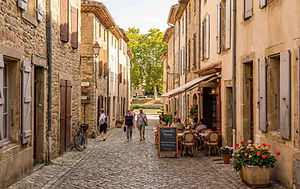
Leaving the riverbanks behind, you climb towards the historic heart of the city to discover a town that has stood the test of time.

The Collegiate Church of Saint-Michel: This imposing building in the Southern Gothic style impresses with its cathedral-like dimensions and its bell tower that dominates the valley.

The Présidial: A former courthouse built under Catherine de Medici (then Countess of Lauragais), this historic building now houses a museum that traces local history, from Roman times to river archaeology.

The alleyways of the Upper Town: A maze of narrow streets where you'll discover half-timbered houses and elegant townhouses, testaments to the former wealth linked to the trade in woad and grain.
Leaving the riverbanks behind, you climb towards the historic heart of the city to discover a town that has stood the test of time.

The Collegiate Church of Saint-Michel: This imposing building in the Southern Gothic style impresses with its cathedral-like dimensions and its bell tower that dominates the valley.

The Présidial: A former courthouse built under Catherine de Medici (then Countess of Lauragais), this historic building now houses a museum that traces local history, from Roman times to river archaeology.

The alleyways of the Upper Town: A maze of narrow streets where you'll discover half-timbered houses and elegant townhouses, testaments to the former wealth linked to the trade in woad and grain.
Leaving the riverbanks behind, you climb towards the historic heart of the city to discover a town that has stood the test of time.

The Collegiate Church of Saint-Michel: This imposing building in the Southern Gothic style impresses with its cathedral-like dimensions and its bell tower that dominates the valley.

The Présidial: A former courthouse built under Catherine de Medici (then Countess of Lauragais), this historic building now houses a museum that traces local history, from Roman times to river archaeology.

The alleyways of the Upper Town: A maze of narrow streets where you'll discover half-timbered houses and elegant townhouses, testaments to the former wealth linked to the trade in woad and grain.

The World Capital of Cassoulet

Leaving the riverbanks behind, you climb towards the historic heart of the city to discover a town that has stood the test of time.

The Collegiate Church of Saint-Michel: This imposing building in the Southern Gothic style impresses with its cathedral-like dimensions and its bell tower that dominates the valley.

The Présidial: A former courthouse built under Catherine de Medici (then Countess of Lauragais), this historic building now houses a museum that traces local history, from Roman times to river archaeology.

The alleyways of the Upper Town: A maze of narrow streets where you'll discover half-timbered houses and elegant townhouses, testaments to the former wealth linked to the trade in woad and grain.

One cannot speak of Castelnaudary without mentioning its culinary heritage, elevated here to the status of a sacred art.

A Wartime Legend: It is said that cassoulet was born during the siege of the town by the English during the Hundred Years' War; the inhabitants supposedly gathered their leftovers to fortify the soldiers.

The Terracotta Casserole: The secret lies as much in the dish (handmade by the potters of Issel) as in the ingredients: lingot beans from the Lauragais region, duck confit, pork rind, and Toulouse sausage.

The Grand Festival: Every year at the end of August, the town comes alive for the Cassoulet Festival, combining giant tastings, concerts, and celebrations of the "Grand Brotherhood."

Leaving the riverbanks behind, you climb towards the historic heart of the city to discover a town that has stood the test of time.

The Collegiate Church of Saint-Michel: This imposing building in the Southern Gothic style impresses with its cathedral-like dimensions and its bell tower that dominates the valley.

The Présidial: A former courthouse built under Catherine de Medici (then Countess of Lauragais), this historic building now houses a museum that traces local history, from Roman times to river archaeology.

The alleyways of the Upper Town: A maze of narrow streets where you'll discover half-timbered houses and elegant townhouses, testaments to the former wealth linked to the trade in woad and grain.

Medieval and Religious Heritage

Leaving the riverbanks behind, you climb towards the historic heart of the city to discover a town that has stood the test of time.

The Collegiate Church of Saint-Michel: This imposing building in the Southern Gothic style impresses with its cathedral-like dimensions and its bell tower that dominates the valley.

The Présidial: A former courthouse built under Catherine de Medici (then Countess of Lauragais), this historic building now houses a museum that traces local history, from Roman times to river archaeology.

The alleyways of the Upper Town: A maze of narrow streets where you'll discover half-timbered houses and elegant townhouses, testaments to the former wealth linked to the trade in woad and grain.

Leaving the riverbanks behind, you climb towards the historic heart of the city to discover a town that has stood the test of time.

The Collegiate Church of Saint-Michel: This imposing building in the Southern Gothic style impresses with its cathedral-like dimensions and its bell tower that dominates the valley.

The Présidial: A former courthouse built under Catherine de Medici (then Countess of Lauragais), this historic building now houses a museum that traces local history, from Roman times to river archaeology.

The alleyways of the Upper Town: A maze of narrow streets where you'll discover half-timbered houses and elegant townhouses, testaments to the former wealth linked to the trade in woad and grain.

The Cugarel Mill: Sentinel of the Lauragais

A relic of the time when Castelnaudary was the "breadbasket of Languedoc," this windmill is one of the town's most photographed landmarks.

The Last of the Giants: Of the 32 windmills that existed in the town in the 17th century, it is the only one to have remained perfectly intact and restored.

Typical Architecture: Built of dressed stone with a rotating conical roof, it offers a glimpse into the workings of traditional milling.

The Belvedere: Located on a rise, the windmill site offers a breathtaking panoramic view of the Lauragais plain and, on a clear day, the Pyrenees mountain range.

Leaving the riverbanks behind, you climb towards the historic heart of the city to discover a town that has stood the test of time.

The Collegiate Church of Saint-Michel: This imposing building in the Southern Gothic style impresses with its cathedral-like dimensions and its bell tower that dominates the valley.

The Présidial: A former courthouse built under Catherine de Medici (then Countess of Lauragais), this historic building now houses a museum that traces local history, from Roman times to river archaeology.

The alleyways of the Upper Town: A maze of narrow streets where you'll discover half-timbered houses and elegant townhouses, testaments to the former wealth linked to the trade in woad and grain.

The Four Locks of Saint-Roch

Just outside the city on the road to Carcassonne, this site exemplifies the engineering ingenuity of the Canal du Midi.

A Water Staircase: This series of four successive locks allows boats to overcome an impressive change in elevation of over 9 meters.

A Continuous Spectacle: The passage of boats through the locks is a fascinating ritual to watch from the banks, attracting both curious onlookers and boating enthusiasts.

The Paper Mill: Nearby, the old buildings are a reminder of the once-thriving industrial activity that harnessed the power of the canal's water.

Conclusion

Castelnaudary is a town to be savored slowly, at the pace of the water and the local flavors. Between the power of its medieval history and the poetry of its river landscapes, it embodies that authentic France where heritage is experienced as much as it is admired. Whether you come to fill your plate or to clear your mind along the canal, this town in Castelnaudary offers you a welcome as warm as a dish fresh from the oven.

Castelnaudary Tourist Office

Information Regarding Visuals: This website uses computer-generated images and illustrations created by artificial intelligence for atmospheric and stylistic purposes. These representations are not actual photographs and are strictly non-binding.

bottom of page