
Carcassonne

Perched on a hill overlooking the Aude Valley, Carcassonne is the jewel of southern France. The largest inhabited and fortified medieval city in Europe, it is a UNESCO World Heritage Site. Between its imposing double ramparts and cobbled streets, it transports visitors to a past steeped in knights, troubadours, and Cathar legends. It is a place where time stands still, offering a magical silhouette that lights up every evening.
The Medieval City and its Ramparts
A veritable impregnable fortress, the Cité is an architectural labyrinth protected by a defense system unique in the world.
The Double Wall: Explore the three kilometers of ramparts that encircle the city, offering exceptional views of the Pyrenees and the Montagne Noire.
The 52 Towers: Each tower possesses its own character and defensive function, reflecting the evolution of military architecture over nearly a thousand years.
The Narbonne Gate: The main entrance, flanked by two monumental towers, is a symbol of the city's power against invaders.


The Bastide Saint-Louis and the Canal du Midi

At the foot of the hill, the "Lower Town" presents a different, more open and commercial character, reflecting the city's economic growth.
The Bastide Saint-Louis: Built on a grid plan in the 13th century, it is full of elegant townhouses, lively squares, and the elegant Saint-Michel Cathedral.
The Canal du Midi: Also a UNESCO World Heritage Site, this masterpiece by Pierre-Paul Riquet invites you to enjoy bucolic strolls in the shade of the plane trees or peaceful cruises.
The Old Bridge: The only historical link between the Cité and the Bastide, this medieval bridge offers the most beautiful panoramic view for photographing the ramparts above the Aude River.

Occitan Gastronomy and Traditions
A visit to Carcassonne is also a culinary journey to a land of gastronomy and conviviality.
Carcassonne Cassoulet: An iconic dish made with white beans, confit goose, and red-legged partridge, slowly cooked in a terracotta casserole dish.
Languedoc Wines: Take advantage of the proximity of the Malepère and Cabardès vineyards to taste distinctive wines directly from local winemakers.
The Cité's Sweets: Indulge in the cobblestones of the citadel or the artisanal chocolates that have made the local confectionery famous.


Events and Nighttime Magic
Carcassonne knows how to make its stones resonate through celebrations that leave a lasting impression on visitors.
The Carcassonne Festival: One of France's largest festivals, blending music, theater, and dance in prestigious historical settings.
The Blazing of the Citadel: On July 14th, a world-renowned fireworks display transforms the fortress into a volcano of glowing red light.
The Medieval Festival: Historical reenactments, jousting tournaments, and period markets bring the daily life of the Middle Ages to life for the duration of your visit.
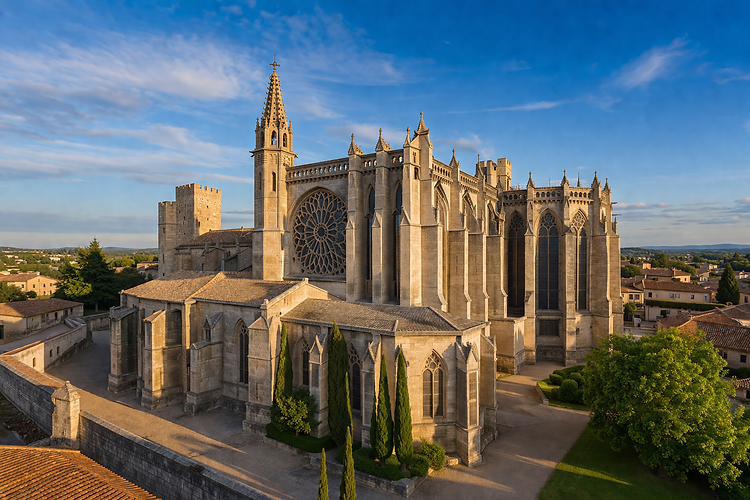
The Count's Castle and the Basilica
At the heart of the fortifications lie the centers of temporal and spiritual power in the city.
The Count's Castle: Built in the 12th century by the Trencavel family, this "castle within the city" now houses a lapidary museum and allows visitors to walk along the inner curtain walls.
The Basilica of Saint-Nazaire: Nicknamed the "Jewel of the City," it surprises with its harmonious fusion of Romanesque and Rayonnant Gothic styles, enhanced by some of the most beautiful stained-glass windows in southern France.
The Jean-Deschamps Theatre: An open-air theatre nestled at the foot of the ramparts, which hosts spectacular performances under the stars every summer.
Conclusion
Carcassonne is a destination that leaves no one indifferent. It's a city that has preserved its heritage while remaining vibrant and welcoming. Whether you're passionate about architecture, a history buff, or simply seeking a romantic setting, the city offers an unforgettable experience. Leaving its walls, you'll take with you a piece of the magic of an era when every stone had a story to tell.
Tourist Office - The City
Information Regarding Visuals: This website uses computer-generated images and illustrations created by artificial intelligence for atmospheric and stylistic purposes. These representations are not actual photographs and are strictly non-binding.