top of page
Beautiful French Town

The towns and villages of France

  • 32
    Page 30
While lavender reigns supreme, the plateau is actually a land of diverse agriculture of immense richness, shaped by human labor.

The Almond Tree in Celebration: From the end of winter (February-March), the plateau is the first to awaken with the pink and white blossoms of the almond trees, heralding spring.

Cereal and Truffle Crops: Fields of wheat and lavender share the space with oak groves ideal for harvesting the Verdon black truffle (the "black diamond").

Olive Oil from Provence: The olive groves that dot the slopes of the plateau produce an extra virgin olive oil, fruity and vibrant, typical of the Mediterranean terroir.

The Valensole Plateau

The Visual and Sensory Spectacle of Lavender

The park is crisscrossed by legendary long-distance hiking trails, offering breathtaking panoramas.

The GR 54 (Tour des Écrins): One of the most challenging yet also one of the most beautiful treks in France. This wild circuit crosses vertiginous high-altitude passes (such as the Col de l'Aup Martin) and requires about ten days of effort.

Lake Muzelle and Lake Lauvitel: Nestled in glacial cirques, these high-altitude lakes with turquoise or emerald waters are very popular destinations for day hikes. Lake Lauvitel is also a protected nature reserve dedicated to scientific research.

Mountain Huts: Havens of conviviality perched on the rock (Refuge des Écrins, Refuge du Glacier Blanc). Spending a night in one allows you to experience the authentic atmosphere of mountaineers' evenings before setting off at dawn.

The Écrins National Park

Mythical Peaks and High Altitude

Thoiry has diversified its activities to offer a good dose of adrenaline to adventurers of all ages.

The zipline over the big cats: For the most daring, a giant zipline lets you fly over the lion enclosure and part of the safari plain. Thrills guaranteed as you soar above the predators' territory!

The Safari Air Park: A unique concept of net bridges suspended in the trees, covering 1,500 square meters above the African plain. Children can let loose safely while enjoying breathtaking aerial views of the antelopes and giraffes below.

The giant maze: A large, historical plant maze of 9,000 square meters, themed around evolution and mythological creatures, perfect for playing at getting lost with the family.

Thoiry Zoo-Safari

The Safari Reserve, Africa within easy driving distance

Dominating the city from its 584-meter summit, this limestone giant offers a true breath of fresh air and breathtaking views of the Var coastline.

The Red Cable Car: Unique on the entire Mediterranean coast, this cable car whisks you from the urban fabric to the summit of the mountain in just six minutes. As you ascend, the glass cabins offer a spectacular, sweeping panorama of the harbor and the Hyères Islands.

The Provence Landing Memorial: Housed in the Beaumont Tower, this history museum commemorates the Allied landings of August 1944. Completely renovated with immersive technologies, it poignantly explains the crucial role of French troops in the liberation of southern France.

Hiking trails and nature: The summit of the mountain is a plateau wooded with Aleppo pines and crisscrossed by numerous hiking and mountain biking trails. It's an ideal space for a wild walk scented with thyme and rosemary, just a stone's throw from the urban bustle.

Toulon

The Toulon harbor and the maritime epic

Tournon is inextricably linked to the Rhône, a river tamed and enhanced by local engineers during the Industrial Revolution.

The Marc Seguin Footbridge, a World Heritage Site: Designed in 1825 by the Thonon-born engineer Marc Seguin, this pedestrian bridge was historically the very first major cable-stayed bridge in the world. Spanning the Rhône to connect Tournon to Tain, it offers a scenic walkway above the water.

The Quays of La Farre Promenade: Completely renovated, the quays of Tournon are lined with century-old plane trees. It's the perfect spot to watch the river cruise boats, relax on the benches overlooking the river, or set off on the ViaRhôna, the famous European cycle route.

The Garden of Eden, a Refuge of Coolness: Nestled against the old ramparts of the lower castle, this park of the former Cordeliers convent is a secret haven of peace. Between romantic pools, murmuring fountains, and ancient trees, it offers a poetic and refreshing respite on hot summer days.

Tournon-sur-Rhône

The Tournon Castle-Museum, the Stone Sentinel

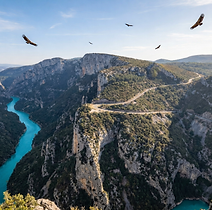
Less frequented but just as dramatic, the Var side of the gorges (to the south) offers a winding road route that follows the contours of the Canjuers plateau.

The Artuby Bridge (or Chaulière Bridge): This exceptional feat of engineering spans the Artuby Gorge (a tributary of the Verdon River) at a height of 182 meters. It is the highest bridge in Europe and a popular spot for bungee jumping, a guaranteed thrill during the summer months.

The Balcons de la Mescla: An exceptional viewpoint where the Artuby and Verdon rivers meet. Here, the river forms a perfect 180° loop around a vast rocky promontory, creating a fascinating geological panorama.

Aiguines and its castle: This charming village perched on the left bank overlooks the mouth of the gorges. Its castle with colorful glazed tiles majestically dominates the immensity of Lake Sainte-Croix.

The Verdon Gorges

The Route des Crêtes, the thrill of the viewpoints

A major strategic location on the Moselle River, Thionville has preserved masterpieces of military architecture, from the era of the Sun King to modern conflicts.

The South Lock Bridge (Couronné d'Yutz): Designed by the engineers of Cormontaigne in the 18th century, following in the footsteps of Vauban's fortifications, this monumental structure allowed the city's moats to be flooded in the event of a siege, blocking access to the Moselle Valley.

The Fort of Guentrange (The Prussian Heritage): Perched on the city's heights, this colossus of concrete and steel was built by the German Empire between 1899 and 1906 during the annexation. A veritable underground fortified factory designed to house 2,000 men, it now offers a fascinating tour through its galleries and rotating artillery turrets.

The Fortified Sector of Thionville (Maginot Line): A few kilometers from the city, military history enthusiasts can explore the famous works of Hackenberg or Michelsberg, spectacular underground witnesses of French defensive engineering of the 1930s.

Thionville

The Belfry and the Historic Heart, the Memory of the Counts

At the foot of the cliff, the Rives district is a picturesque haven of peace that has preserved all the authenticity of a traditional Lake Geneva fishing port.

Traditional Fishermen's Huts: Around the marina, the small, colorful wooden houses still shelter the last professional fishermen on the lake. In the morning, you can watch them mending their nets and unloading the prized fish of Lake Geneva (whitefish, Arctic char, perch).

The Museum of Hunting and Fishing: Housed in the 15th-century Rives Castle, this small museum of local ethnography explains the evolution of navigation, fishing, and ecosystem protection techniques on the lake through the centuries.

The Ripaille Quayside Promenade: Entirely pedestrianized, the quayside invites you to a bucolic stroll lined with century-old plane trees. In summer, restaurant terraces and ice cream parlors come alive to the rhythm of the incandescent sunsets that set the waters of Lake Geneva ablaze.

Thonon-les-Bains

The Upper Town, the Viewpoints and the Historic Funicular

In the 16th century, Toulouse became the European capital of woad, a plant whose leaves produced a blue of unparalleled purity. This flourishing industry made the fortunes of the woad merchants, who built urban palaces of rare refinement.

The Hôtel d’Assézat, a Renaissance Masterpiece: Designed by the renowned architect Nicolas Bachelier for the wealthy merchant Pierre d’Assézat, this urban palace is the most spectacular in the city. Its courtyard displays a series of ancient columns (Doric, Ionic, Corinthian) and today houses the prestigious Bemberg Foundation, rich in Renaissance and Impressionist works of art.

The Hôtel de Bernuy and the Tour d’Orgueil: A testament to the wealth of Jean de Bernuy (the man who stood surety for the ransom of King Francis I), this private mansion blends Flamboyant Gothic and Renaissance styles. Its tall Gothic tower, known as the "tower of pride," rises above the rooftops to assert the social power of its owner.

The Secret Courtyards Trail: While strolling through the Carmes or Saint-Étienne districts, travelers push open heavy carriage gates to discover secret inner courtyards, dotted with suspended loggias, caryatid sculptures, and intricately carved mullioned windows.

Toulouse

The Place du Capitole and the Historic Monumental Heart

Nestled against the city's ancient Gallo-Roman walls, the former Archbishop's Palace is a monument of immense classical nobility, now home to the Museum of Fine Arts of Tours.

Grand Classical Architecture: Built between the 17th and 18th centuries, the palace boasts a monumental paved courtyard and state rooms adorned with period woodwork and parquet floors, reminiscent of the splendor of the princes of the Church.

The Famous Bicentennial Cedar of Lebanon: In the heart of the museum's park, visitors are greeted by a monumental tree: a Cedar of Lebanon planted at the very beginning of the 19th century, whose giant branches extend majestically over the formal lawns.

Internationally Significant Collections: The museum houses priceless masterpieces of art history, including two famous paintings on wood by the Italian Renaissance master Andrea Mantegna (Christ in the Garden of Olives and The Resurrection), as well as works by Rembrandt, Delacroix and Monet.

Tours

Old Tours and Place Plumereau, the Medieval Jewel

  • 32
    Page 30
bottom of page